Last updated October 30, 2026
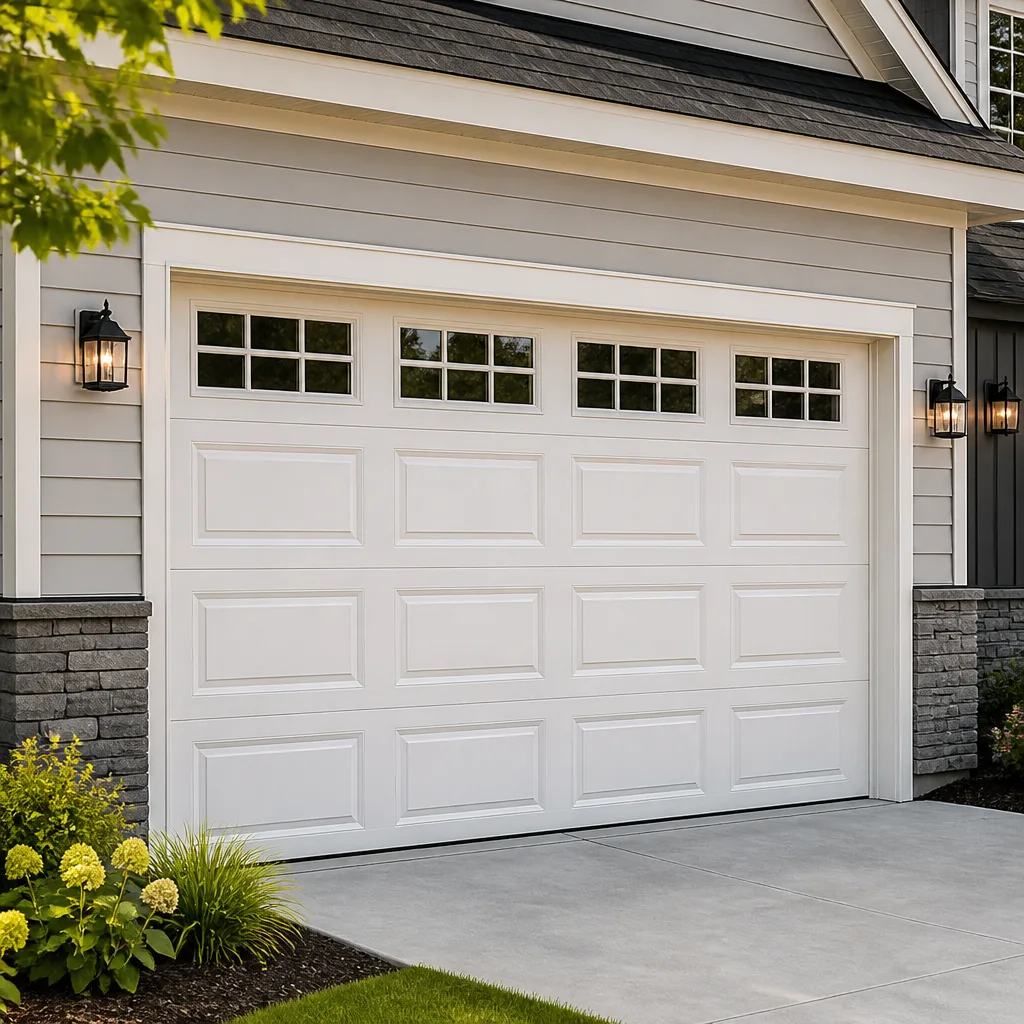 Raised-panel steel
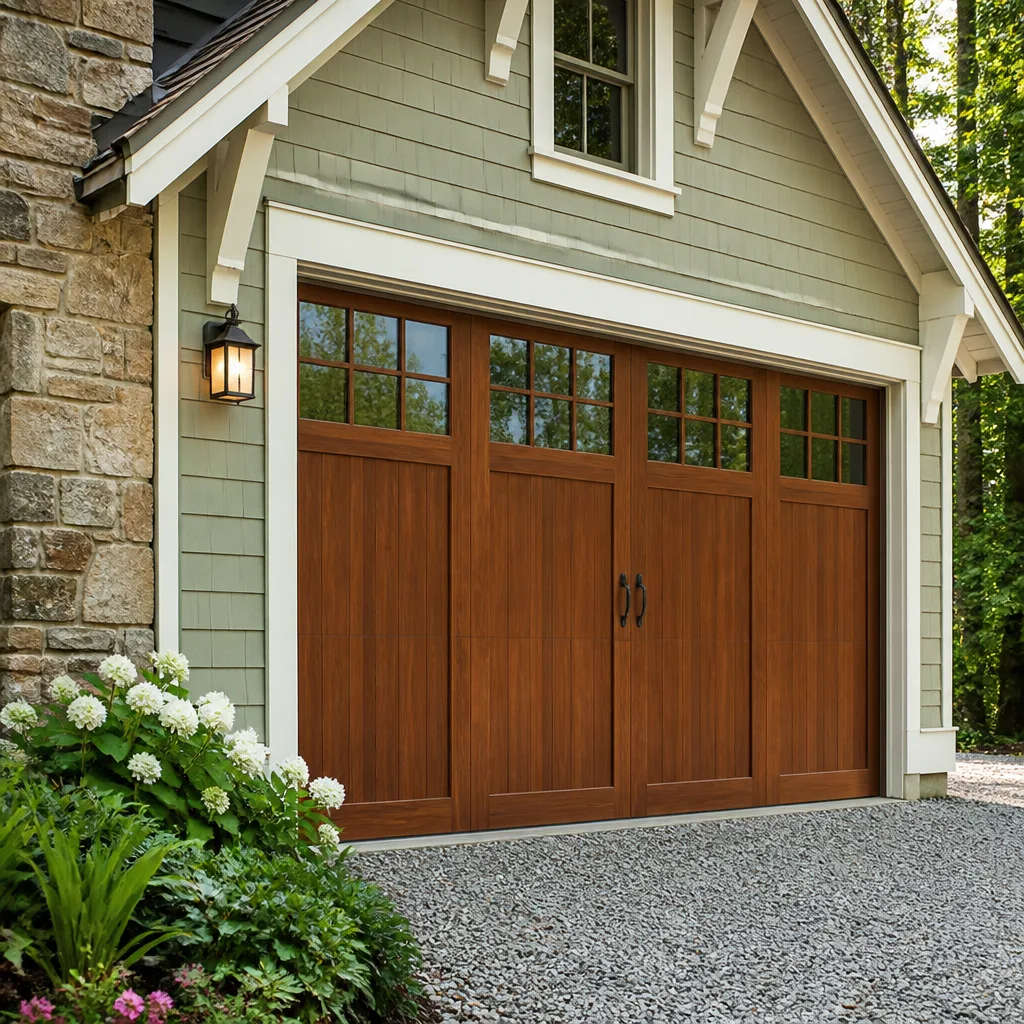 Carriage house
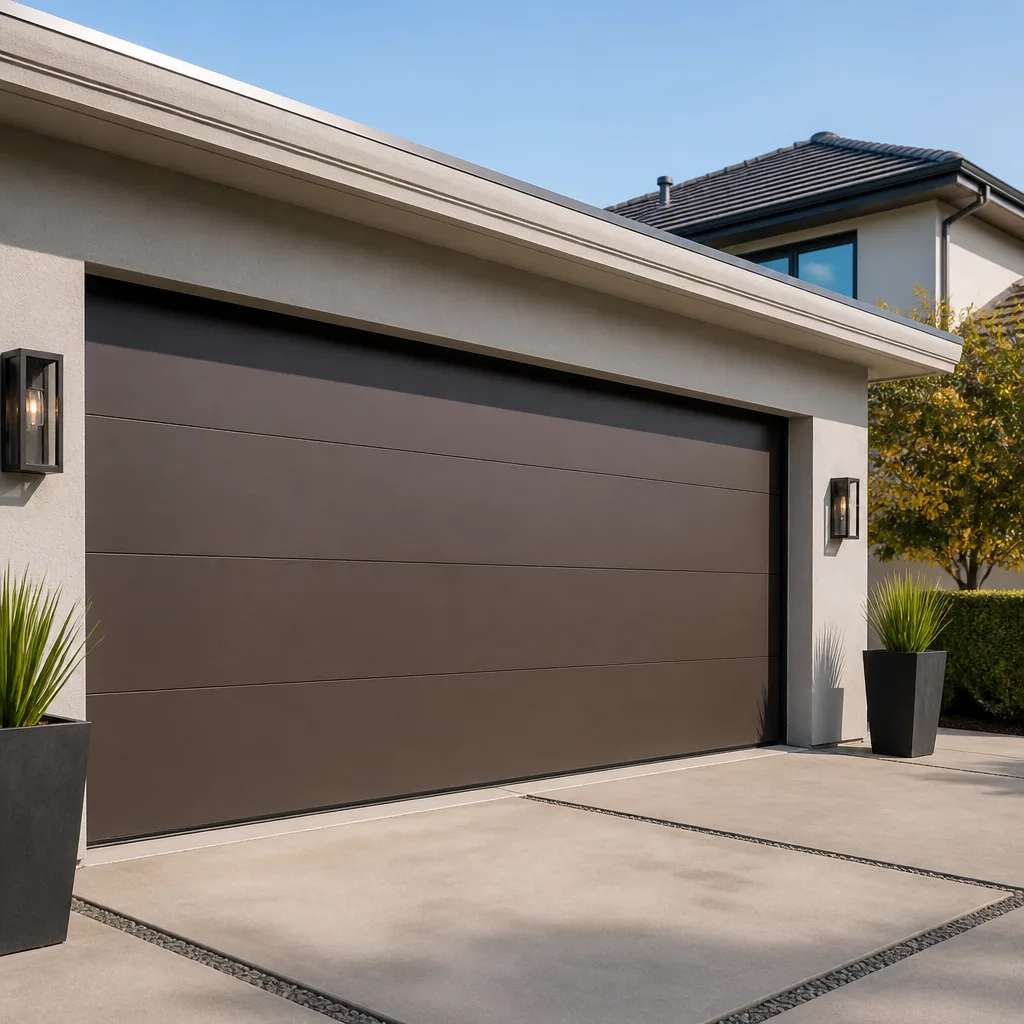 Modern flush
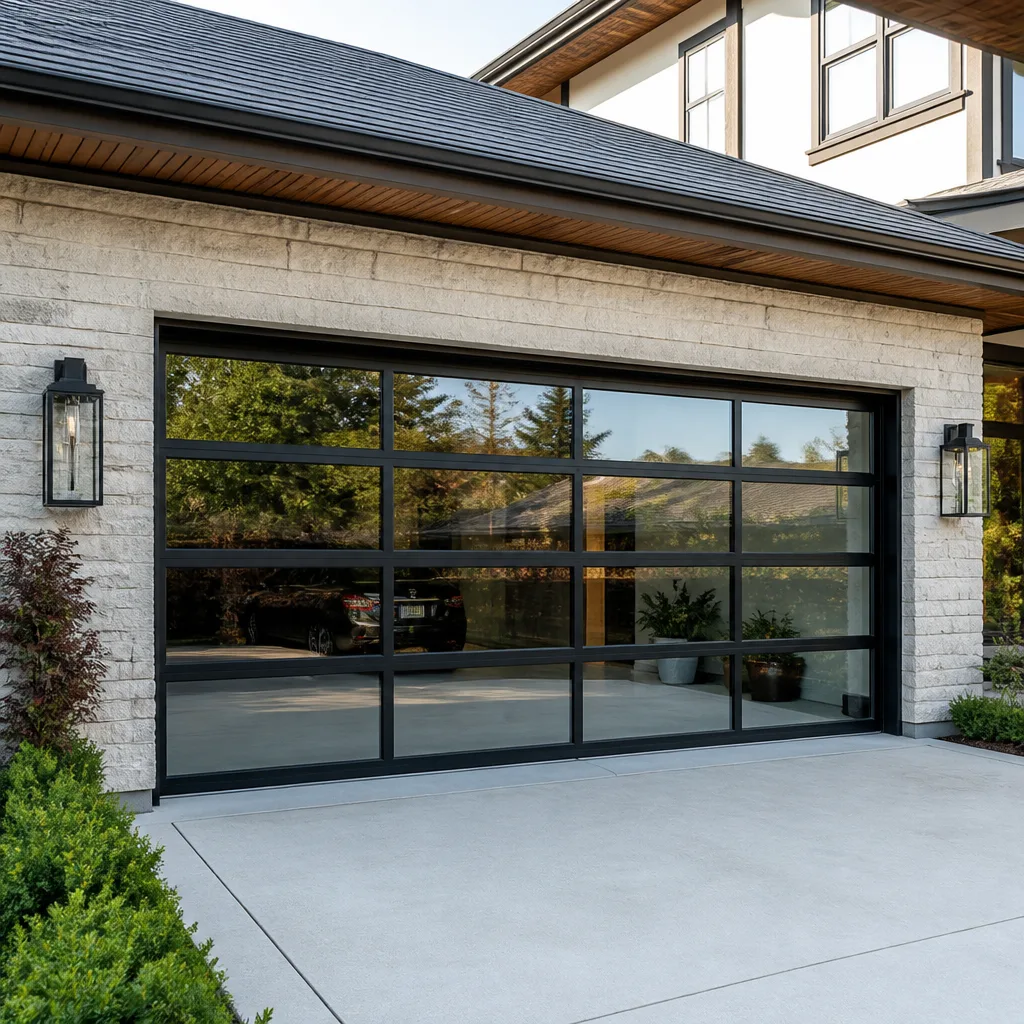 Full-view glass
 LiftMaster openers
 Chamberlain openers
Full 25-point door and opener safety check with every visit - springs, cables, rollers, tracks, and your LiftMaster or Chamberlain opener included
You get a price before we start. It does not change when the truck arrives.
Get your free estimateGarage Door Warning Signs: A Jacksonville Homeowner’s Reference Guide
A grinding noise on a Jacksonville garage door in August usually isn’t what it sounds like. In high humidity, that metal-on-metal screech is often swollen wood or fiberboard blocking a track, a repair that costs about $80 instead of $400. Most garage door warning signs are universal, but Jacksonville homeowners face a specific subset of failure patterns driven by humidity, heat cycling, and storm vibration that look different from what national guides describe. Misreading them leads to the wrong repair, and the wrong repair leads to a second service call. This guide covers what we see in Jacksonville garages every week, organized so you can tell the difference between a safety stop, a mechanical repair, and a cosmetic issue you can live with. For more guides & resources, visit our blog.
Styles & brands we work with
Quick Answer
The most common garage door warning signs in Jacksonville are uneven lifting, loud grinding or squealing during operation, doors that stick or bind in humid months, visible rust on tracks or hardware, and cables that look frayed after storm season. Some of these are urgent safety issues (spring problems, frayed cables, failing roller axles), while others are maintenance items you can monitor. If you notice any change in how your door sounds, moves, or balances, get it checked before a small fix becomes a snapped spring or a door off its track.
Table of Contents
- Why Jacksonville’s Climate Creates Different Warning Signs
- Humidity-Driven Symptoms: Sticking Doors and Swollen Materials
- Storm-Vibration Aftermath: Cable Fraying and Roller Wear
- Heat Cycling and Spring Tension Drift
- Salt-Air Corrosion: What 1, 3, and 5 Years of Neglect Looks Like
- Safety Stop vs. Cosmetic Issue: A Triage Framework
- Common Mistakes to Avoid
- When to Call a Professional
- Frequently Asked Questions
- The Bottom Line
Why Jacksonville’s Climate Creates Different Warning Signs
Jacksonville sits in USDA hardiness zone 9a with a humid subtropical climate that alternates between 50-degree winter nights and 95-degree summer afternoons. That swing is the root cause of most garage door failures we see across Duval County, from Riverside and Ortega to Mandarin and the Beaches. Steel expands and contracts. Wood swells and shrinks. Coil springs lose grams of tension per degree of temperature change. And then there’s the salt air if you live east of the Intracoastal.
National garage door guides assume a stable environment. They describe warning signs as if the door lives in a climate-controlled showroom. Jacksonville doors don’t. A door that runs smoothly in January may bind in July. A cable that looked fine in March may show frayed strands by September after a hurricane season of vibration and barometric swings. Understanding this local reality is the first step toward reading your door correctly.
Here’s what to watch for by season:
- Winter (December through February): Cold snaps cause metal contraction, which can make springs feel stiffer and opener motors work harder. Doors may stop short on the way up.
- Spring (March through May): Pollen and oak debris accumulate on tracks and rollers, creating grinding noises that are typically maintenance issues, not structural ones.
- Summer (June through September): High humidity causes wood and fiberboard panels to swell, which can push doors off-center in their tracks. This is the most common season for “stuck door” calls we see in Jacksonville.
- Fall (October through November): Post-storm vibration damage shows up now. Cables that absorbed hurricane-force vibration begin showing frayed strands weeks after the storm passed.
The point is not to panic at every sound. The point is to know which sounds are seasonal in Jacksonville and which ones mean something is genuinely failing.
Humidity-Driven Symptoms: Sticking Doors and Swollen Materials
The most misdiagnosed warning sign in Jacksonville is a door that “sticks” during summer months. Homeowners often assume the opener is dying or the springs are shot. In our experience across neighborhoods like San Marco and Springfield, the culprit is frequently the door itself, not the mechanics. Wood doors and even some composite and fiberboard doors absorb moisture from Jacksonville’s 70-90% summer humidity. Panels swell. Edges push against the track. The opener strains to move the door, which creates noise and uneven travel.
Here’s how to tell the difference between moisture swelling and a genuine mechanical problem:
- Test the door by hand. Pull the emergency release cord (usually a red handle hanging from the opener rail) and try lifting the door manually. If it moves smoothly by hand, the problem may be opener settings or sensor alignment. If it binds at a specific point, you have a track or panel issue.
- Look at the gap between the door and the track. A consistent gap on both sides is normal. A door that sits visibly closer to one track at the middle panel is likely swollen or misaligned.
- Check when the problem started. If the sticking began after a week of heavy rain or in July, moisture is a strong suspect. If it started suddenly in dry weather, look at rollers, cables, or springs.
The fix for moisture-swollen doors in Jacksonville is usually straightforward: adjust the track, sand or trim the swollen edge slightly, or in persistent cases, replace the door with a material better suited to the climate. Our Seasonal Garage Door Care for Jacksonville: Year-Round Homeowner’s Guide covers additional maintenance steps. Amarr and Clopay both make doors designed for coastal humidity zones. If you have an older wooden door in a neighborhood like Avondale where original architecture matters, we typically recommend keeping the door and modifying the track rather than replacing a historic fixture.
The key insight: a door that sticks in August but runs fine in January is not a spring problem. Saving yourself a spring replacement bill by understanding seasonal swelling is one of the easiest wins for a Jacksonville homeowner.
Storm-Vibration Aftermath: Cable Fraying and Roller Wear
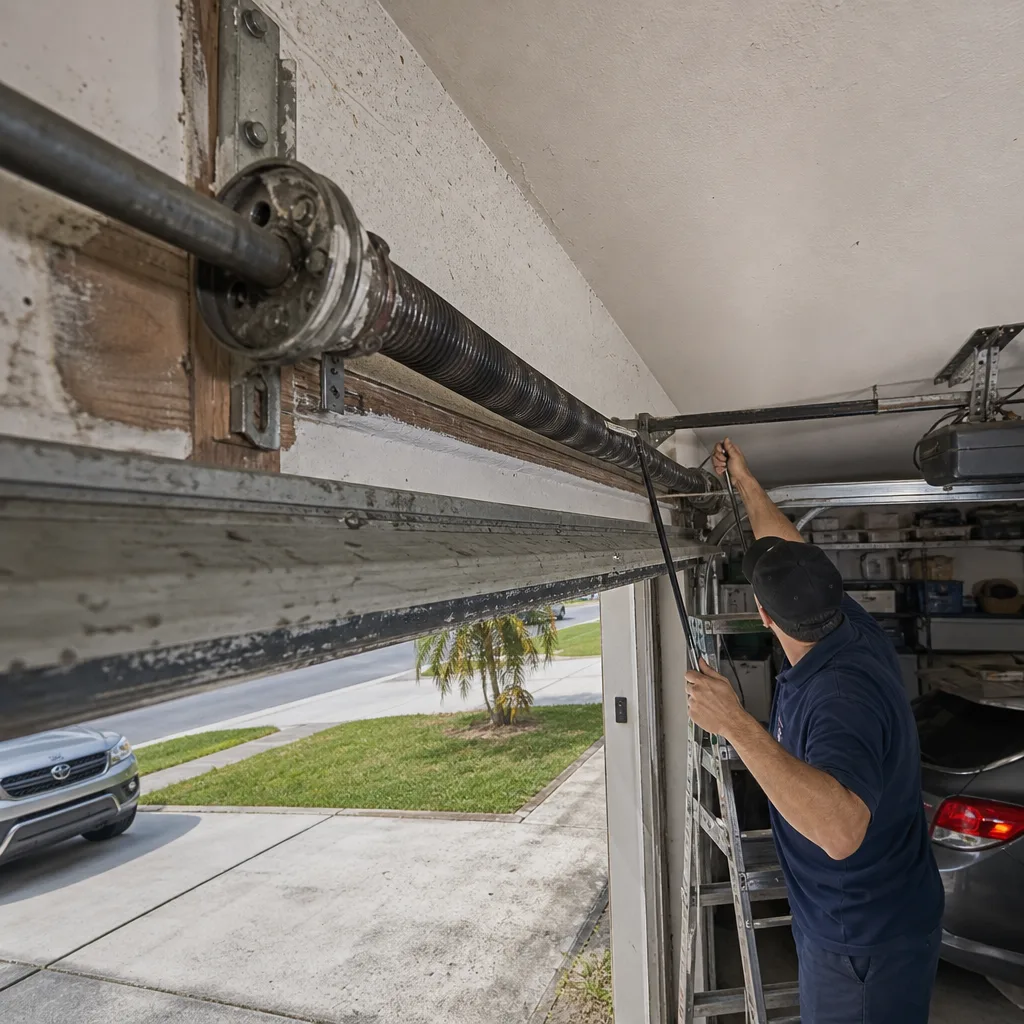
Jacksonville’s hurricane season runs from June through November, and even storms that never make landfall send sustained vibration through garage door assemblies. The door acts like a sail. Wind pressure pushes and pulls at the panels, which transfers force through the hinges, into the rollers, and down the lift cables. The damage doesn’t always show up immediately. It often appears two to six weeks after a major storm, when a cable strand finally gives way or a roller bearing fails.
Here’s what to look for after any significant storm in Jacksonville:
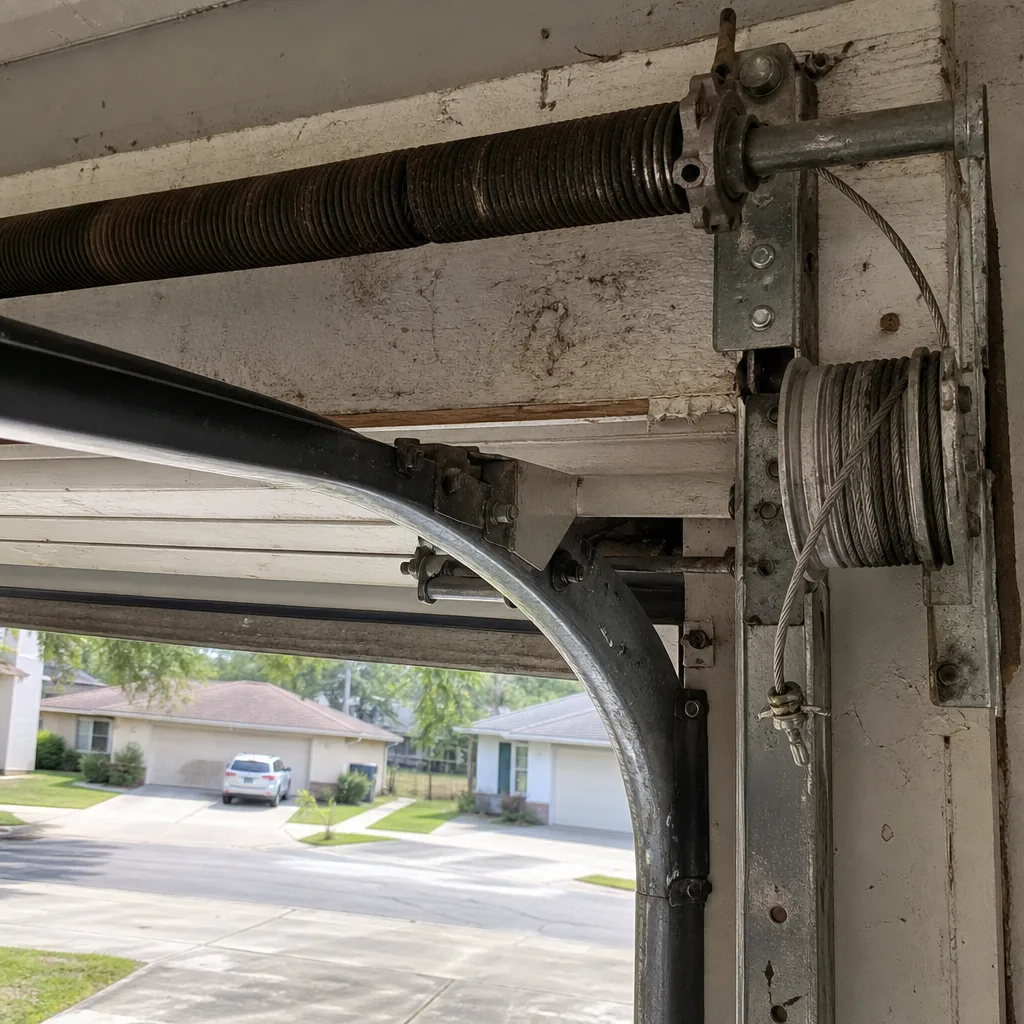
- Frayed lift cables: Look at the cables running alongside the tracks. Individual steel strands may be separating from the main cable. This is a safety issue because a snapping cable can send a door out of control.
- Loose or wobbly rollers: Rollers should spin smoothly and sit firmly in the track. Storm vibration can loosen axles or damage nylon roller wheels, creating a chattering sound during operation.
- Shifted track alignment: Sustained wind pressure can nudge tracks out of true by as little as a quarter inch, which creates binding and uneven wear.
- Hinge pin movement: The metal pins that connect panels can work loose under vibration. Loose hinges cause squeaking and, eventually, panel misalignment.
We saw a clear example of this in Neptune Beach after a late-season tropical storm. A homeowner called us because their door made a rhythmic thumping sound. The cable had not broken, but three strands had separated and were catching on the drum as the door cycled. Replacing the cable cost a fraction of what a snapped cable repair would have cost, because they caught it early.
The lesson: after any storm where you felt the house shake, do a visual inspection of your garage door hardware. If you see cable separation or loose rollers, schedule service in the next few weeks. Waiting until the cable snaps turns a $150 repair into a $400+ emergency call and risks damage to the door and whatever is parked under it.
Heat Cycling and Spring Tension Drift
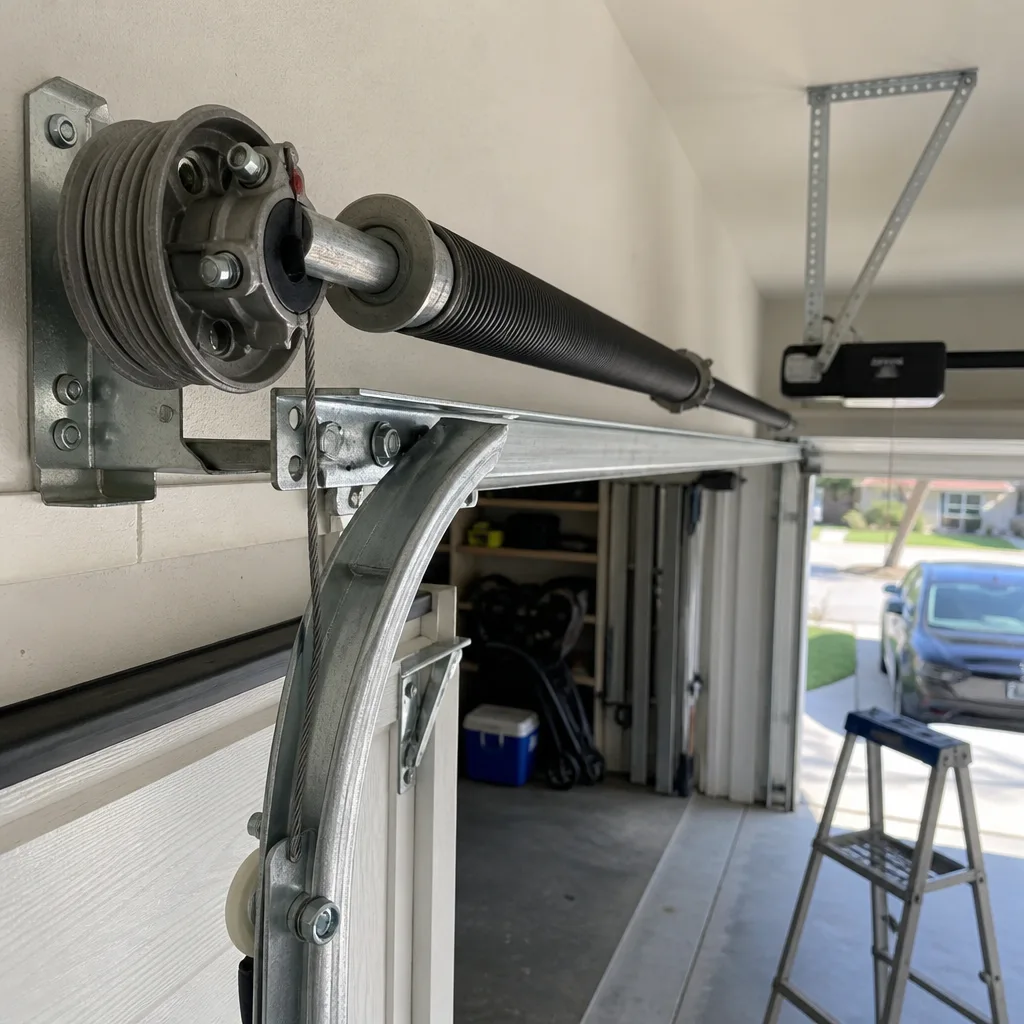
Garage door springs are calibrated to a specific tension. In Jacksonville, that calibration is under constant assault. A torsion spring on a typical two-car garage door holds between 180 and 250 pounds of tension. Every 10-degree temperature swing changes the spring’s working characteristics slightly. Over a year of Jacksonville’s 50-degree winter nights to 95-degree summer days, that’s thousands of micro-adjustments. Springs begin to settle. The result is what we call tension drift: the door no longer lifts evenly or balances correctly.
Here’s what uneven lifting looks like in a Jacksonville garage:
- Door opens slowly or stops partway: The opener is working harder than the spring, which means the spring tension has decreased.
- Door slams down or closes too quickly: The spring is no longer controlling the descent, which is a sign the spring has weakened significantly.
- One side of the door sits higher than the other: On a two-spring system, one spring may have drifted more than the other.
- Door creeps up when you disconnect the opener: This means the spring is over-tensioned relative to the door’s weight.
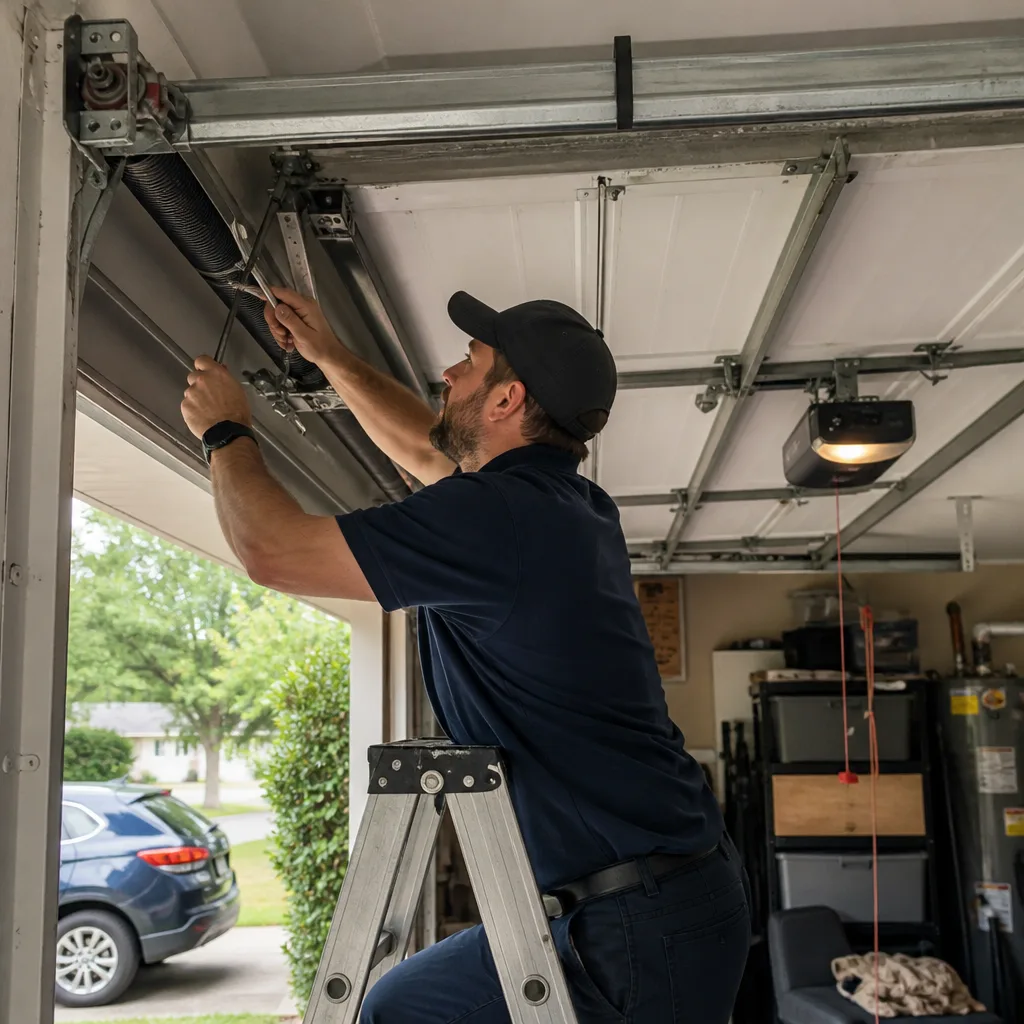
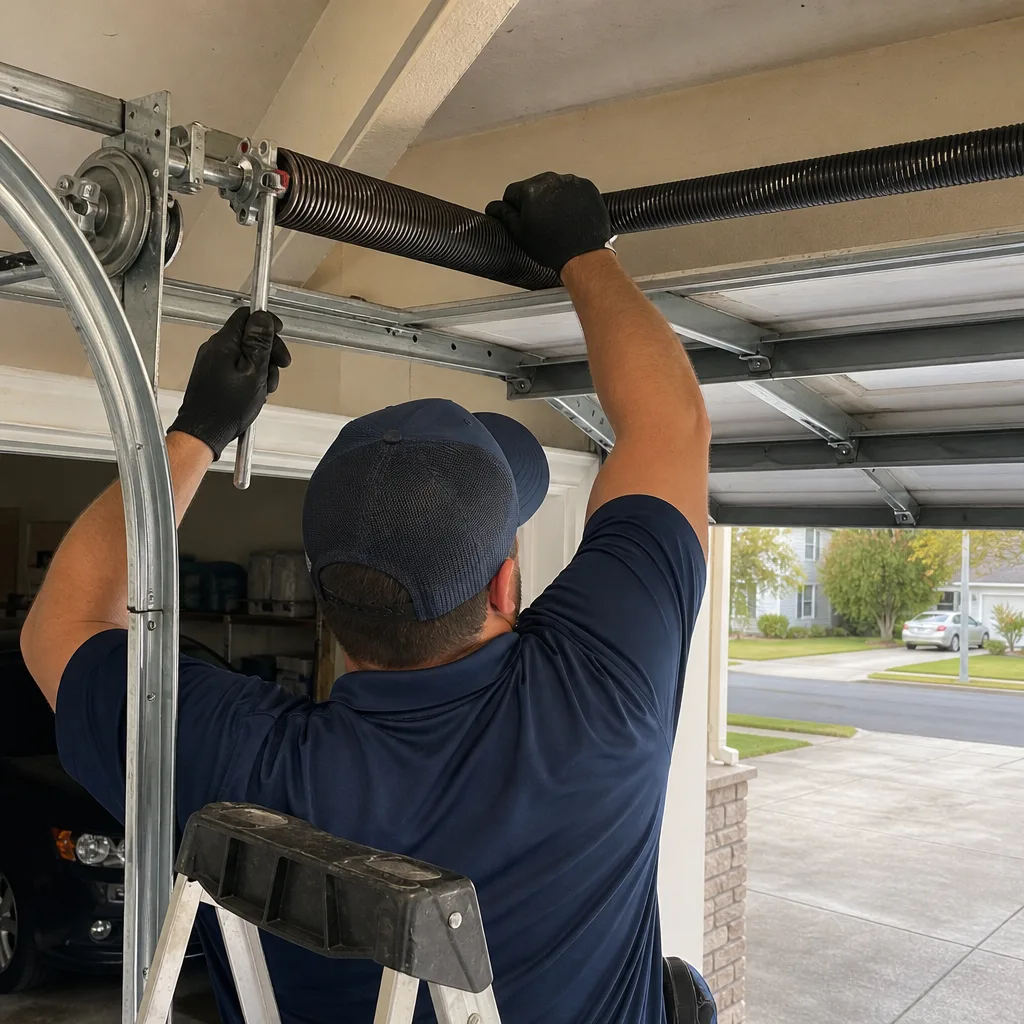
Spring tension drift is not something homeowners should try to correct themselves. Torsion springs are under enough force to cause serious injury or death if mishandled. A Geneva or Clopay torsion spring can release that force in an instant if the winding cone slips. This is one area where a trained professional is the only safe option.
What homeowners can do is recognize the pattern. If your door has been running fine for years and suddenly starts moving unevenly with no visible damage, think about spring tension before you replace the opener. A spring replacement, not an opener replacement, is often the correct repair. Getting that diagnosis right can save you $300 or more.
Salt-Air Corrosion: What 1, 3, and 5 Years of Neglect Looks Like
If you live east of the Intracoastal in Jacksonville Beach, Atlantic Beach, or Ponte Vedra, your garage door hardware ages differently than a door in Mandarin or Orange Park. Salt air accelerates corrosion on every exposed metal component: springs, cables, hinges, brackets, and track hardware. The progression is predictable. We’ve seen enough coastal Jacksonville doors to map it out.
Year 1: Surface oxidation
Springs develop a light orange-brown patina. Hinges show slight discoloration at the pivot points. Rollers still function smoothly. This is cosmetic and expected. A light coating of lubricant on moving parts twice a year can slow it down.
Year 3: Functional wear begins
Surface rust on springs has deepened, and you may notice small flakes of oxidized metal when the door runs. Hinge pins begin to stiffen. Cables may show dark discoloration. This is the point where maintenance can extend the life of the hardware, but you should have a professional inspection to catch any components that are failing prematurely.
Year 5: Component failure risk
Springs may show deep pitting or reduced tension. Cable strands show visible corrosion and may be losing strength. Hinges are stiff enough that the door no longer travels smoothly. At this stage, replacement of hardware components is usually more cost-effective than continued repair.
The salt-air timeline matters because it changes the repair-vs-replace calculation. A five-year-old door in Avondale may only need a spring replacement. A five-year-old door in Atlantic Beach may need springs, cables, hinges, and possibly new rollers. Understanding where your home sits on that corrosion timeline helps you plan for the right scope of work.
One specific tip for coastal Jacksonville homes: look at the bottom brackets where the cables attach. These brackets sit close to the ground and collect salt spray kicked up from driveways and roads. Bracket failure at the bottom of the door is one of the most common salt-air casualties we see on beachside homes. When those brackets go, the cable can release, and the door can fall.
Safety Stop vs. Cosmetic Issue: A Triage Framework
Not every warning sign needs a service call. Some need immediate attention. Some can wait. Knowing the difference saves you money and protects your household. Here’s the triage framework we use with Jacksonville homeowners.
Immediate safety stop (do not operate the door):
- Frayed or separated lift cables – a snapping cable can cause a freefalling door.
- Visible spring separation or a broken spring – never try to lift a door with a broken spring by hand.
- Door off its track or hanging crooked – the door can fall if you attempt to move it.
- Bottom bracket pulling away from the door – this is the attachment point for the cable system.
Schedule service within days:
- Uneven lifting or closing – likely spring tension drift or a failing opener.
- Persistent loud grinding or squealing – rollers, hinges, or track misalignment.
- Door reverses unexpectedly during operation – photo eye alignment or force setting issues.
- Visible track rust with flaking – especially on coastal homes.
Monitor and address at your convenience:
- Surface rust without flaking – cosmetic on hardware that’s still functioning.
- Peeling paint on door panels – an appearance issue unless wood is exposed underneath.
- Minor squeaking on a Chamberlain or Genie opener rail – usually resolved with proper lubrication.
- Seasonal sticking that resolves in dry weather – humidity swelling, not a mechanical failure.
This framework prevents both over-reacting and under-reacting. If you treat surface rust like a structural failure, you spend money you didn’t need to spend. If you ignore a frayed cable because it “still works,” you risk a door falling on a car or a person. The safe path is knowing which category the warning sign falls into.
Common Mistakes to Avoid
- Ignoring a door that runs differently after a storm. Jacksonville homeowners often dismiss post-storm noises as normal settling. Storm vibration causes real mechanical wear that shows up weeks later, and catching it early means a cable replacement instead of a door repair.
- Replacing the opener when the spring is the problem. If your door slows down or stops partway, the spring may have lost tension. Replacing the opener doesn’t fix the underlying balance problem, and you’ll be out the cost of both repairs.
- Oiling a swollen door. If summer humidity is causing your wood door to swell and bind, lubricant won’t help. The fix is track adjustment or panel modification, not more grease on an already-swollen surface.
- Assuming coastal rust is always terminal. Surface rust on springs and hinges is normal for Jacksonville beach homes. A professional assessment can tell you whether the hardware has structural life left or needs replacement.
- Attempting DIY spring repair. Torsion springs hold enough energy to cause serious injury. Even with the right tools, the risk isn’t worth the savings. A trained technician with the proper winding bars and experience is the only safe choice.
- Waiting until the door won’t open to address warning signs. Most failures give you weeks or months of warning. Acting on the early signs keeps the repair small and planned instead of large and urgent.
- Ignoring opener-specific symptoms. A door that reverses for no reason or remote that works intermittently is often an opener logic board or sensor issue, not a door problem. Diagnosing the opener separately from the door saves you from replacing the wrong component.
When to Call a Professional
Call a professional if you notice any of the immediate safety stops: frayed cables, broken or visibly separated springs, a door hanging off-track, or bottom brackets pulling away. Call within days if your door lifts unevenly, makes persistent grinding noises, reverses unexpectedly, or shows flaking rust on structural hardware. For homeowners who aren’t sure which category their symptom falls into, a trained eye is the fastest way to get an accurate answer. Heritage Garage Door Service offers free estimates in Jacksonville – call (833) 711-2679 and one of our technicians will assess the door, the opener, and the installation as one complete system.
Frequently Asked Questions
Summer humidity causes wood and some composite door panels to swell, and the swollen edge binds against the track. This is different from a mechanical failure, and the fix is usually a track adjustment or minor panel modification, not a spring or opener replacement. Call (833) 711-2679 for a free assessment if your door is binding.
The primary signs are uneven lifting, a door that stops partway, a door that slams shut, or visible separation in the spring coil. In Jacksonville, heat cycling causes gradual tension drift, so these symptoms often develop slowly over months. If you notice any change in how the door balances, have it checked before the spring fails completely.
Inspect the lift cables for frayed strands, check rollers for looseness or chattering, look for shifted track alignment, and test the door’s balance by hand. Storm vibration causes damage that appears days or weeks after the event. Free inspections in Jacksonville are available by calling (833) 711-2679.
Surface rust on springs and hinges is normal for homes in Atlantic Beach, Jacksonville Beach, and Ponte Vedra. Flaking rust or visible pitting is more concerning and can indicate structural weakness. The timeline varies, but coastal hardware typically needs close monitoring starting around year three.
Minor repairs like track adjustments or roller replacements typically run $120 to $250. Spring replacement, depending on the door weight and spring type, is usually $250 to $450. Cable replacement falls between $150 and $300. These ranges vary by door type and brand, and Heritage Garage Door Service quotes every job before any work begins. For help selecting equipment, see our Choosing the Right Garage Door Brand: A Buyer’s Guide for Jacksonville.
If the noise is a light squeak and you can safely reach the moving parts, applying proper garage door lubricant can help. Do not attempt to adjust or replace torsion springs, cables, or bottom brackets yourself. These components are under extreme tension and can cause serious injury. A professional assessment is the safe choice for anything beyond basic lubrication.
If you’re noticing any of the warning signs in this guide and want a professional assessment from a multi-brand specialist who works on Heritage Garage Door Service home standards, our team at Heritage Garage Door Service is trained on Clopay, Amarr, Wayne Dalton, Raynor, LiftMaster, Chamberlain, Genie, and Craftsman systems. We offer Garage Door Repair in Jacksonville for doors with any of these symptoms, Garage Door Opener Repair in Jacksonville for opener-specific issues like reversing doors or intermittent remotes, and Garage Door Installation in Jacksonville when replacement makes more sense than repair. Call (833) 711-2679 for your free estimate.
The Bottom Line
Garage door warning signs in Jacksonville follow patterns influenced by humidity, heat cycling, storm vibration, and for beachside homes, salt air. The same noise that means a $400 repair in a national guide might be an $80 track adjustment here. The key is matching the symptom to the actual cause, which requires understanding how Jacksonville’s specific climate stresses door systems. When you notice a change in sound, movement, or balance, act on it early. Most failures give ample warning, and the difference between a planned repair and an emergency call is the difference between a cable replacement and a door off its track. Trust your observations and call a specialist when something doesn’t feel right.
Written by the team at Heritage Garage Door Service, serving Jacksonville since 2018.
See the difference
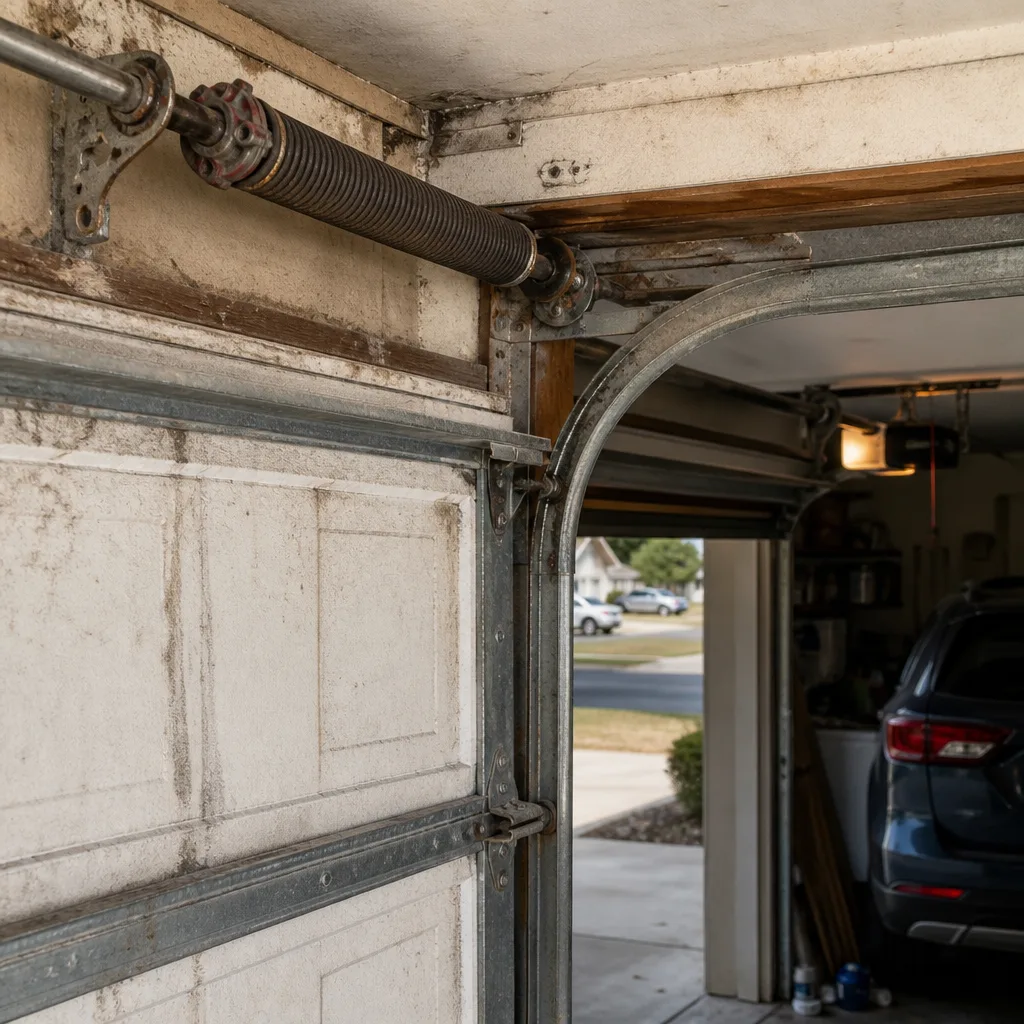 Before
 After
 Before
 After
 Before
 After