
Last updated October 30, 2026
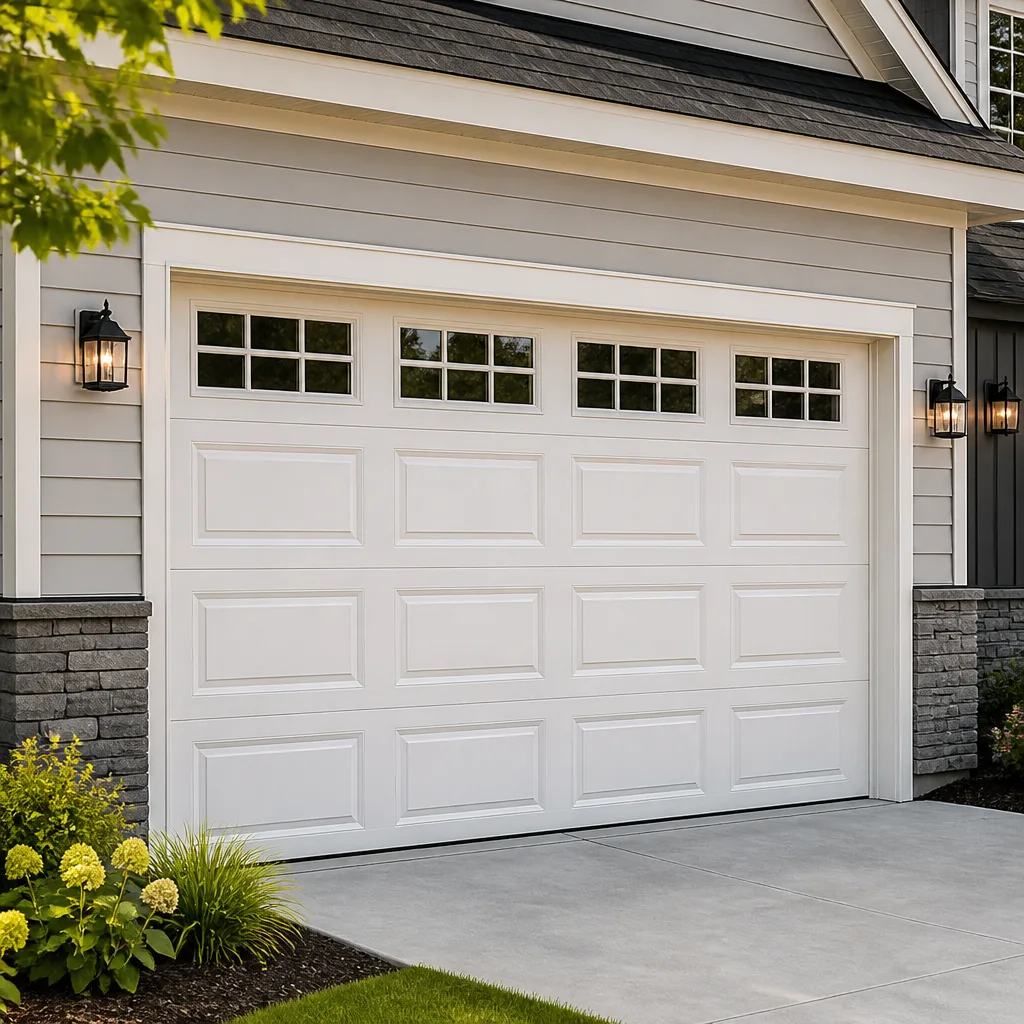 Raised-panel steel
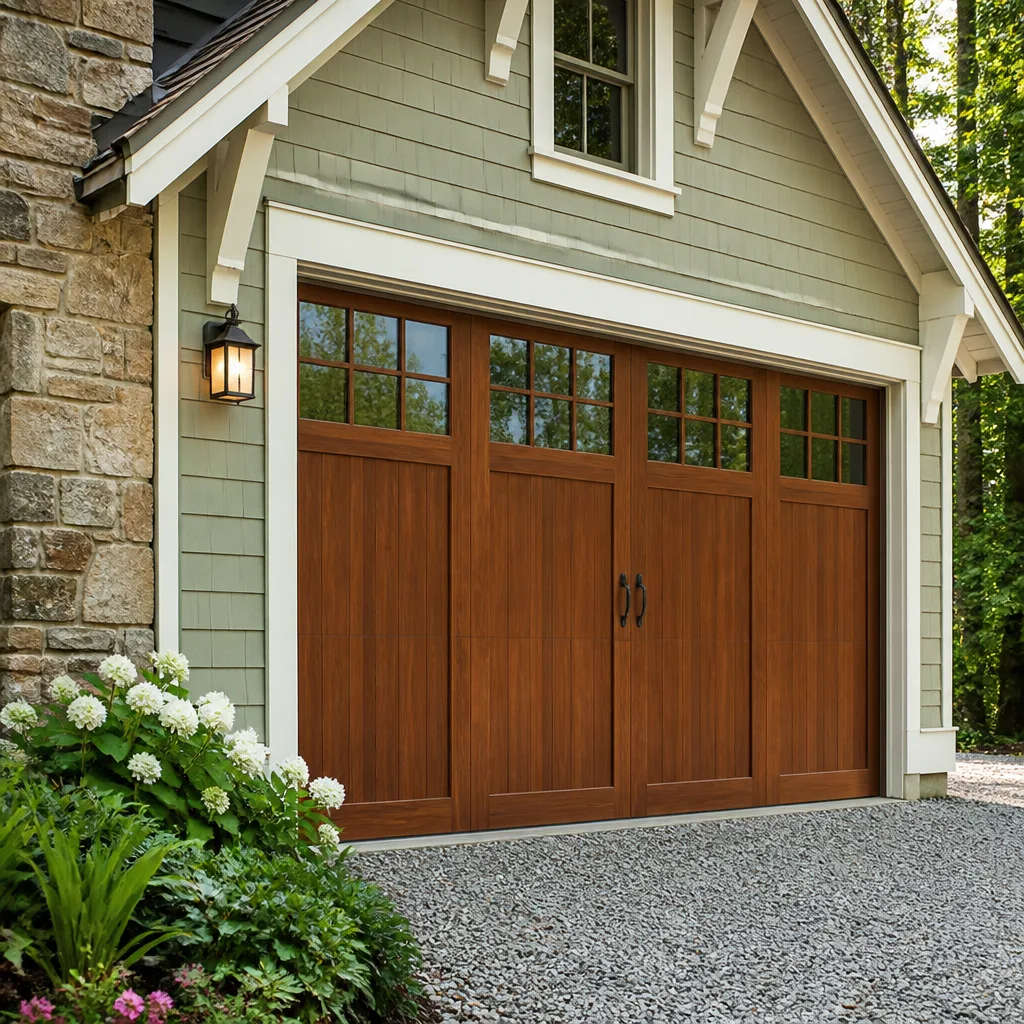 Carriage house
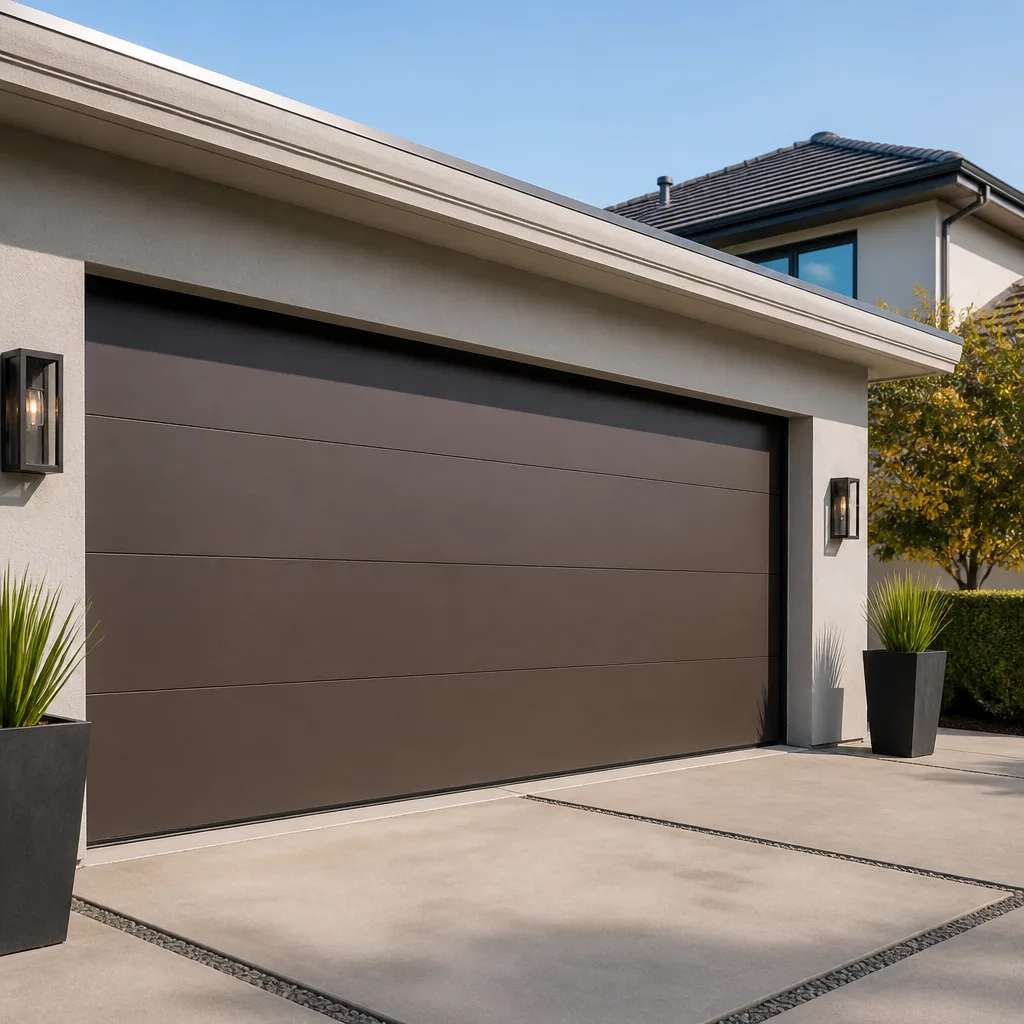 Modern flush
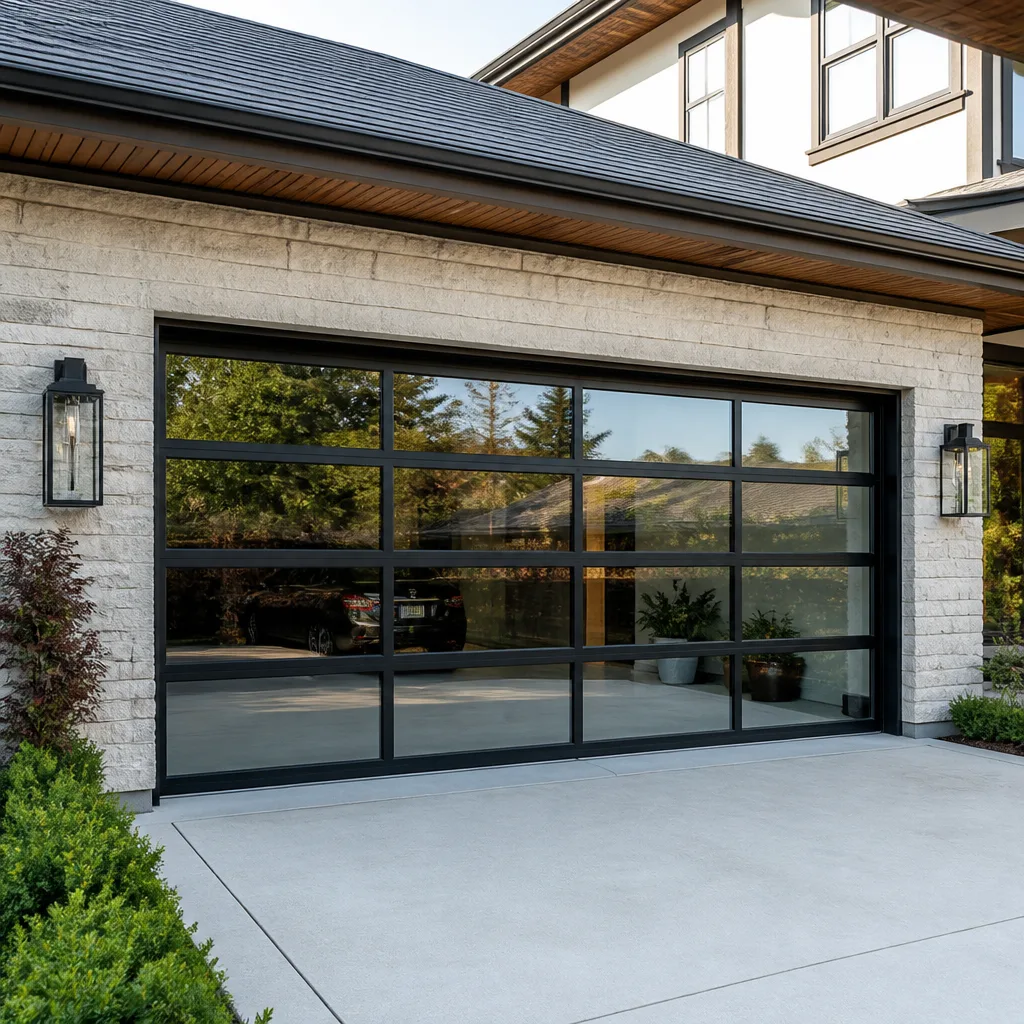 Full-view glass
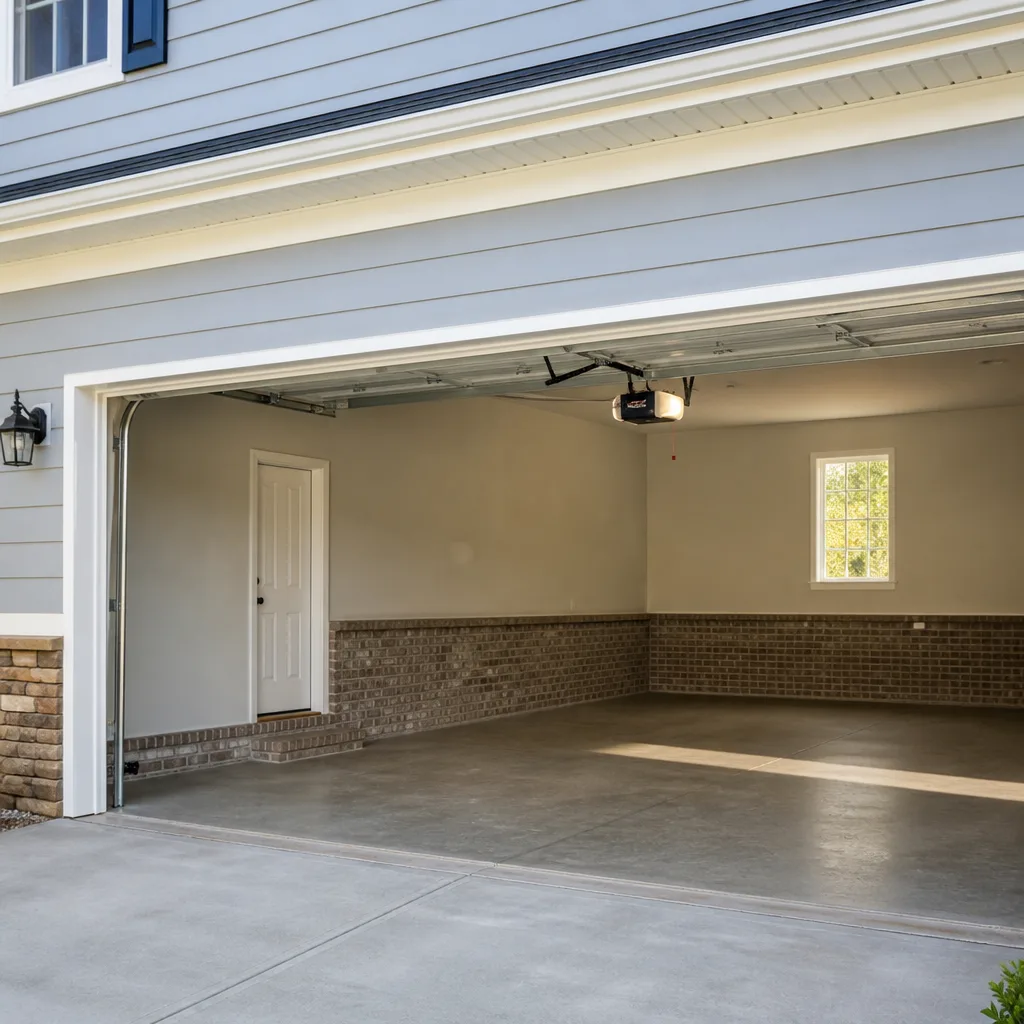 LiftMaster openers
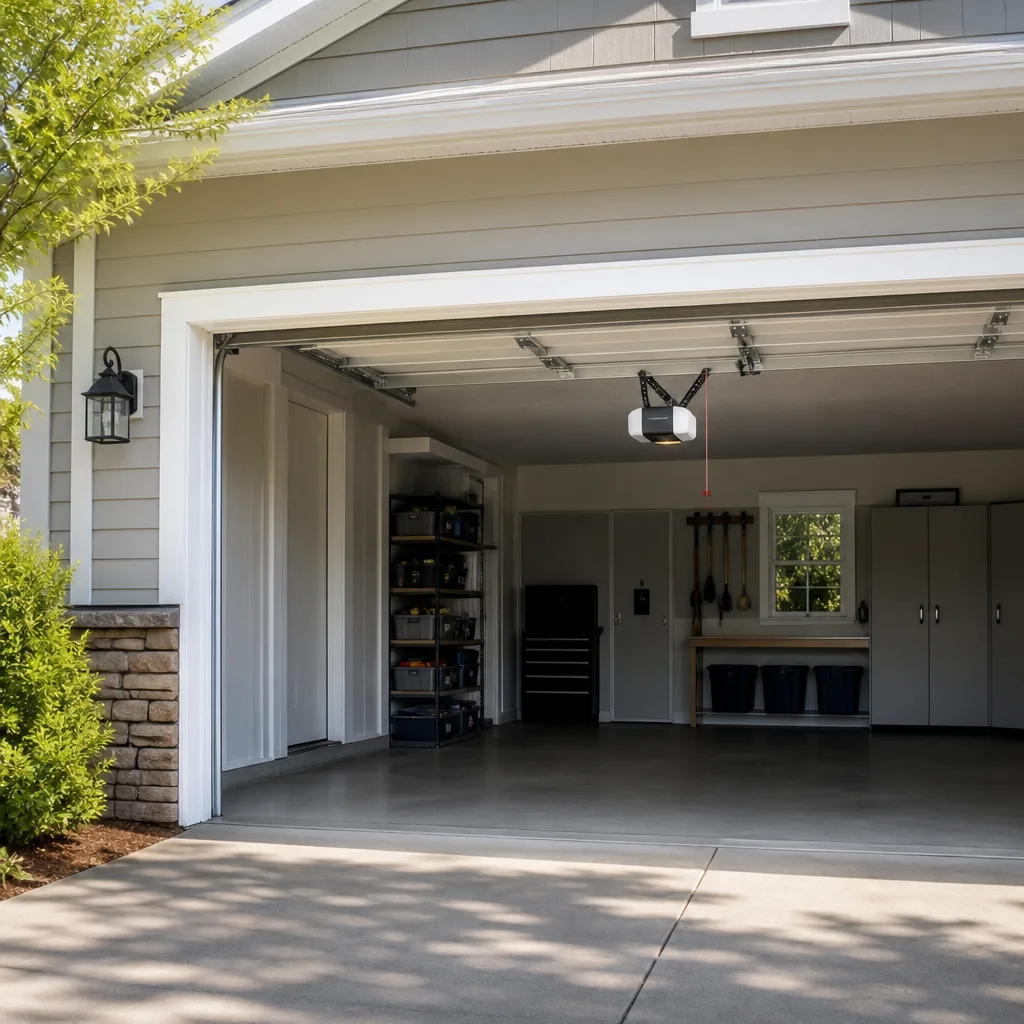 Chamberlain openers
Full 25-point door and opener safety check with every visit - springs, cables, rollers, tracks, and your LiftMaster or Chamberlain opener included
You get a price before we start. It does not change when the truck arrives.
Get your free estimateGarage Door Repair Troubleshooting: Common Problems and How to Fix Them
A garage door that keeps breaking the same component isn’t unlucky – it’s telling you something else in the system is out of balance, and replacing parts without reading that signal is exactly how a $150 repair turns into a $900 recurring problem. Homeowners across Jacksonville learn this the hard way every summer, when humidity swells wooden frames and salt air accelerates wear on hardware that inland homes never think twice about. This guide teaches you how to trace a symptom back to its actual mechanical source, so you stop paying for the same fix twice. For a deeper look at what to watch for, see our Garage Door Warning Signs: A Jacksonville Homeowner’s Reference Guide. We’ll walk through the diagnostic framework our technicians use on service calls every week, from the beaches to Mandarin to the Northside.
Styles & brands we work with
Quick Answer
Garage door repair troubleshooting starts with the manual balance test: disconnect the opener, lift the door halfway, and see whether it holds position. A door that drops is spring-related, a door that binds is track-related, and a door that opens fine manually but not with the opener is logic-board or sensor-related. Most repairs fall into one of those three buckets, and identifying the right one before buying parts saves hundreds of dollars.
Table of Contents
- Symptom-to-Source: A Diagnostic Framework That Actually Works
- The Manual Balance Test: What Your Door Tells You for Free
- The Cascade Failure Pattern: How Small Problems Become Big Ones
- Opener Logic Board vs. Safety Sensor vs. Mechanical Bind
- What’s Safe to Fix Yourself (and What Truly Isn’t)
- Brand-Specific Notes: Wayne Dalton, Craftsman, Raynor, and LiftMaster
- Jacksonville Climate and Garage Door Wear: What We See Most
- Common Mistakes to Avoid
- When to Call a Professional
- Frequently Asked Questions
- The Bottom Line
Symptom-to-Source: A Diagnostic Framework That Actually Works
Most troubleshooting guides start with a list of symptoms and jump straight to the part that’s “probably” bad. That’s backwards. A grinding noise isn’t a roller problem until you’ve confirmed the track is aligned and the spring tension is in range. It’s a symptom of something upstream, and treating the symptom without finding the source is how homeowners end up with a garage full of spare parts and a door that still doesn’t run right.
The framework we use on every service call in Jacksonville works like this: observe the exact behavior, isolate the subsystem (door panels, springs, tracks, opener, or electronics), then test the cheapest-to-check component first. Here’s the mapping we teach our technicians:
- Grinding or scraping: Usually a misaligned track, a bent roller stem, or a spring that’s lost tension and is letting the door ride against the track edge. Check track alignment and roller condition before touching the spring.
- Slow opening or closing: The opener motor is working harder than it should. That means either spring tension is wrong (overworking the motor), track lubrication is shot, or the opener’s force settings are miscalibrated.
- One side sagging: A classic sign of uneven cable tension or a broken spring on one side only. A door that hangs lower on the left side usually has a left-side cable or spring issue, not a “door problem.”
- Door reverses before hitting the floor: On modern openers, this is typically the safety sensor or the force-setting being too sensitive. On older models, it’s often physical binding in the track.
- Loud snap followed by the door not moving: That’s a spring failure, and it’s the one symptom that’s genuinely urgent. A door with a snapped spring can fall hard if you try to lift it manually.
The point of this framework is simple: don’t guess, test. A homeowner in Ortega who hears grinding and immediately replaces rollers is going to be back in the same spot in six months if the track is the actual culprit. The Heritage Garage Door Service home team starts every diagnostic with a full-system walkthrough, not a part swap.
The Manual Balance Test: What Your Door Tells You for Free
This is the single most valuable diagnostic move any homeowner can do, and it costs nothing. The balance test tells you whether your springs are doing their job, which narrows down about seventy percent of all garage door issues before you spend a dollar.
Here’s the step-by-step:
- Close the door completely.
- Pull the emergency release cord (the red handle hanging from the opener rail) to disconnect the door from the opener carriage.
- Lift the door manually to about waist height – roughly halfway open – and let go.
- Watch what happens.
If the door stays put: Your springs are holding correct tension. The door is balanced, and any issues you’re having are downstream – the opener, the sensors, or the track.
If the door drops: The springs are weak or broken. They’re no longer counterbalancing the door’s weight, which means the opener motor is doing all the lifting. That’s how opener motors burn out in two years instead of fifteen.
If the door rises on its own: The springs are over-tensioned. This is less common but equally destructive – the door will slam up, wear out cables, and the spring will fatigue faster under excess tension.
If the door feels heavier than it should but still stays put: Springs are starting to lose tension. You’re in the warning window where a full failure is weeks or months away.
In our experience across Jacksonville, about half of the “opener problems” we’re called out for turn out to be spring issues that the balance test would have caught immediately. A homeowner in Riverside called us for a “dead opener” last year. The balance test showed the door dropped like a stone. The opener was fine – it had just been working against a failing spring for so long that it had tripped its internal overload. One spring replacement later, the “dead opener” worked perfectly.
The Cascade Failure Pattern: How Small Problems Become Big Ones
Garage doors rarely fail all at once. They fail in sequence, with each small issue adding load to the next component in line, until something expensive gives out. Understanding this cascade is the difference between a $40 fix today and a $400 fix next spring.
Here’s the pattern we see repeated constantly in Jacksonville garages:
- A roller begins to stick or wear unevenly. Maybe it’s a cheap plastic roller from the original install, or a bearing that’s gone dry from years of humidity cycling.
- The sticking roller creates drag. The door now moves unevenly through the track, putting lateral pressure on sections that should travel straight.
- The uneven movement misaligns the track. One side of the track gets pulled a fraction of an inch out of true. Now the door is fighting itself on every cycle.
- The opener compensates. Modern openers have force-adjustment settings. The motor starts working harder to overcome the drag, which the homeowner doesn’t notice because the door still opens.
- The springs bear extra load. Torsion springs are rated for a specific cycle life under normal conditions. When the door develops extra resistance, the springs cycle through their rated lifespan faster than they should.
- The spring snaps. Now the door is dead weight. The homeowner calls for emergency service, and the repair bill includes the spring, the rollers that should have been replaced nine months ago, the track realignment, and possibly an opener motor that’s been overworked for months.
The cascade failure pattern is why we tell Jacksonville homeowners to treat a noisy door as an early warning, not background noise. A roller replacement is cheap. A roller replacement plus a spring replacement plus a track realignment is not.
The lesson: when you hear a change in how your door sounds or moves, investigate the source. The longer you wait, the more components get pulled into the failure. This is also why Garage Door Repair in Jacksonville calls from our team start with a full inspection of every component in the system, not just the one that broke.
Opener Logic Board vs. Safety Sensor vs. Mechanical Bind
Three problems, nearly identical symptoms. A door that starts closing, stops, and reverses could be any one of them. Telling them apart takes five minutes and zero tools.
The safety sensor test: Look at the two small units mounted near the floor on either side of the door opening. Each has an LED. If one LED is solid and the other is blinking, the sensors are out of alignment or the wiring to one is loose. Wave your hand in front of the beam. If the light on the receiving sensor doesn’t respond, you’ve found your culprit. Clean the lenses with a dry cloth first – Jacksonville pollen and spider webs cause more “sensor failures” than actual electronic faults.
The mechanical bind test: Disconnect the opener (pull the red cord) and run the door up and down by hand. If you feel resistance at a specific point in the travel – or if the door suddenly sticks, then frees up with a jolt – you have a mechanical bind in the track or rollers. The opener isn’t malfunctioning; it’s doing its job by reversing when it senses unexpected resistance.
The logic board test: If the sensors check out and the door travels smoothly by hand, but the opener still reverses erratically or won’t respond to commands, the logic board is suspect. Boards fail in three ways: solder joints crack from vibration, capacitors dry out from heat, or relay contacts wear out from years of switching. None of these are DIY repairs.
On a LiftMaster or Craftsman unit, a logic board that’s failing will often cause intermittent operation – the door works fine for a week, then refuses to open for an hour, then goes back to normal. That’s not a ghost. That’s a board on its way out. We replace boards on all major brands, and diagnosing them correctly before recommending replacement is part of the full-system approach we bring to Garage Door Opener Repair in Jacksonville.
What’s Safe to Fix Yourself (and What Truly Isn’t)
There’s a line in garage door repair that separates “nuisance fix” from “hospital visit.” We’re going to be direct about where that line sits, because we’ve seen enough close calls in Jacksonville garages to know that enthusiasm without information is dangerous.
Safe for a homeowner with basic tools:
- Cleaning and lubricating tracks with silicone spray or white lithium grease. Use sparingly; lubricate rollers and hinges, not the track itself.
- Tightening loose bolts and nuts on hinges, brackets, and track mounts. Use a socket set, not pliers.
- Replacing a wall button or remote battery. If the opener’s wall console is cracked or unresponsive, a replacement is plug-and-play on most LiftMaster and Craftsman models.
- Aligning safety sensors. Loosen the wing nut, adjust the housing until both LEDs are solid, tighten. Five minutes.
- Clearing debris from the track. Leaves, dirt, and small rocks cause more jerky door movement than any mechanical fault.
Not safe. Do not attempt. Call someone who does this professionally:
- Torsion spring repair or replacement. These springs are under hundreds of pounds of stored tension. A winding bar that slips can break bones, destroy the door, or worse. This is the number-one cause of serious garage door injuries every year.
- Cable repair or re-spooling. Cables work in tandem with springs. If a cable has snapped or come off the drum, the torsion system is not in a safe state to work on without training.
- Track realignment that requires bending or resetting the track. A track that’s visibly out of true needs to be re-hung, not muscled back into place.
- Anything involving the bottom bracket. The bottom bracket connects the cable to the door. It carries the same spring tension as the torsion assembly. Removing it without winding down the spring first is how serious hand injuries happen.
If you’re unsure which side of the line a task falls on, call and ask. We’ll tell you honestly whether something is worth your time or worth a professional visit. That kind of straight answer is how the Heritage Garage Door Service home approach works – we’d rather help you avoid a mistake than charge you to fix one.
Brand-Specific Notes: Wayne Dalton, Craftsman, Raynor, and LiftMaster
Not all garage doors are built the same, and not all brands fail the same way. Working across eight major manufacturers – including Wayne Dalton, Craftsman, Raynor, and LiftMaster – means we see the distinct failure patterns each brand is known for.
Wayne Dalton doors use a torquemaster spring system on many residential models, which is housed inside a tube rather than exposed on a shaft above the door. The telltale sign of a failing torquemaster is a rattling sound from inside the tube when the door moves. If you have a Wayne Dalton door and hear rattling, the spring is on borrowed time. These springs are also harder to visually inspect than standard torsion springs, which means failures often surprise homeowners. We inspect both the exposed and enclosed spring systems, so a Wayne Dalton door gets the same systematic diagnosis as any other.
Craftsman openers are some of the most common units in Jacksonville garages, particularly in homes built in the 1990s and 2000s. Craftsman exited the opener market years ago, which means many of the units still running are approaching the end of their expected service life. The most frequent Craftsman call we get is a door that won’t respond to the remote but works fine from the wall button. That’s almost always a receiver board issue, and it’s repairable on most models. The second most common is a stripped drive gear in chain-drive units – a whirring motor with no door movement is the classic symptom.
Raynor builds a solid door, but their residential line uses a specific roller profile that wears differently than competitors. Raynor doors in humid Jacksonville conditions tend to develop roller stem corrosion before the rollers themselves wear out. If you have a Raynor door that’s getting noisy, replace the roller stems along with the rollers. Replacing just the roller head on a corroded stem buys you three months of quiet.
LiftMaster is the most common opener brand we install and service, and their newer units are built around smart-home integration rather than just mechanical operation. The most frequent LiftMaster issue we diagnose is a wall console that’s lost its programming or a logic board that’s stopped responding to the app. LiftMaster doors also have a distinct belt-drive sound – a slight chirp on startup that’s normal and shouldn’t be confused with a failing sprocket. Knowing the difference is exactly why we train our technicians on multi-brand systems rather than a single product line. When you call for Garage Door Installation in Jacksonville, we’ll match the replacement to what’s already in your garage, not what we happen to stock.
Jacksonville Climate and Garage Door Wear: What We See Most
Garage doors in Jacksonville live a harder life than garage doors in most of the country. Salt air, humidity, and intense summer heat each take a specific toll, and knowing which factor is attacking which component helps homeowners get ahead of failures.
Humidity and wooden frames: Jacksonville’s summer humidity runs seventy to ninety percent for months at a time. Wooden garage door frames absorb that moisture and swell, which changes the clearance between the door and the frame. A door that worked perfectly in January may start binding in August. If your door sticks only in summer, the frame is moving, not the door. The fix is usually a slight trim adjustment or a switch to a door profile with better clearance, not a new opener.
Salt air and hardware: Homes within a few miles of the beaches – Atlantic Beach, Neptune Beach, Jacksonville Beach – deal with salt corrosion on hinges, roller stems, and spring hardware. We see roller failures in beach-area homes at twice the rate of inland neighborhoods like San Marco or Avondale. Stainless steel hardware extends service life significantly, and it’s worth specifying if you live east of the Intracoastal.
Heat and spring fatigue: Torsion springs are rated in cycles – one full open and close equals one cycle. A typical spring is rated for 10,000 cycles, which translates to about seven to ten years of normal use. In Jacksonville’s heat, where garage interiors regularly hit 110 degrees or more in July and August, springs cycle through their rated life faster. Extreme heat accelerates metal fatigue at the molecular level, and springs that would last ten years in Ohio fail in seven or eight in Northeast Florida.
Rain and sensor housings: Jacksonville’s afternoon thunderstorms are a way of life from June through September. Garage door sensor housings aren’t always watertight, and after years of exposure, moisture seeps in and corrodes the wiring connections. A sensor that fails only after heavy rain is a moisture problem, not a mechanical one. Replacing the sensor with a properly sealed unit solves it permanently.
None of this is meant to scare homeowners. It’s meant to set expectations realistically. A garage door in Jacksonville needs a little more attention than one in a dry, mild climate, and knowing what your door is up against helps you plan for service before it becomes an emergency.
Common Mistakes to Avoid
- Replacing parts before diagnosing the source. A new set of rollers won’t fix a misaligned track, and a new opener won’t fix a broken spring. Test first, buy second. We’ve walked into Jacksonville garages where homeowners had spent $300 on parts that never addressed the actual problem.
- Lubricating with WD-40. WD-40 is a solvent, not a lubricant. It cleans and then evaporates, leaving metal surfaces drier than before. Use silicone spray or white lithium grease on rollers, hinges, and springs instead.
- Ignoring a noisy door. A door that grinds, squeaks, or rattles is sending you a signal. Ignoring it for six months turns a $50 roller replacement into a $400 spring and track repair. Noise is the earliest symptom of almost everything that goes wrong on a garage door.
- Attempting spring repair without training. We say this in every guide because every year someone in Florida gets hurt doing it. Torsion springs store enormous energy. A slipped winding bar is a life-changing injury. Call a professional.
- Buying the cheapest replacement part available. A $4 roller from a discount bin fails in eighteen months. A quality roller with sealed bearings lasts a decade. The cheap part always costs more per year of service, and in Jacksonville’s humidity, the difference is even wider.
- Resetting the opener force settings to compensate for a binding door. When a door starts binding and the opener reverses, some homeowners crank up the force adjustment instead of fixing the bind. This overworks the motor and creates a door that’s genuinely unsafe – the opener should reverse when it meets resistance, not plow through it.
- Skipping the balance test because “the opener works fine.” The opener masking a spring problem is not the opener working fine. It’s the opener doing the spring’s job, and the motor will pay for that on a long enough timeline.
When to Call a Professional
Some repairs are diagnostic puzzles, some are part swaps, and some are genuinely dangerous. Here’s when to pick up the phone instead of the toolbox: a snapped torsion spring, a frayed or detached cable, a track that’s pulled away from the wall, or a door that’s come off its rollers entirely. Those are not DIY situations, and attempting them without training and proper tools puts you at serious risk of injury. Beyond safety, call when you’ve done the balance test and the door still doesn’t behave correctly, or when you’ve replaced a part and the problem came back within a few months. That recurrence means the root cause is still in the system. When the job is beyond DIY, trust our Garage Door Repair services — Heritage Garage Door Service offers free estimates in Jacksonville – call (833) 711-2679 and we’ll diagnose the actual source, not just the symptom.
Frequently Asked Questions
Garage door repair in Jacksonville typically ranges from $75 to $150 for minor fixes like sensor alignment or roller replacement, up to $250 to $400 for spring replacement and $300 to $700 for opener logic board or motor work. The final number depends on the root cause, not just the symptom, which is why a proper diagnosis before any repair work saves money. Call (833) 711-2679 for an exact quote – estimates are free.
Most spring, cable, and sensor repairs can be completed the same day with parts already loaded on our service vehicles. Complex opener board replacements or special-order door panels may take longer. Call (833) 711-2679 to check availability in your Jacksonville neighborhood.
No. We quote the price before any work starts, and we don’t change the number after the fact. If the diagnosis reveals additional issues during the repair, we’ll stop and discuss the updated quote with you before proceeding. You’ll always know the final cost before you owe it.
We carry common springs, rollers, cables, sensors, and opener components for LiftMaster, Craftsman, Genie, Chamberlain, Clopay, Amarr, Wayne Dalton, and Raynor systems. Your specific part may require a quick order if it’s a less common profile, but most repairs are completed in one visit.
Intermittent sticking is almost always environmental – a wooden frame swelling with humidity, a track that shifts with temperature changes, or a sensor housing with moisture inside. In Jacksonville’s climate, where humidity swings from bone-dry in winter to saturated in summer, this pattern is normal but fixable. The solution is usually a small track adjustment or frame clearance fix, not a new door.
Most garage door springs carry a 3 to 10 year manufacturer warranty, and most openers carry a 5 year parts warranty on the motor and 1 year on electronics. Whether your specific situation is covered depends on the brand, the age, and whether the failure was caused by a defect or by normal wear. We can check your model against the manufacturer’s warranty terms during a service call.
The Bottom Line
Garage door repair troubleshooting is not about memorizing a list of symptoms and matching parts. It’s about understanding how the balance test reveals spring health, how noise indicates the earliest stage of a cascade failure, and how Jacksonville’s heat, humidity, and salt air accelerate specific types of wear. The homeowner who learns to trace a symptom to its source stops paying for the same repair twice. The homeowner who calls a specialist when the job crosses into spring or cable territory stays safe while getting a durable fix. Master the diagnostic side, respect the danger line, and your garage door will run reliably for years. Call Heritage Garage Door Service home team at (833) 711-2679 for a free estimate on any repair, from a single roller to a full system overhaul.
Written by the team at Heritage Garage Door Service, serving Jacksonville since 2018. Explore more guides & resources on our blog.
See the difference
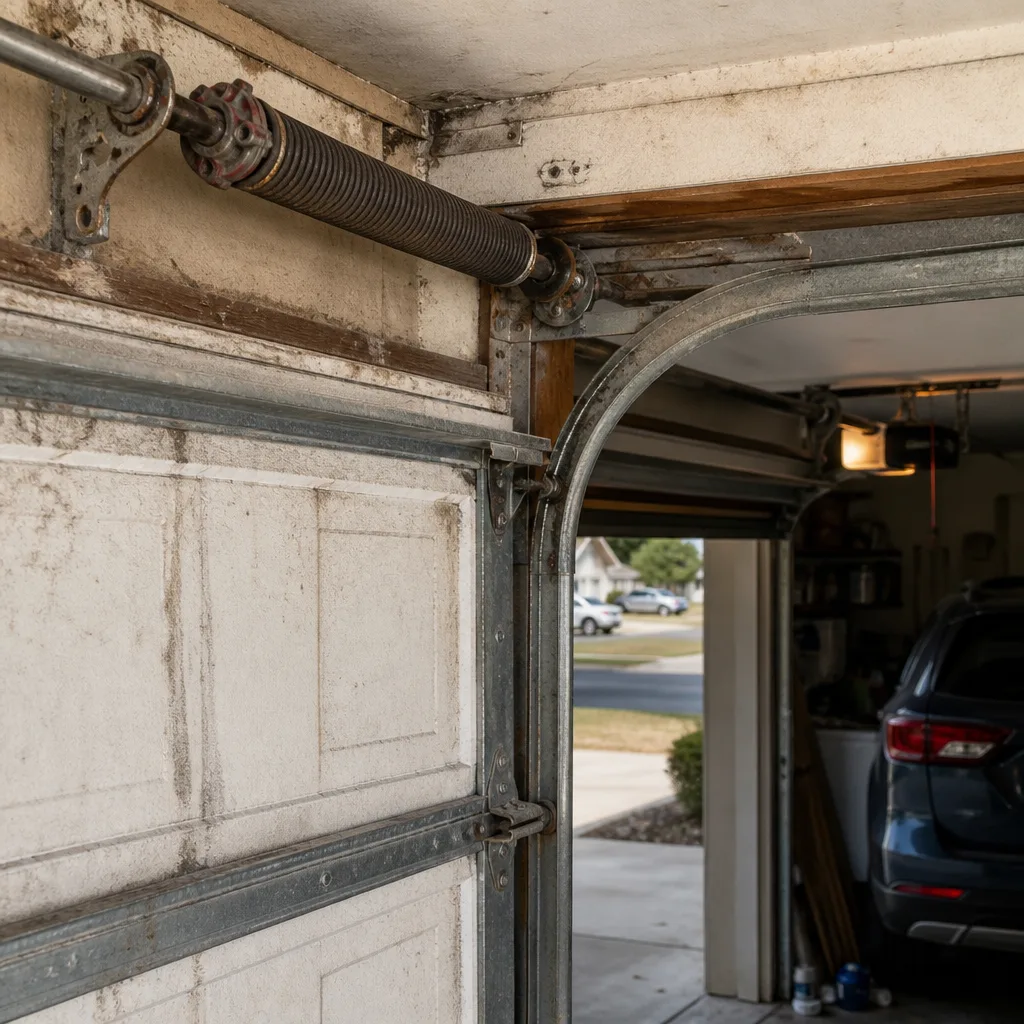 Before
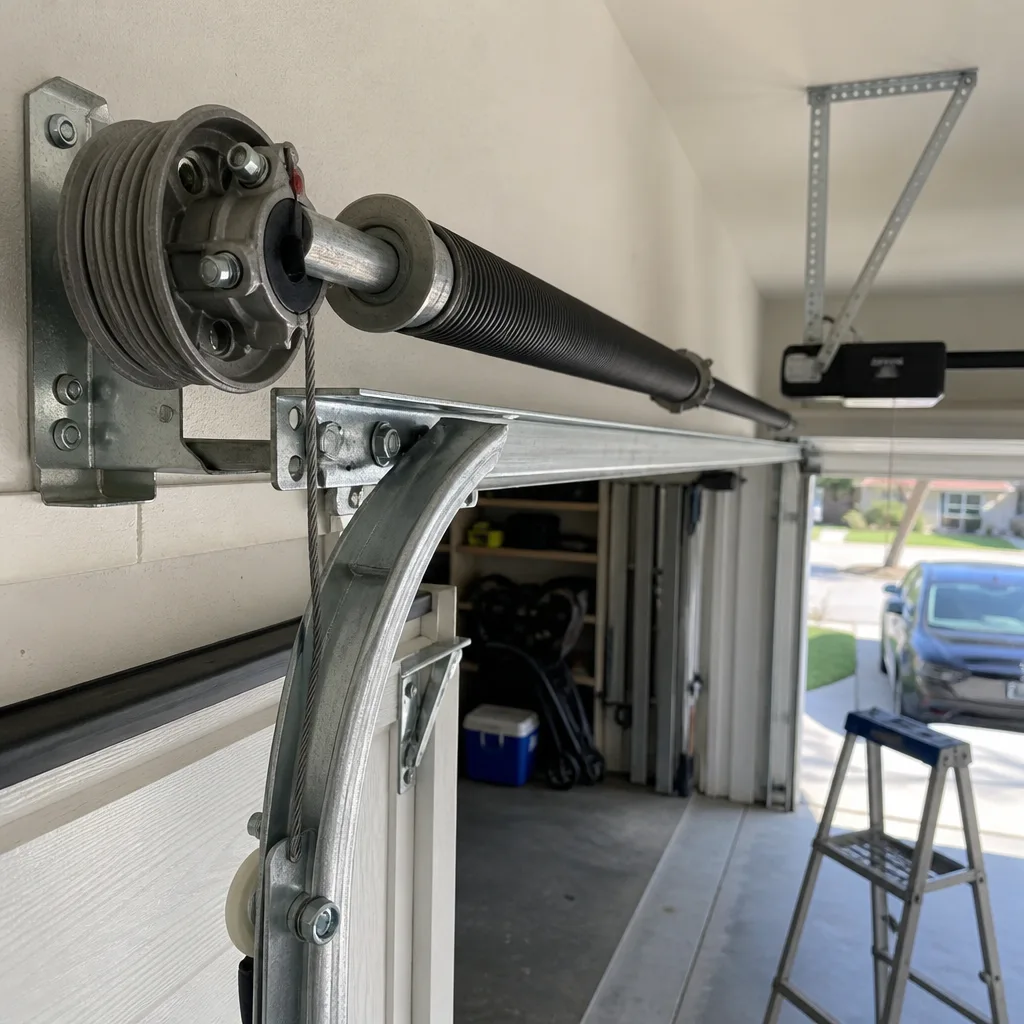 After
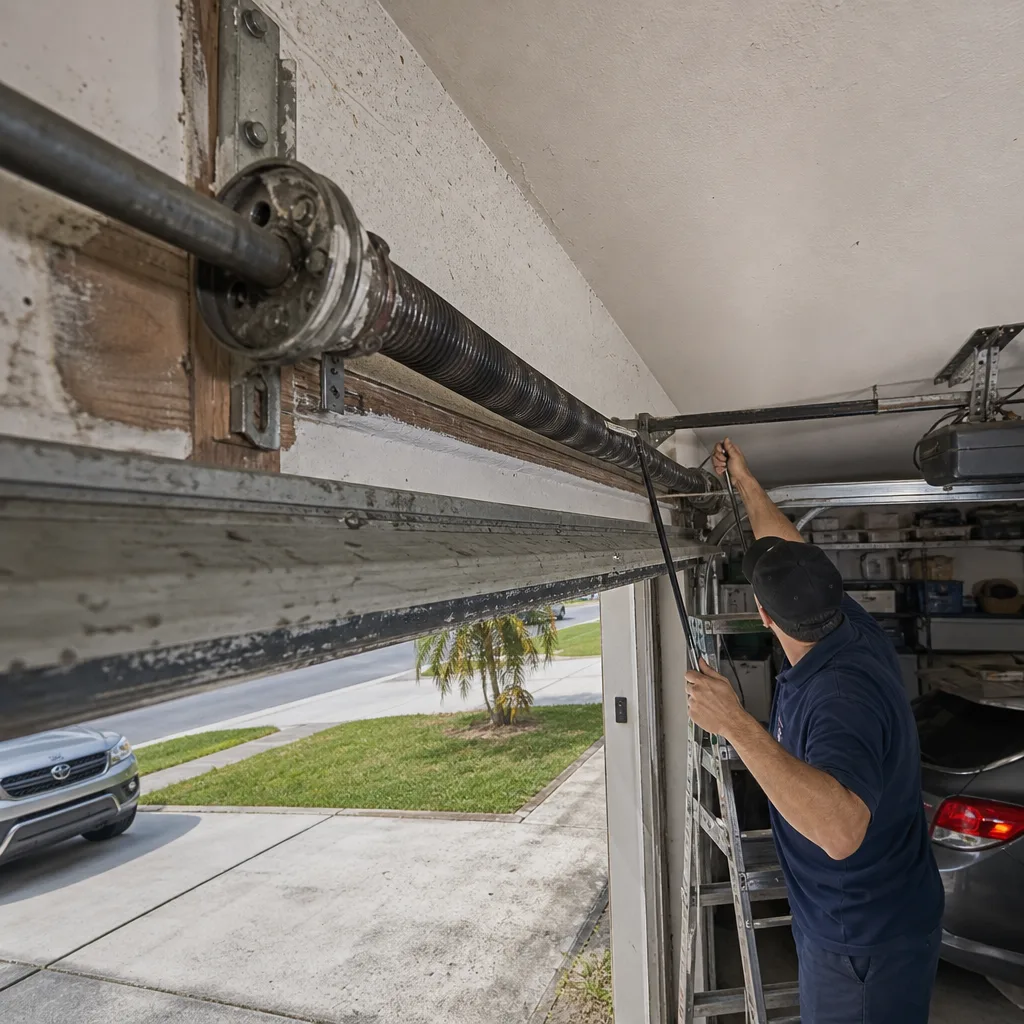 Before
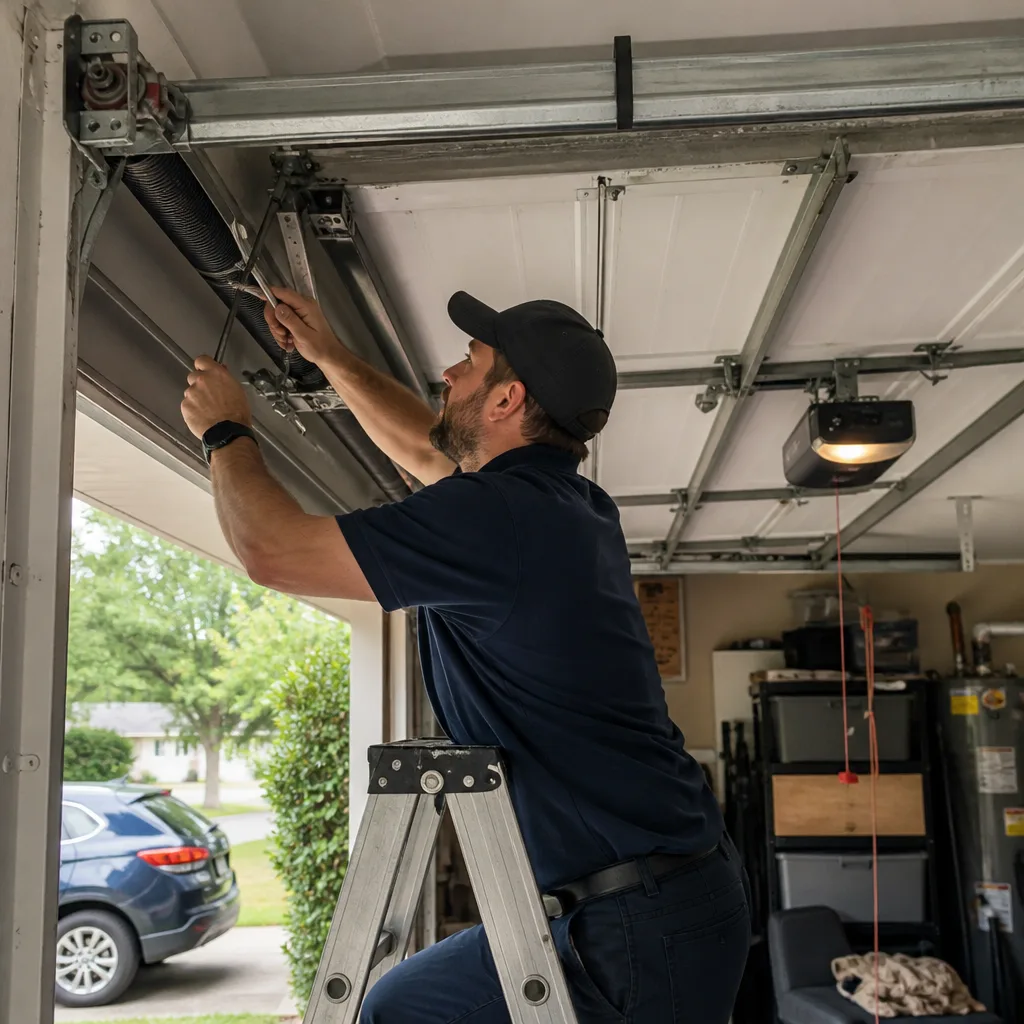 After
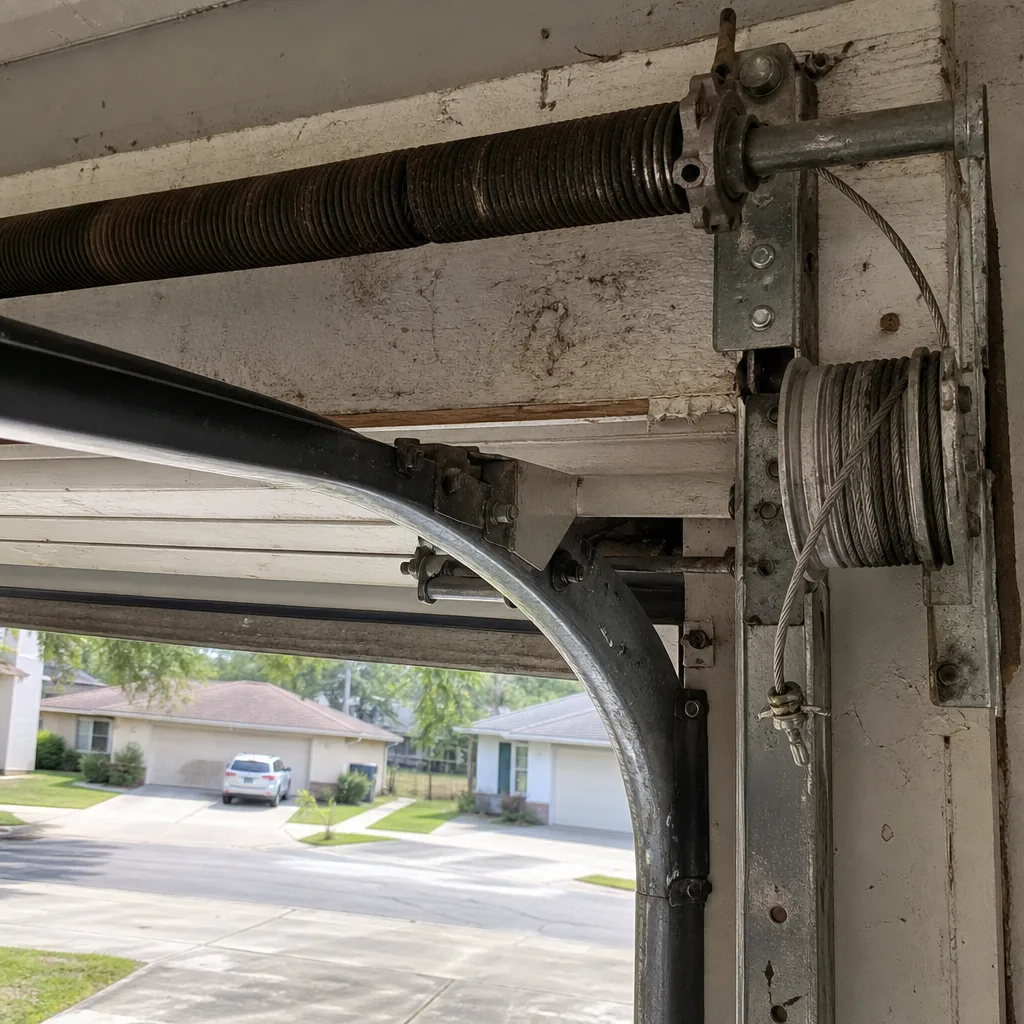 Before
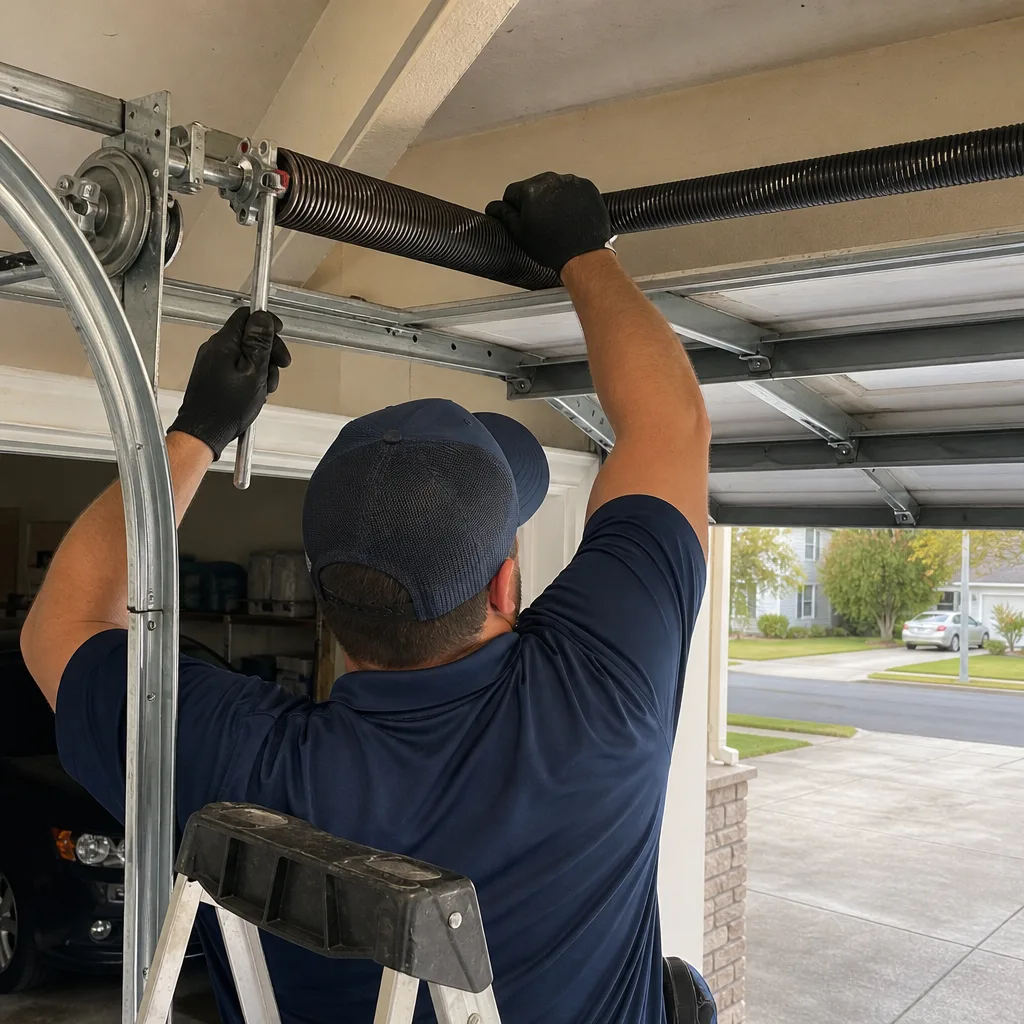 After