Last updated October 30, 2026
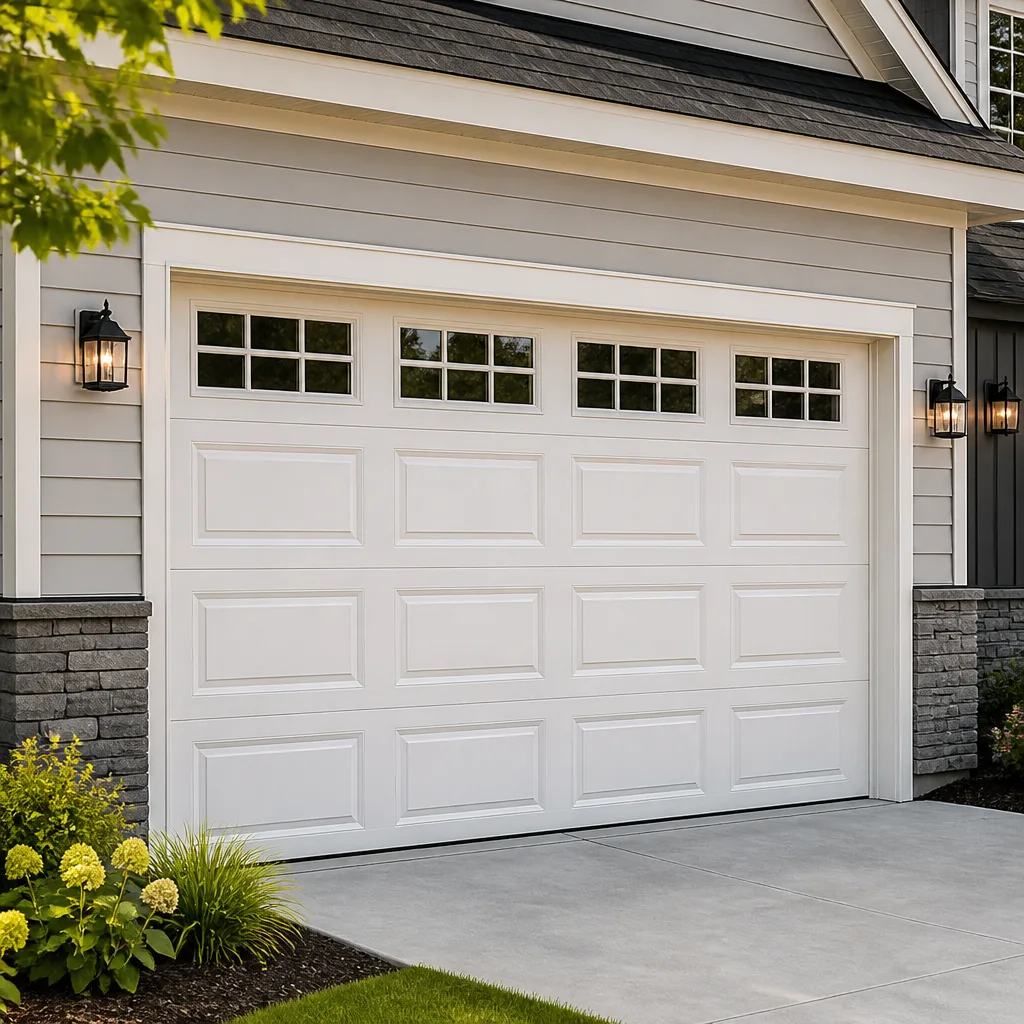 Raised-panel steel
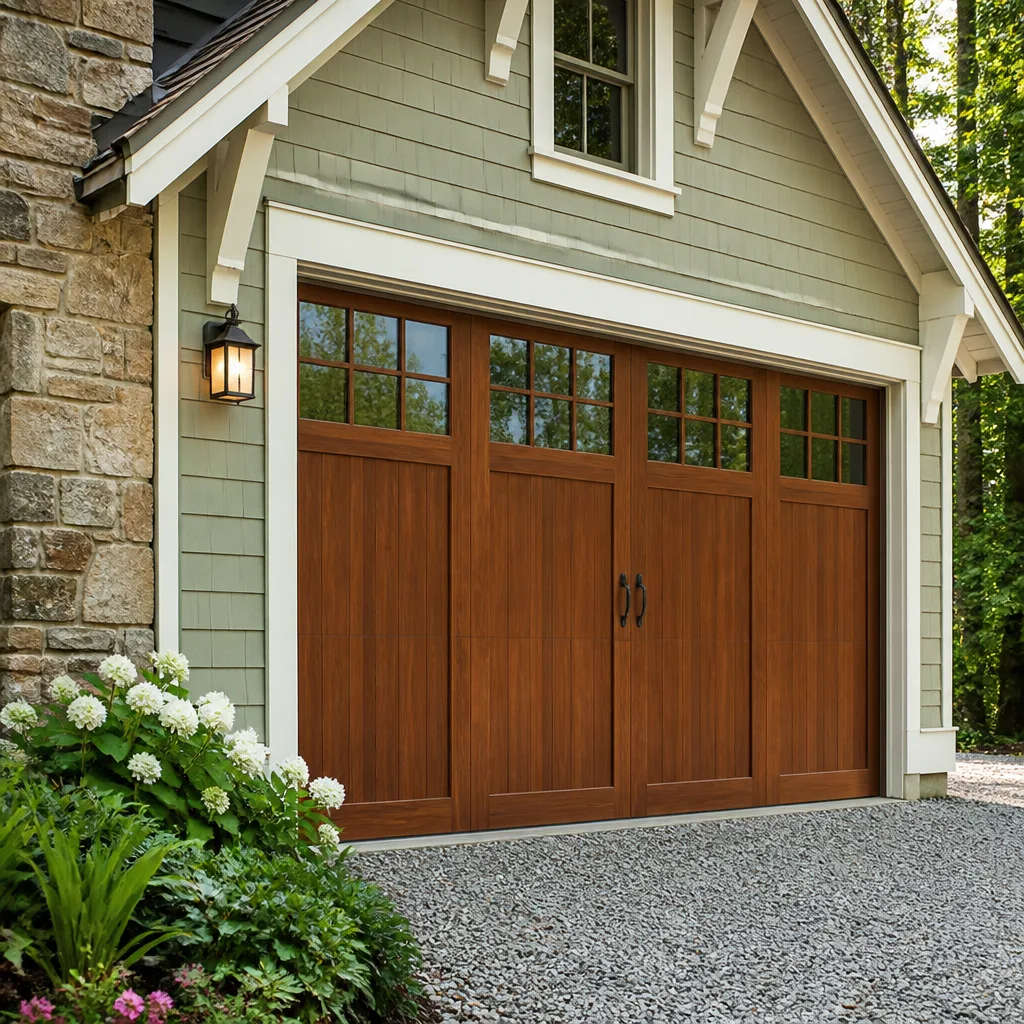 Carriage house
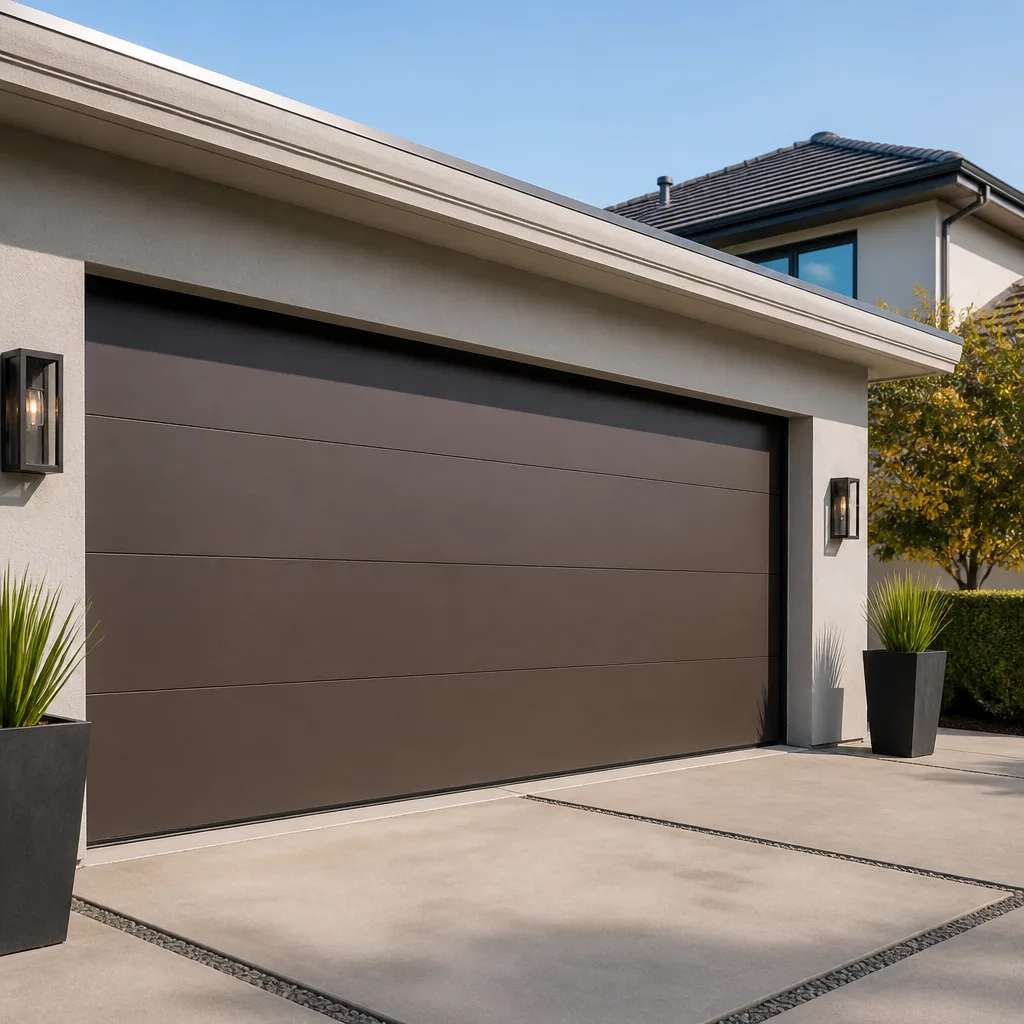 Modern flush
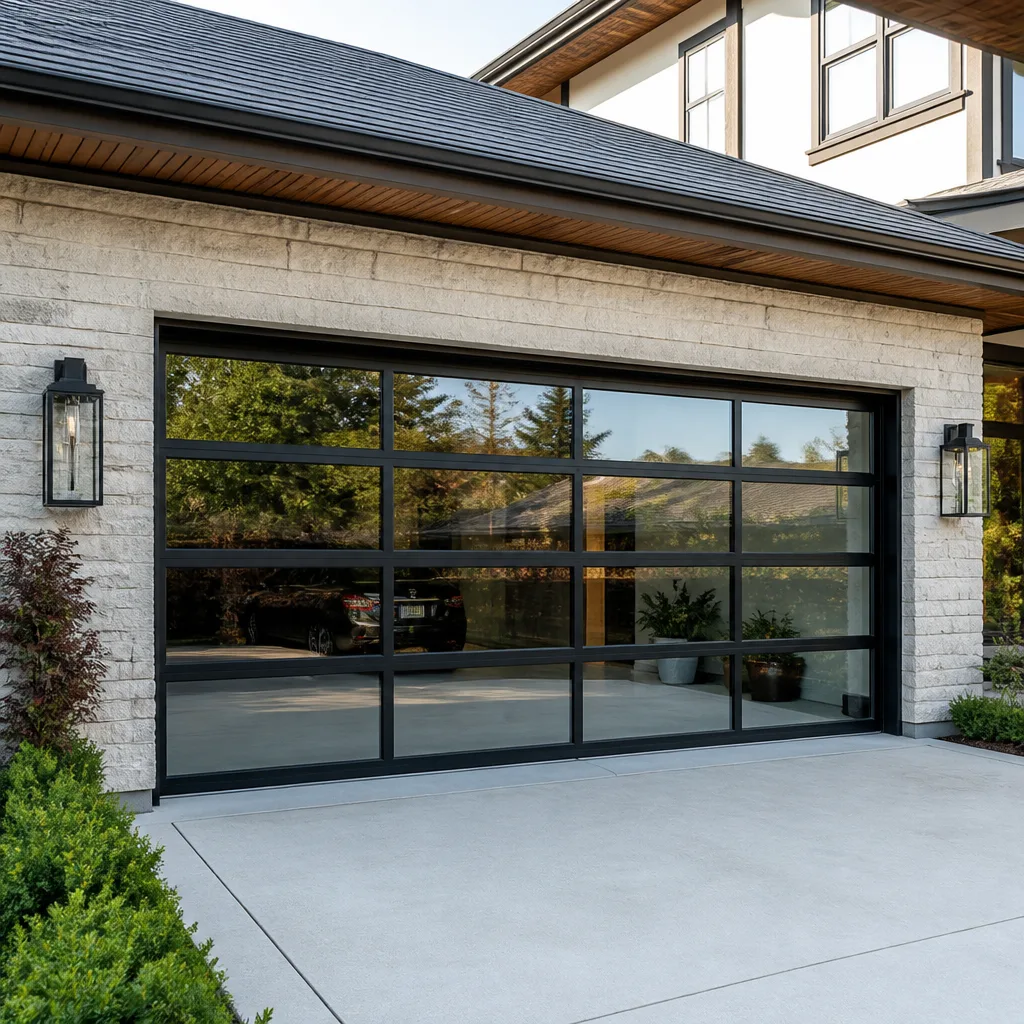 Full-view glass
 LiftMaster openers
 Chamberlain openers
Full 25-point door and opener safety check with every visit - springs, cables, rollers, tracks, and your LiftMaster or Chamberlain opener included
You get a price before we start. It does not change when the truck arrives.
Get your free estimateGarage Door Repair Maintenance Checklist for Jacksonville Homeowners
A torsion spring that lasts 10,000 cycles in Denver may fail at 7,000 in Jacksonville. Not because of use, but because humidity corrodes the coil from the inside out while the door sits closed. Most online checklists were written by someone in a dry climate, and they skip the exact things that kill garage doors here. This guide is what we’ve learned from years of Garage Door Repair services across Jacksonville, from Ortega to Mandarin to the Beaches, and it covers the six failure modes that generic lists miss.
Styles & brands we work with
Quick Answer
A proper garage door maintenance checklist for Jacksonville should run quarterly, with additional post-storm inspections. Focus on humidity-driven rust on torsion springs, salt-air corrosion on rollers and hardware, bottom seal rot, and opener force settings. Lubricate with white lithium grease, not silicone spray, and document everything for insurance purposes.
Table of Contents
- Why Jacksonville Is Different: The Climate Factor
- The Quarterly Maintenance Checklist
- The Annual Deep Service
- Post-Storm Inspection Protocol for Jacksonville
- Lubrication: What to Use and Why It Matters Here
- Documenting Maintenance for Insurance Claims
- Brand-Specific Notes: Amarr, Wayne Dalton, and Craftsman
- Common Mistakes to Avoid
- When to Call a Professional
- Frequently Asked Questions
- The Bottom Line
Why Jacksonville Is Different: The Climate Factor
Jacksonville sits in a humid subtropical zone. That’s a polite way of saying the air is wet, salty, and warm for most of the year. Your garage door is not a sealed system. It’s a collection of steel coils, steel rollers, aluminum tracks, and rubber seals, all of which react to moisture and salt. The intracoastal and ocean breezes push salt-laden air through neighborhoods like Atlantic Beach, Neptune Beach, and San Pablo. Even inland areas like Baymeadows and Southside get enough ambient moisture to accelerate rust on untreated hardware.
We see three specific patterns in Jacksonville that homeowners in Phoenix or Denver never deal with. First, torsion springs develop interior coil rust long before you see anything on the surface. The spring flexes, micro-cracks form in the factory coating, and humidity does the rest. Second, bottom seals rot rather than wear. The rubber breaks down from constant moisture contact, especially if the garage floor stays damp after afternoon thunderstorms. Third, roller bearings seize from salt corrosion, not from age. A roller that would spin freely for 15 years in a dry climate may lock up in 8 here.
The practical takeaway: your maintenance calendar needs to reflect Jacksonville’s actual seasons. We don’t have winter in the traditional sense. We have a long humid season from roughly May through October, a milder dry stretch from November through February, and a storm season that overlaps both. Quarter-based checklists work, but the tasks shift depending on whether you’re heading into storm season or coming out of it.
If you want a deeper look at what goes wrong most often in this climate, our Garage Door Repair in Jacksonville page breaks down the most common failure points by season.
The Quarterly Maintenance Checklist
Most national guides suggest twice-a-year maintenance. For Jacksonville, quarterly is the baseline. Here’s the task list we recommend for homeowners, with the Jacksonville-specific reasoning behind each item, plus links to more guides & resources.
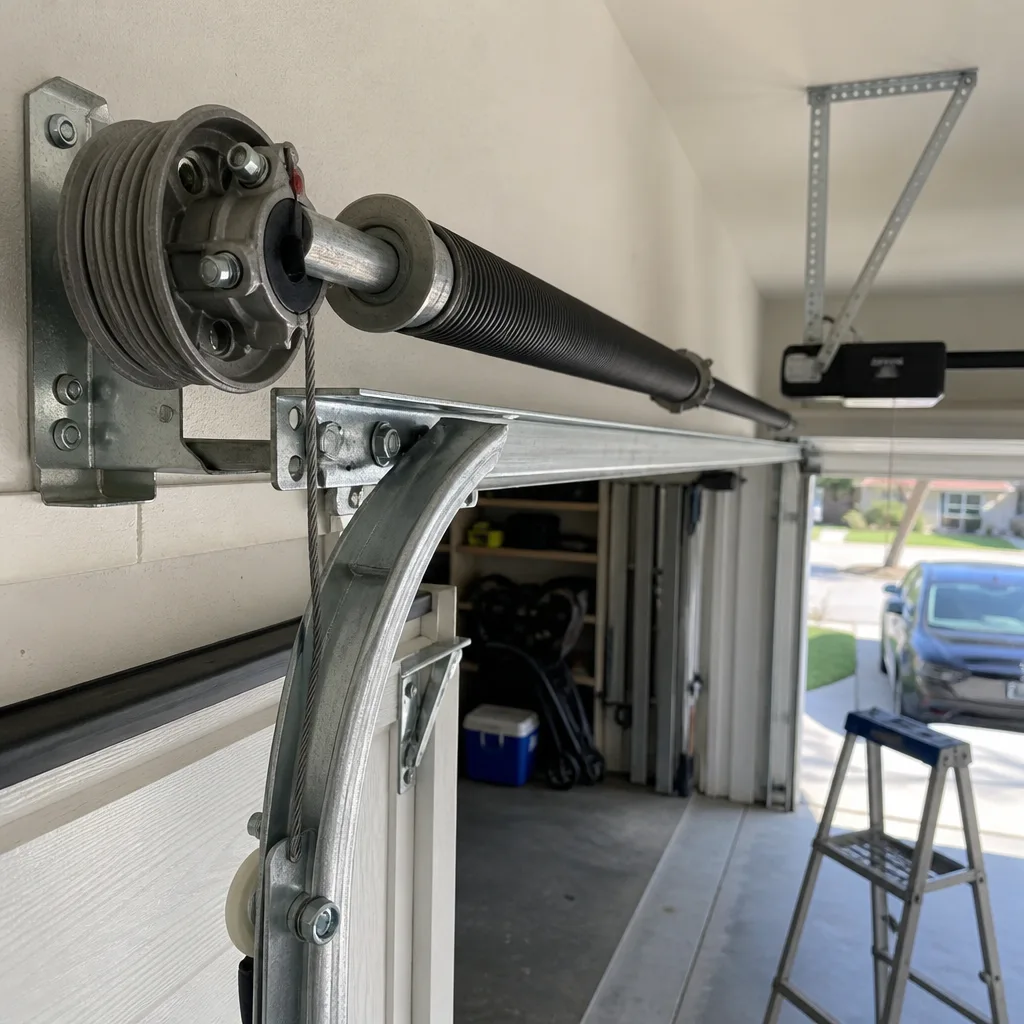
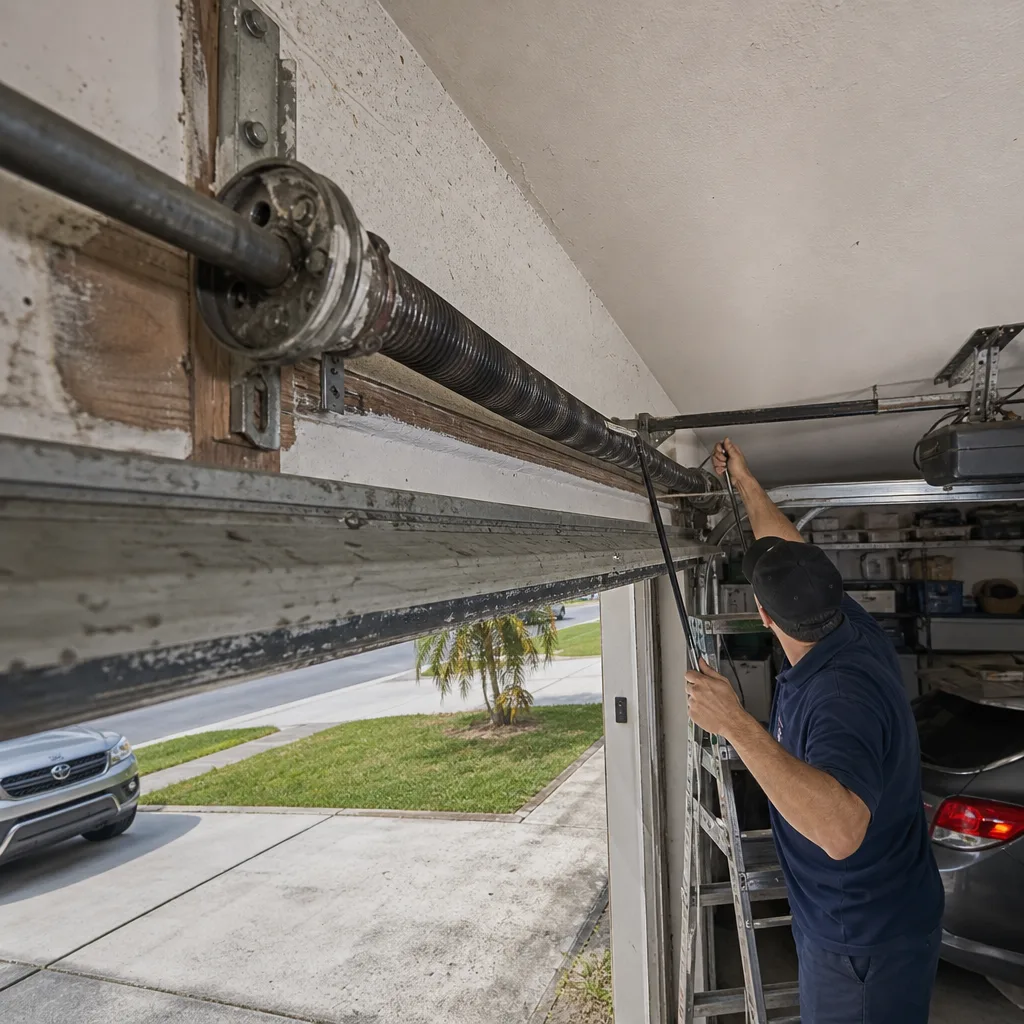
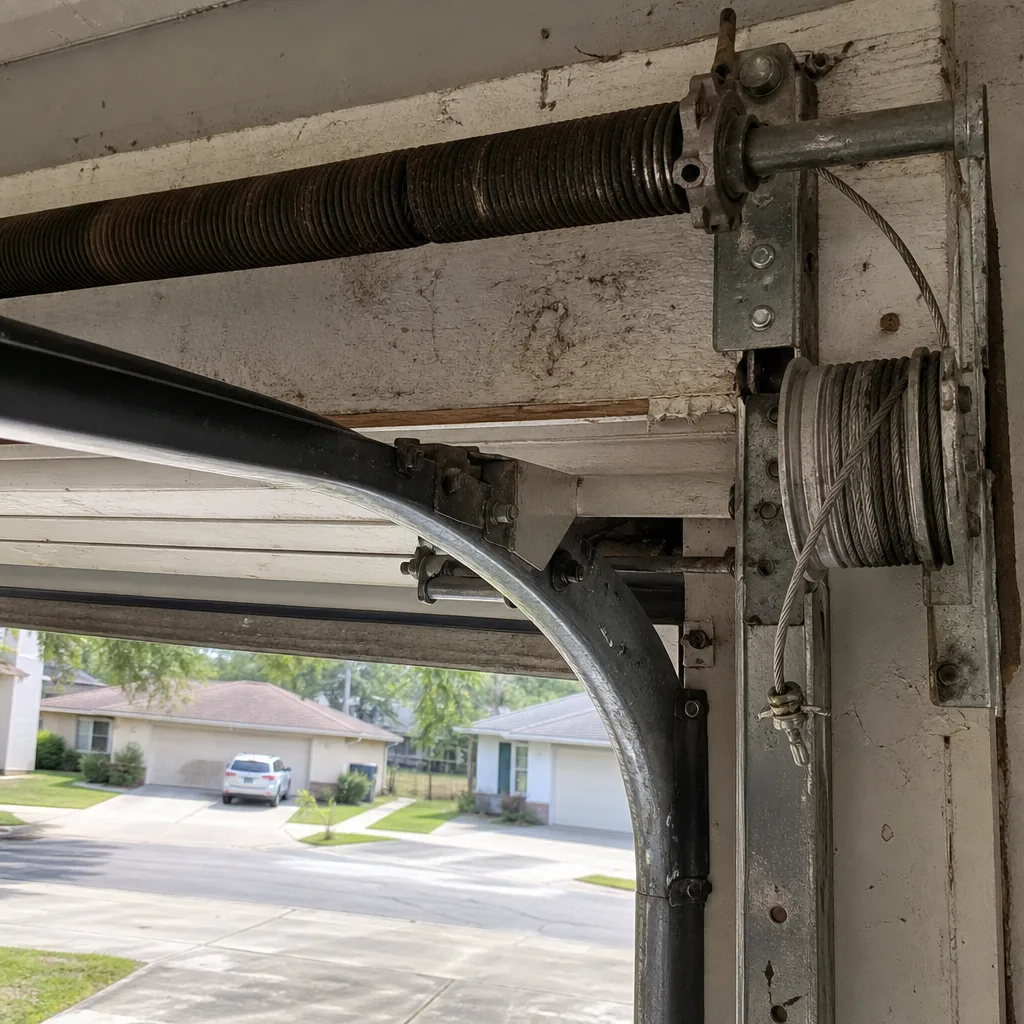
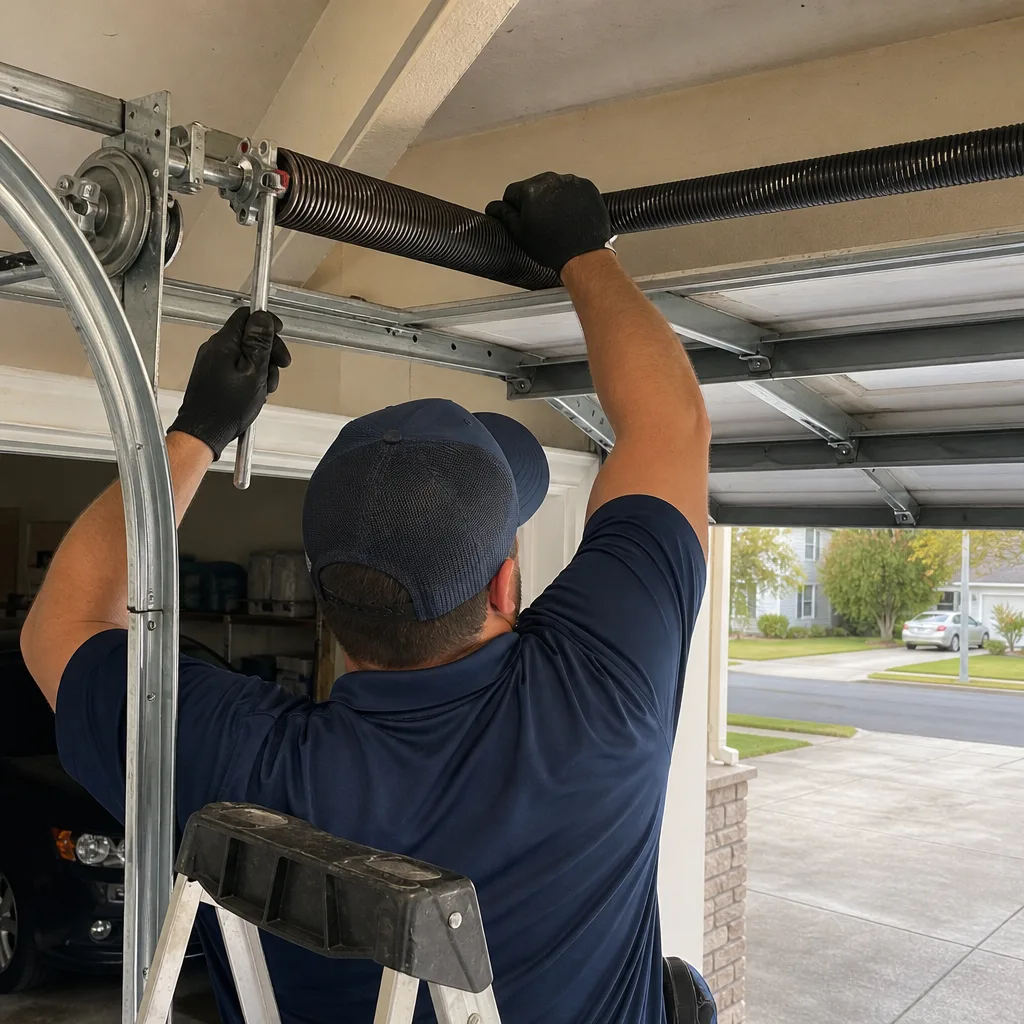
- Inspect torsion springs for surface rust and listening for creaks. Look at the coils where they touch each other. Any orange discoloration or flaking coating means moisture has breached the protective layer. A creaking spring is grinding against itself, which accelerates wear. This is a visual inspection only. Never attempt to adjust or replace a torsion spring yourself. The tension is enough to cause serious injury.
- Check the bottom seal for rot, not just cracks. Run your hand along the rubber strip at the bottom of the door. In Jacksonville, the seal often softens and turns spongy before it cracks. If the rubber feels mushy or leaves black residue on your fingers, it’s failing. A compromised seal lets humidity into the garage year-round and standing water in during summer downpours.
- Test roller spin by hand with the door closed. Disconnect the opener and manually raise the door halfway. Spin each roller with your fingers. A healthy roller spins freely. A seized roller doesn’t spin at all. In Jacksonville, roller bearing failure from salt corrosion is one of the most common repair calls we get, especially in beach-adjacent neighborhoods.
- Wipe down tracks and check for rust blooms. Use a dry rag to remove dust and grime from the vertical and horizontal tracks. Look for rust spots where the zinc coating has worn through, particularly near the bottom of the vertical track where moisture collects. Light surface rust can be addressed. Deep pitting means the track may need replacement.
- Test the auto-reverse safety function. Place a 2×4 flat on the floor under the door and close it. The door should reverse within two seconds of contact. This is not optional. It’s a safety system, and in a humid climate where opener sensors can corrode, it needs testing more often than in dry regions.
- Check opener force settings. With the door closed, operate the opener. It should lift the door smoothly without strain. If the motor sounds labored or the door hesitates, the force setting may need adjustment or the springs may be wearing out. Call a professional for either issue.
These six tasks take about 30 minutes and require no special tools beyond a step ladder and a rag. What they do is catch the Jacksonville-specific failure points before they become repair calls.
The Annual Deep Service
Once a year, go beyond the quarterly checks. This is the service level where you prevent most mid-summer breakdowns. The best time for Jacksonville homeowners is early spring, before the humidity spikes and before storm season starts in earnest.
Complete hardware inspection
Every hinge, bracket, and bolt on the door should be checked for corrosion and tightness. In beach communities like Mayport and Atlantic Beach, we see hinge pins rust through in as little as five years. Interior neighborhoods fare better, but the humidity alone is enough to seize hardware that hasn’t been lubricated in over a year.
Balance test
Disconnect the opener and lift the door manually to waist height. Release it. A properly balanced door stays in place. If it falls, the springs are losing tension. If it rises, the springs are over-tensioned. Either condition means the springs are nearing the end of their life. Here’s the Jacksonville angle: a door that’s even slightly out of balance puts extra load on the opener motor, which runs hot in our summer garage temperatures and fails faster.
Opener full-function test
Test every remote, every keypad, and the wall button. Check the gear and sprocket assembly for wear if you have a chain-drive opener. Belt-drive openers from LiftMaster and Chamberlain hold up well in humidity, but the circuit boards in any opener can corrode if the garage stays damp. If you hear grinding or the door moves erratically, it’s time for garage door opener repair in Jacksonville.
Weatherstripping replacement
The bottom seal and the side weatherstripping should be replaced annually in Jacksonville, not every three to five years like national guides suggest. UV from the Florida sun breaks down rubber quickly, and the constant moisture accelerates the process. A new bottom seal costs far less than repairing a water-damaged door panel or replacing rusted track.
Track alignment check
Look down the length of both tracks from the front of the garage. They should be perfectly parallel. Any inward or outward bowing means a track has shifted. In Jacksonville’s sandy soil, garage slabs settle over time, and that settlement can shift track alignment. A misaligned track strains the rollers, the hinges, and the opener.
Post-Storm Inspection Protocol for Jacksonville
Jacksonville gets two kinds of storms: fast-moving summer squalls that roll through in 20 minutes, and named storms that sit offshore and pound the coast for hours. Each leaves different damage, and the checklist should match the storm type.
After a fast-moving thunderstorm
These storms usually bring wind gusts and brief, heavy rain. The damage tends to be impact-related and water-related in equal measure. After the storm passes, do this:
- Check for debris in the tracks. Palm fronds, small branches, and roofing material from neighbors’ homes can lodge in the track channels. Clear anything you find before operating the door.
- Look for water intrusion at the door perimeter. If the bottom seal is aged, a hard squall can push water under the door. Check the garage floor for puddling and the bottom panel for water lines.
- Operate the door once. Listen for any new grinding, scraping, or popping sounds. A door that worked fine yesterday and sounds wrong today likely took impact damage to a roller or hinge.
After a named storm or tropical system
These storms bring sustained winds, hours of rain, and often storm surge in coastal areas. The inspection needs to be more thorough.
- Check the door for panel warping. Sustained wind pressure can bow panels, especially on older doors. Run your hand across each panel from the inside and look for gaps where panels meet.
- Inspect the opener’s emergency release mechanism. Floodwater or heavy rain can cause the release cord to swell or the mechanism to bind. Test it by pulling the cord and manually operating the door.
- Examine all electrical components. If your garage took on any water, have the opener inspected by a professional before using it. Water and circuit boards are a bad combination.
- Document everything with photos. This matters for insurance claims, and it leads into the next section.
If the door took structural damage or the tracks shifted, don’t force it. Forcing a damaged door causes secondary failures that cost more to repair than the original damage would have. See our Garage Door Repair Troubleshooting: Common Problems and How to Fix Them for guidance on assessing damage safely.
Lubrication: What to Use and Why It Matters Here
Here’s a point where Jacksonville homeowners should ignore most national advice. The standard recommendation is white lithium grease or silicone spray, used interchangeably. That’s wrong for our climate.
White lithium grease is the correct choice for Jacksonville hardware. It’s thicker, it clings, and it creates a moisture barrier that silicone spray simply can’t match. In high-humidity environments, silicone spray washes away too quickly and leaves metal exposed. We’ve seen rollers lubricated with silicone spray seize within months during a Jacksonville summer. The same rollers lubed with white lithium grease ran clean for a year.
What to lubricate:
- Roller bearings: A small amount at each bearing point. Don’t overdo it. Excess grease attracts dust and sand, which creates a grinding paste.
- Hinges: Each hinge pivot point benefits from a light coat. Move the door manually afterward to work the grease in.
- Torsion spring: Spray or brush a thin coat along the coils. This is the single best thing a Jacksonville homeowner can do to extend spring life in humid air.
- Opener chain or screw drive: Use the manufacturer’s recommended lubricant. For chain drives, white lithium grease is fine. For screw drives, check your manual. Some call for a specific grease.
What not to lubricate:
- Tracks: This is the most common mistake we see. Lubricating the track makes the rollers slide instead of roll, and it collects dust. Tracks should be cleaned, not greased.
- Plastic components: Nylon rollers and plastic gear housings don’t need lubrication. Grease on nylon can actually attract grit and accelerate wear.
Lubrication frequency for Jacksonville: every three months during the humid season, every six months during the drier winter stretch. If you live within two miles of the ocean or intracoastal, stick with quarterly year-round.
Documenting Maintenance for Insurance Claims
This is the step most Jacksonville homeowners skip entirely, and it costs them real money when storm season arrives. If your garage door takes damage from a named storm, your homeowner’s insurance may cover the repair or replacement. But the adjuster needs two things: proof of the damage and proof that the door was properly maintained before the storm.
An unmaintained door that fails in a storm is often classified as wear-and-tear, which is not covered. A maintained door that fails in a storm is storm damage, which frequently is. The difference comes down to records.
Create a simple maintenance log. It doesn’t need to be elaborate. A Google Doc or a spiral notebook works fine. Record the date, what you inspected, what you found, and what you did. Take a photo of the door and the springs during each quarterly check. Store the photos in a cloud folder named with the date.
After any storm that produces damage, take photos immediately, before making any repairs. Photos should show the damage up close and the door in context. If a tree limb hit the door, photograph the limb. If water entered, photograph the water line.
Then call your insurance company before calling a repair service. Most policies require you to mitigate further damage, which means you can make temporary fixes like tarping a broken panel, but the adjuster needs to see the original damage. If you’re unsure whether a repair will affect your claim, ask your adjuster first. We’ve walked homeowners through this process more times than we can count, and the ones who documented their maintenance consistently had smoother claims.
Brand-Specific Notes: Amarr, Wayne Dalton, and Craftsman
Different brands fail differently in Jacksonville’s climate, and knowing what to watch for on your specific door makes maintenance more effective.
Amarr doors are common in Jacksonville’s newer subdivisions, particularly in the Oakleaf and Durbin Crossing areas. The Classica and Olympus lines have good factory coatings, but the bottom seals are standard rubber and rot on schedule with every other brand. What we notice most on Amarr doors is hinge corrosion at the bottom panel, where water splashes up from the slab. Check those hinges more closely than the upper ones.
Wayne Dalton doors appear often in Jacksonville’s older neighborhoods like Riverside and Avondale, where homes date from the mid-century. The older Wayne Dalton models have a distinctive design with a rear-mounted torsion spring system that sits against the wall above the door. This setup puts the spring in direct contact with garage wall moisture, which accelerates interior coil rust. If you have an older Wayne Dalton door, inspect the spring more frequently than the quarterly baseline, and look for rust along the spring’s top edge where it meets the wall.
Craftsman openers are a staple in Jacksonville garages, particularly units installed in the 1990s and 2000s. These openers are mechanically simple and durable, but the circuit boards in older Craftsman models are susceptible to humidity corrosion. If your Craftsman opener starts acting erratically, opening or closing without a command, or refusing to respond to remotes, the board is often the culprit. This is a repair a professional can diagnose quickly, and the cost is usually less than a full opener replacement.
The point with brand-specific maintenance is knowing where to look. Your Amarr door, Wayne Dalton spring system, or Craftsman opener has particular weak points in this climate. Checking those points consistently means catching problems before they become breakdowns.
If your door is at the point where maintenance is no longer enough, our garage door installation in Jacksonville guide covers replacement options and what to expect.
Common Mistakes to Avoid
- Using WD-40 on door hardware. WD-40 is a water displacer, not a lubricant. It cleans rust but leaves metal dry afterward. In Jacksonville, dry metal rusts immediately. Use white lithium grease.
- Lubricating the tracks. Greasy tracks attract dust, sand, and grit, which then grinds against your rollers. Tracks should be clean and dry, always.
- Ignoring a creaking door. A creak means metal is rubbing against metal somewhere. In this climate, that means accelerated wear. Address it now, not when the spring snaps.
- Testing the auto-reverse with a soft object. A cardboard box or a pool noodle doesn’t simulate a child or pet. Use a 2×4 laid flat. The door should reverse on contact.
- Waiting until a door stops working to call. By the time a door fails, you’re usually looking at a spring replacement or a motor replacement. Quarterly maintenance catches the warning signs while the fix is still small.
- Forgetting to check the bottom seal after every storm season. The seal protects your garage from water, salt, humidity, and pests. A rot-eaten seal lets all of that in year-round.
- Assuming all garage door companies are the same. Jacksonville has plenty of single-brand specialists and plenty of anonymous dispatch services. The difference in diagnostic quality and long-term fix durability is significant.
When to Call a Professional
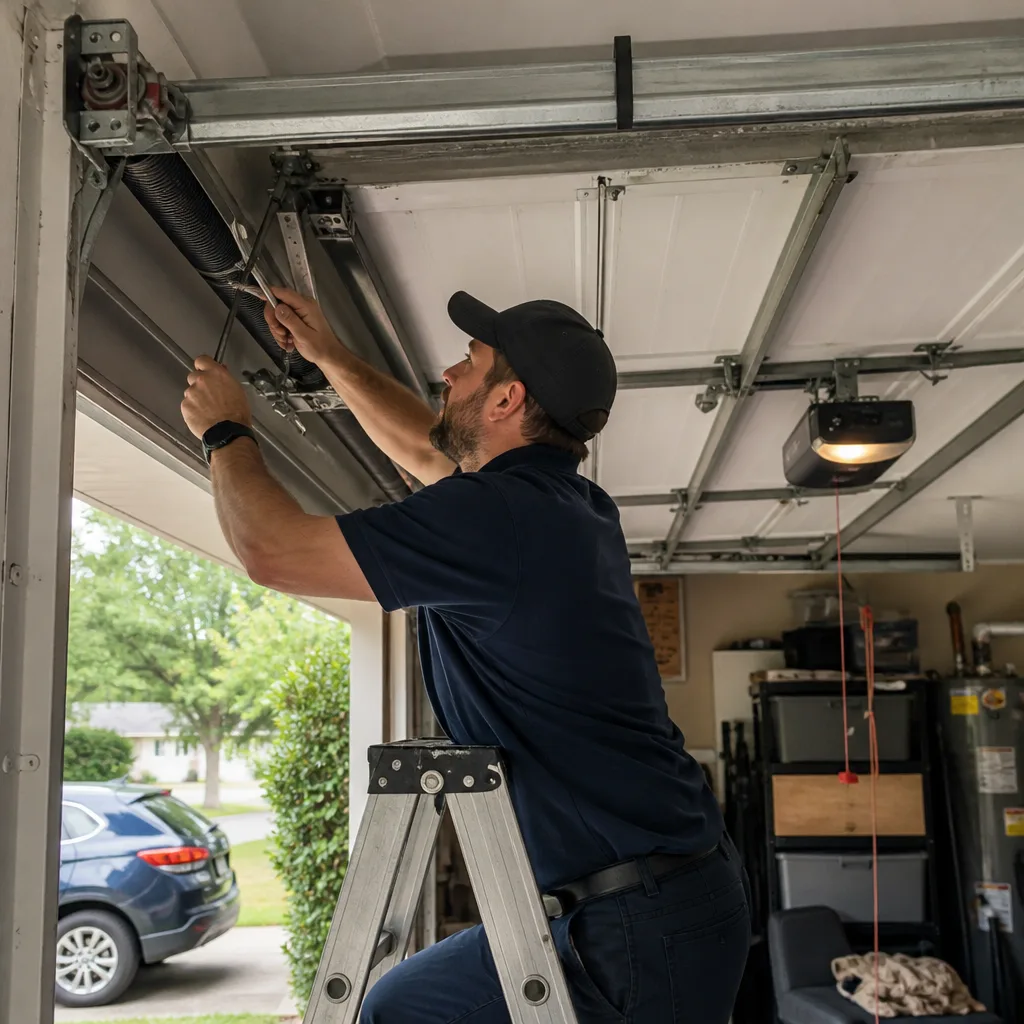
Some maintenance tasks are safe for any homeowner. Others demand a trained technician with specific experience. Any time the work involves torsion springs, cables under tension, or track removal, call a professional. A torsion spring holds enough energy to cause severe injury if it releases. Cable replacement is nearly as dangerous, because cables run alongside high-tension springs and the failure mode is violent.
If your door is off-balance after a storm, if the opener circuit board is behaving erratically, or if you’ve found significant rust on the spring coils, these are professional repairs. Heritage Garage Door Service covers the full system, from the door panels to the springs to the opener, and we work on what you have rather than steering you toward a replacement you don’t need. We offer free estimates in Jacksonville. Call (833) 711-2679 and we’ll tell you whether it’s a repair or a replacement, honestly and without the upsell.
Frequently Asked Questions
A professional maintenance visit in Jacksonville typically runs between $85 and $150 depending on the extent of the service and whether replacement parts are needed. Quarterly DIY maintenance costs under $20 for lubricant and a new bottom seal when required. Call (833) 711-2679 for an exact quote based on your door and opener.
In Jacksonville’s humidity and sun exposure, plan to replace the bottom seal every 12 to 18 months. Beach-area homes may need annual replacement. Inspect the seal each quarter and replace it as soon as the rubber feels spongy or shows cracking.
Silicone spray provides minimal protection in Jacksonville’s high-humidity environment. It’s too thin to create a lasting moisture barrier and washes away quickly. White lithium grease is the better choice for torsion springs, hinges, and roller bearings in this climate.
A musty smell usually means moisture is trapped in the garage, often because the bottom seal is failing or the garage lacks proper ventilation. Check the seal first. If the seal is intact, the issue may be condensation from temperature swings, which is common in Jacksonville during summer afternoons after overnight cooling.
Yes, and you should do it before moving boxes in. New homeowners in Jacksonville often inherit deferred maintenance from previous owners. A full inspection right after closing establishes a baseline, identifies any spring or seal issues, and lets you start your maintenance log from day one.
It depends on your policy and whether the door was maintained before the storm. Most Florida policies cover wind damage to garage doors, but adjusters often deny claims if they determine the door was already weakened by rust or neglect. Document your maintenance quarterly and photograph damage immediately after any storm.
The Bottom Line
Jacksonville’s garage doors fail for different reasons than garage doors in the rest of the country, as detailed in our Garage Door Warning Signs: A Jacksonville Homeowner’s Reference Guide. Humidity corrodes from the inside, salt air seizes bearings, and storms punish doors that were already compromised. A maintenance routine built for a dry climate misses all of it. The fix is simple: quarterly checks focused on rust and rot, white lithium grease instead of silicone spray, post-storm inspections after every squall and every named storm, and a maintenance log that protects your insurance claim. Thirty minutes every three months keeps a Jacksonville garage door running longer than most national checklists ever will.
Call (833) 711-2679 for a free estimate on any garage door repair, opener issue, or new installation in Jacksonville.
Written by the team at Heritage Garage Door Service, serving Jacksonville since 2018.
See the difference
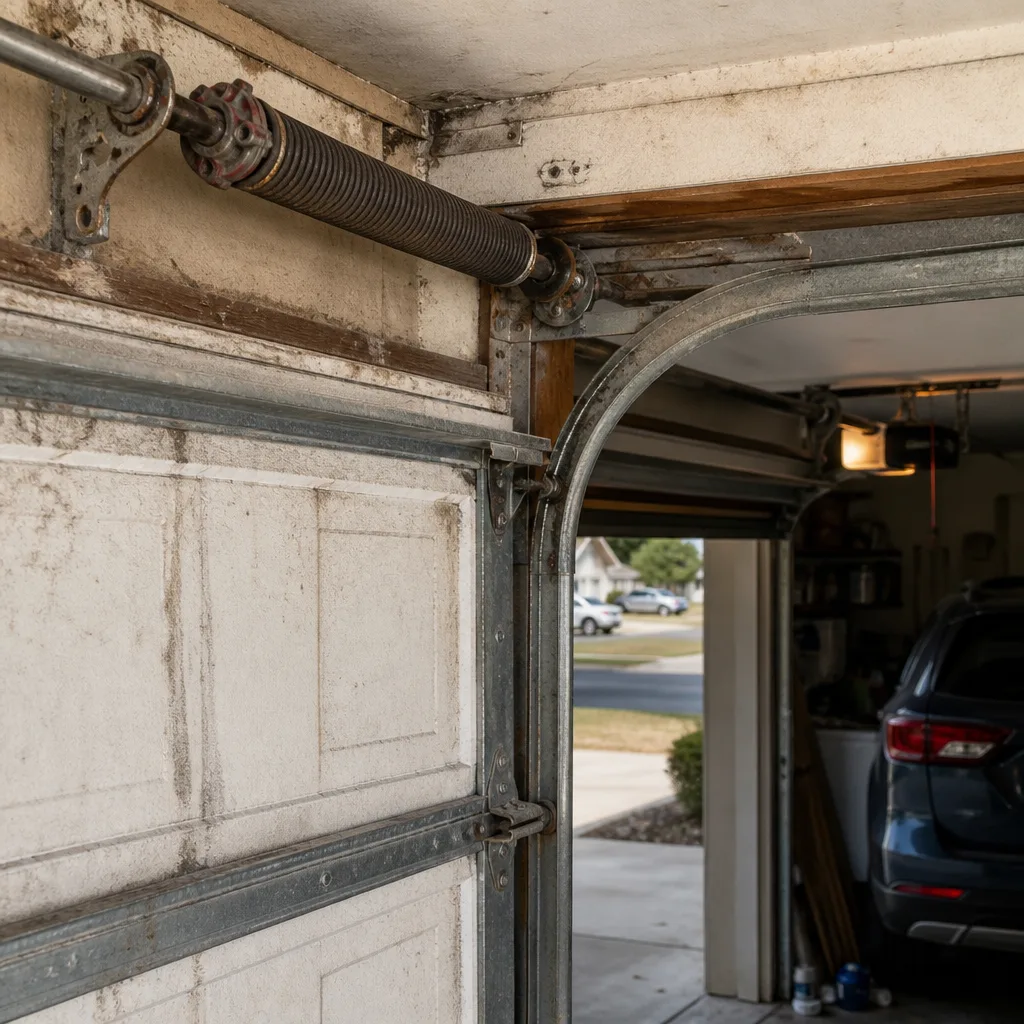 Before
 After
 Before
 After
 Before
 After