
Last updated October 30, 2026
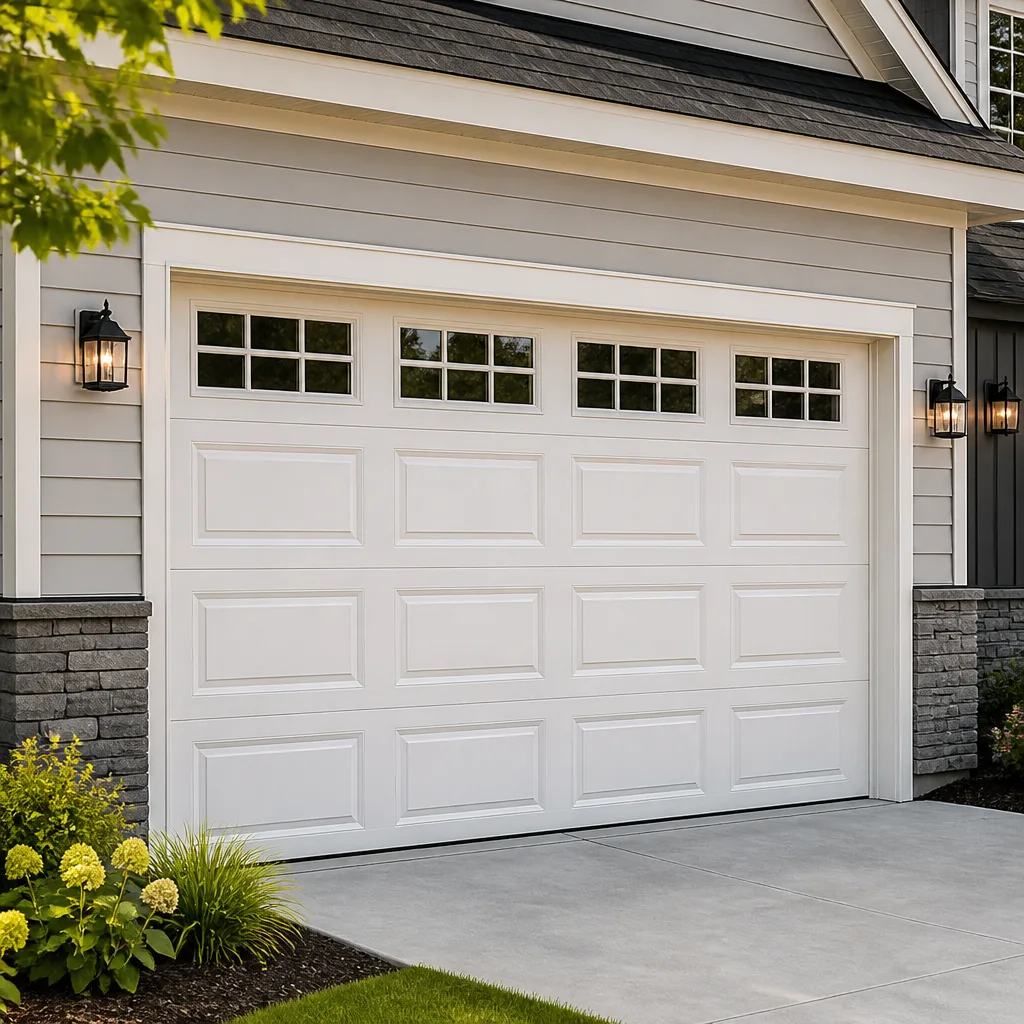 Raised-panel steel
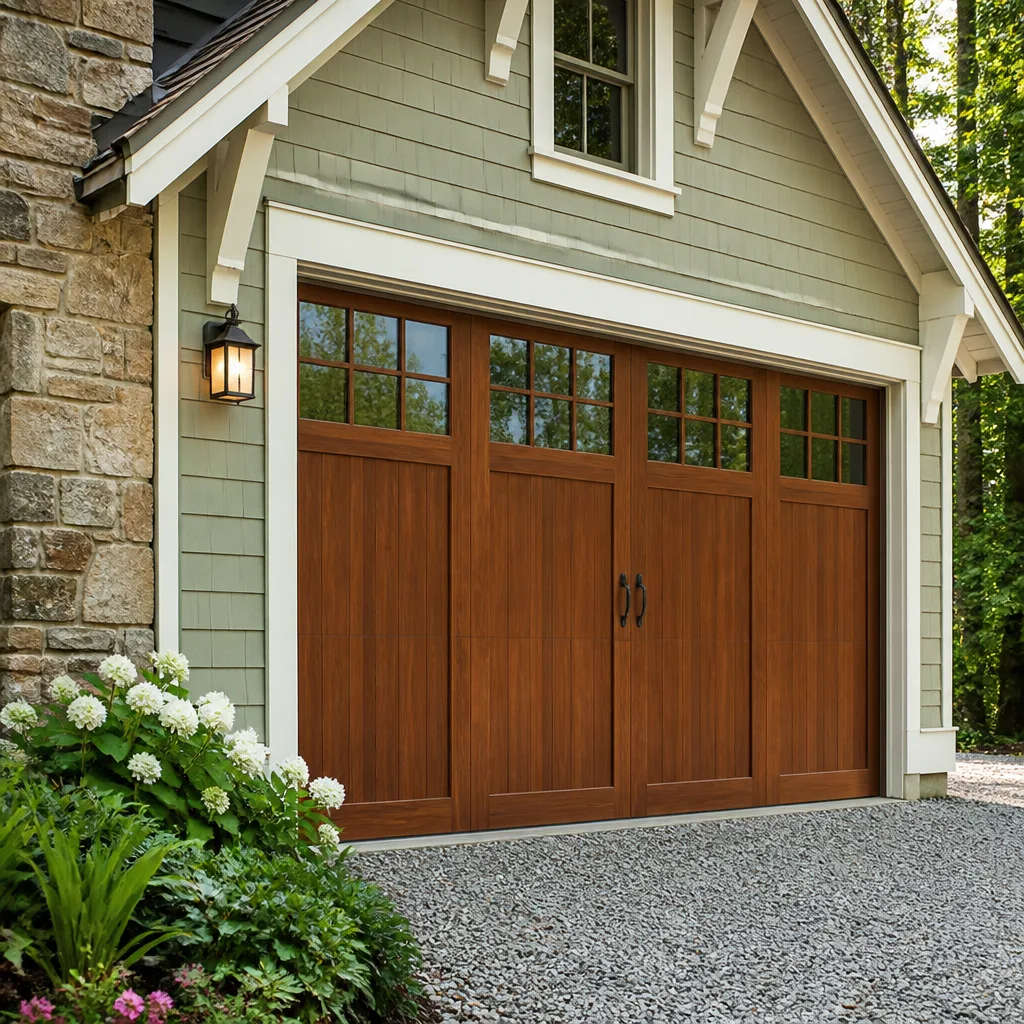 Carriage house
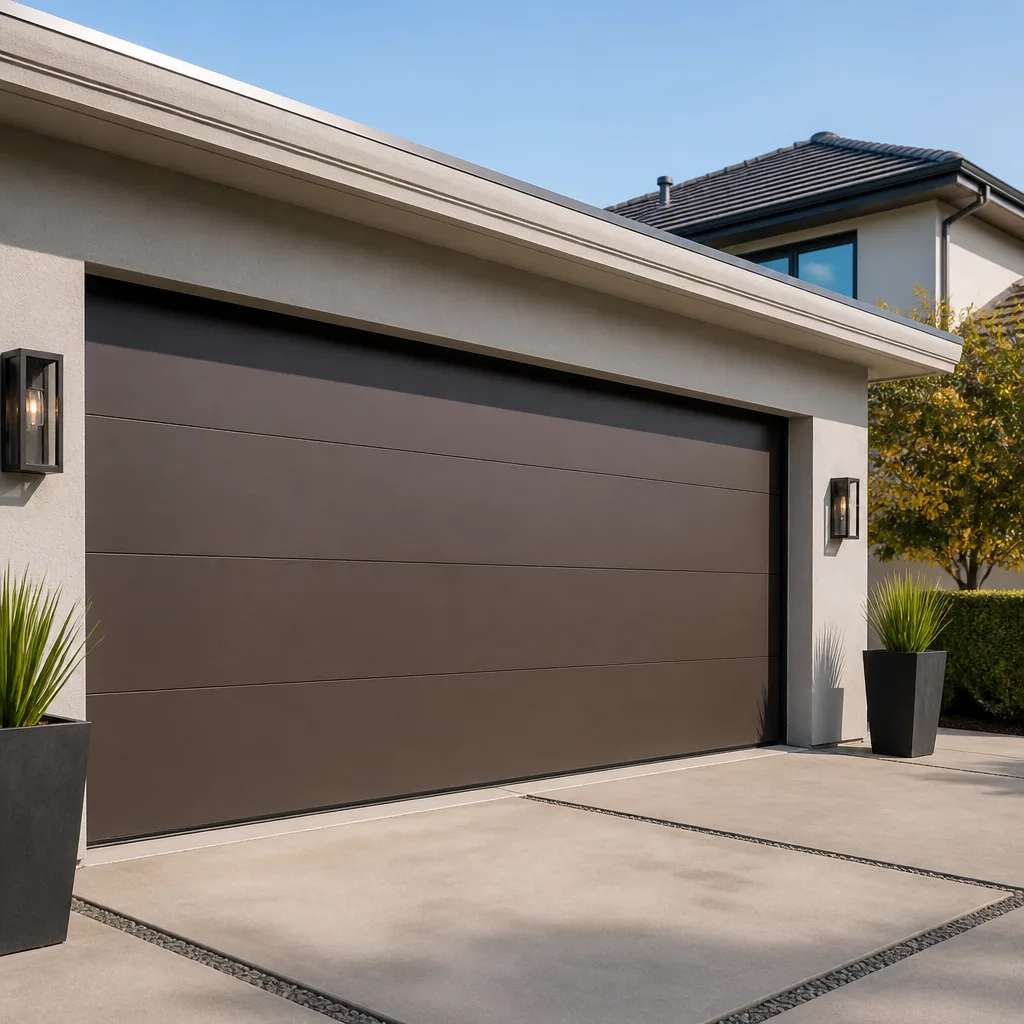 Modern flush
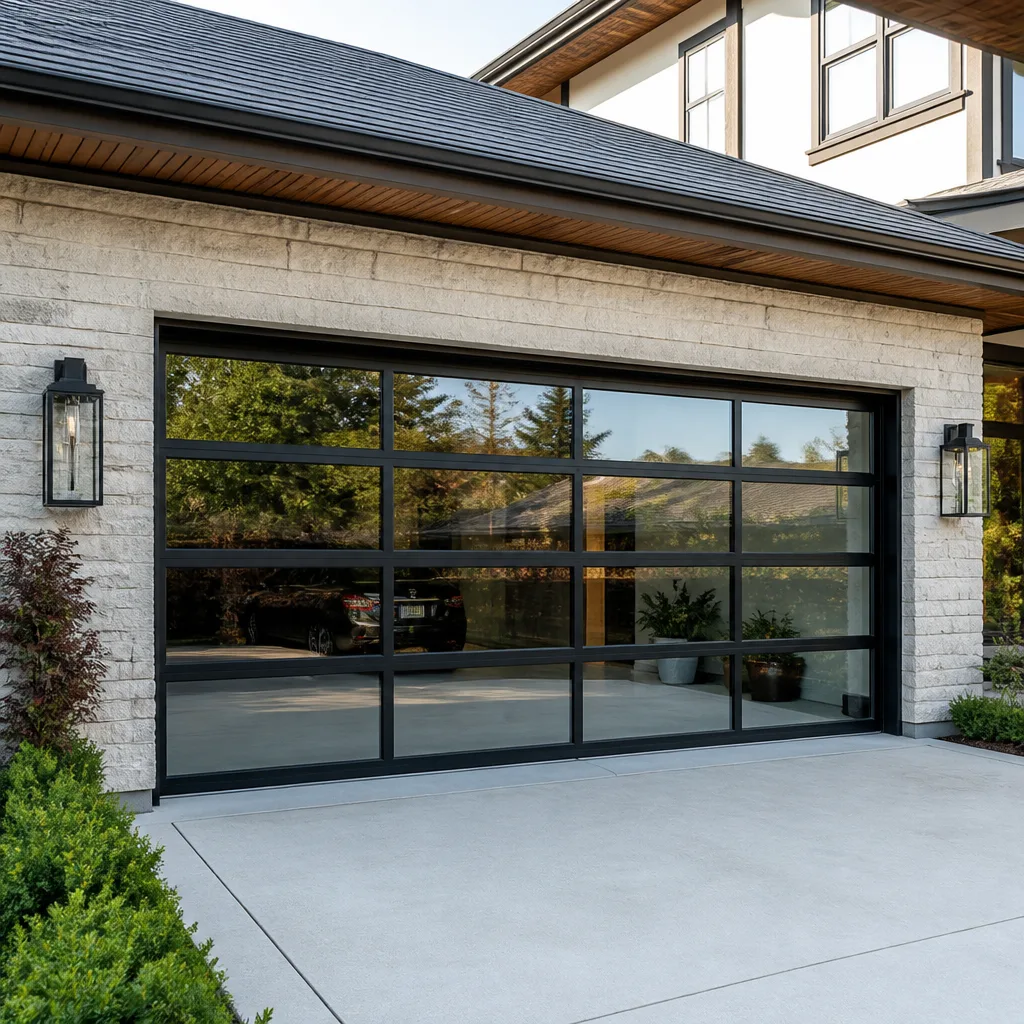 Full-view glass
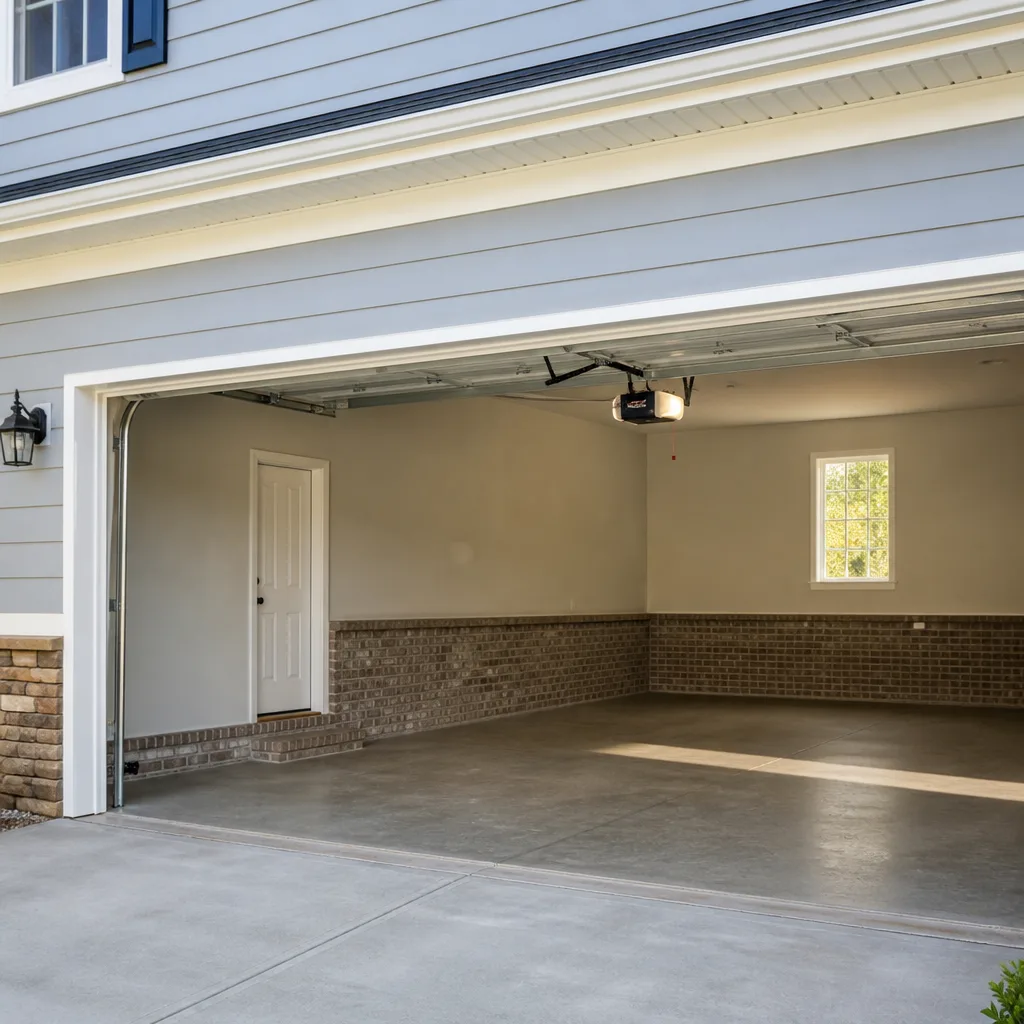 LiftMaster openers
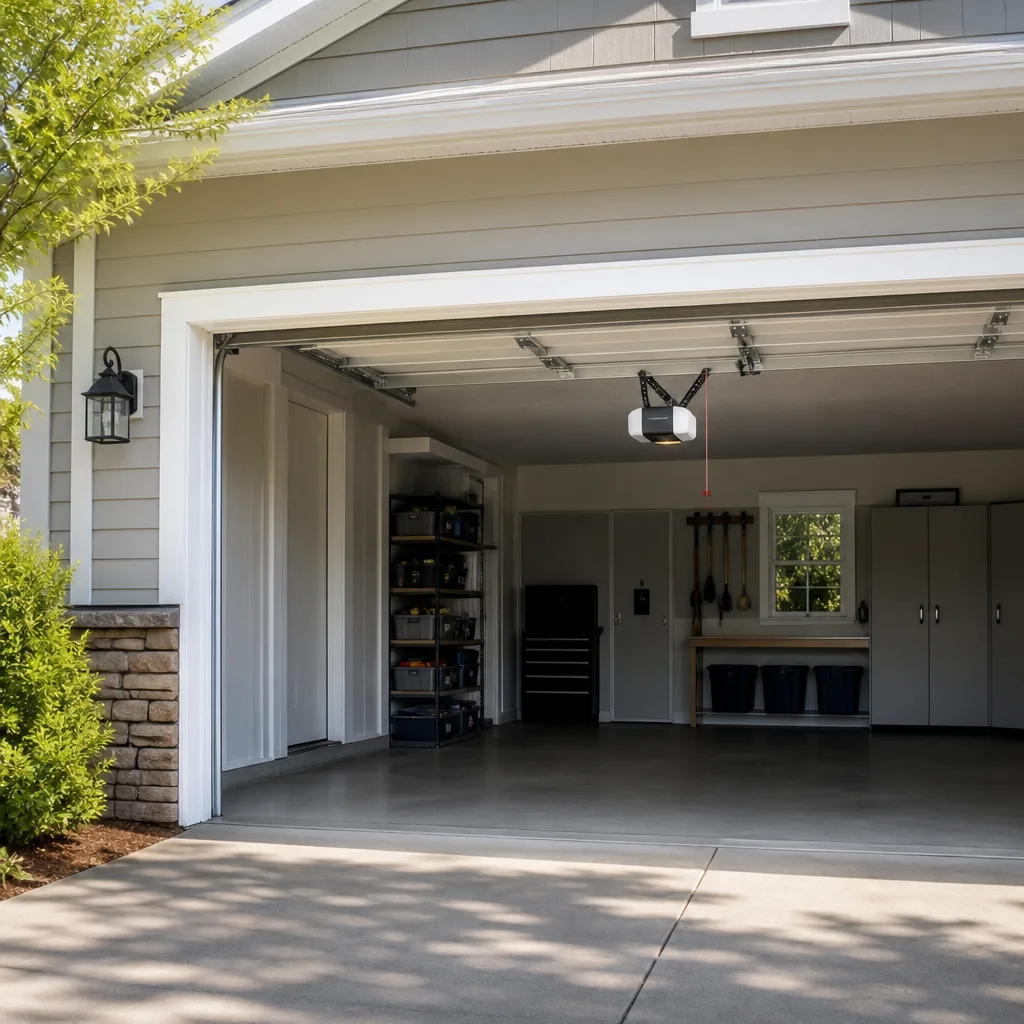 Chamberlain openers
Full 25-point door and opener safety check with every visit - springs, cables, rollers, tracks, and your LiftMaster or Chamberlain opener included
You get a price before we start. It does not change when the truck arrives.
Get your free estimateSeasonal Garage Door Care for Jacksonville: Year-Round Homeowner’s Guide
Here’s a fact most Jacksonville homeowners don’t hear until it’s too late: your garage door is more likely to fail in October than during an August thunderstorm. We see the pattern every year. A door spends four months cycling through 90% humidity, salt-tinged air, and daily heat expansion. Nothing breaks during that stretch because the metal is warm and forgiving. Then the first cool front rolls through, everything contracts, and the hardware that was quietly degrading all summer finally lets go. This guide maps garage door maintenance to the calendar Jacksonville actually has, not the four seasons a hardware store checklist assumes. For a broader look at the topic, see our The Complete Guide to Garage Door in Jacksonville. By the time you finish reading, you’ll know what to inspect, when to schedule real work, and which problems genuinely can’t wait.
Styles & brands we work with
Quick Answer
Seasonal garage door care in Jacksonville means treating the year as four distinct maintenance windows: March through May for pre-storm preparation, June through September for storm-season checks, October through November for post-summer hardware assessment, and December through February for planned replacements. The single most important recurring task is lubricating moving parts every 90 days with a product formulated for high humidity, because Jacksonville’s moisture load breaks down standard garage door grease faster than almost any other climate in the country.
Table of Contents
- March through May: Pre-Season Preparation Before the Heat Arrives
- June through September: Active Storm Season Checks
- October through November: Post-Summer Hardware Assessment
- December through February: The Mild Window for Planned Replacement
- Lubrication in a High-Humidity Climate: What Jacksonville Gets Wrong
- Cold Snaps and Your Door: What Sub-40°F Nights Actually Do
- DIY Inspection vs. Professional Repair: Drawing the Line Safely
- Common Mistakes to Avoid
- When to Call a Professional
- Frequently Asked Questions
- The Bottom Line
March through May: Pre-Season Preparation Before the Heat Arrives
By March, Jacksonville is already warming up. Daytime highs push past 75°F on a regular basis, and the humidity that defines a Florida summer starts creeping back in. This window, before the real heat and the first named storms arrive, is when you want to get your garage door into fighting shape. Think of it as the equivalent of boarding up windows before hurricane season, except quieter and considerably less expensive.
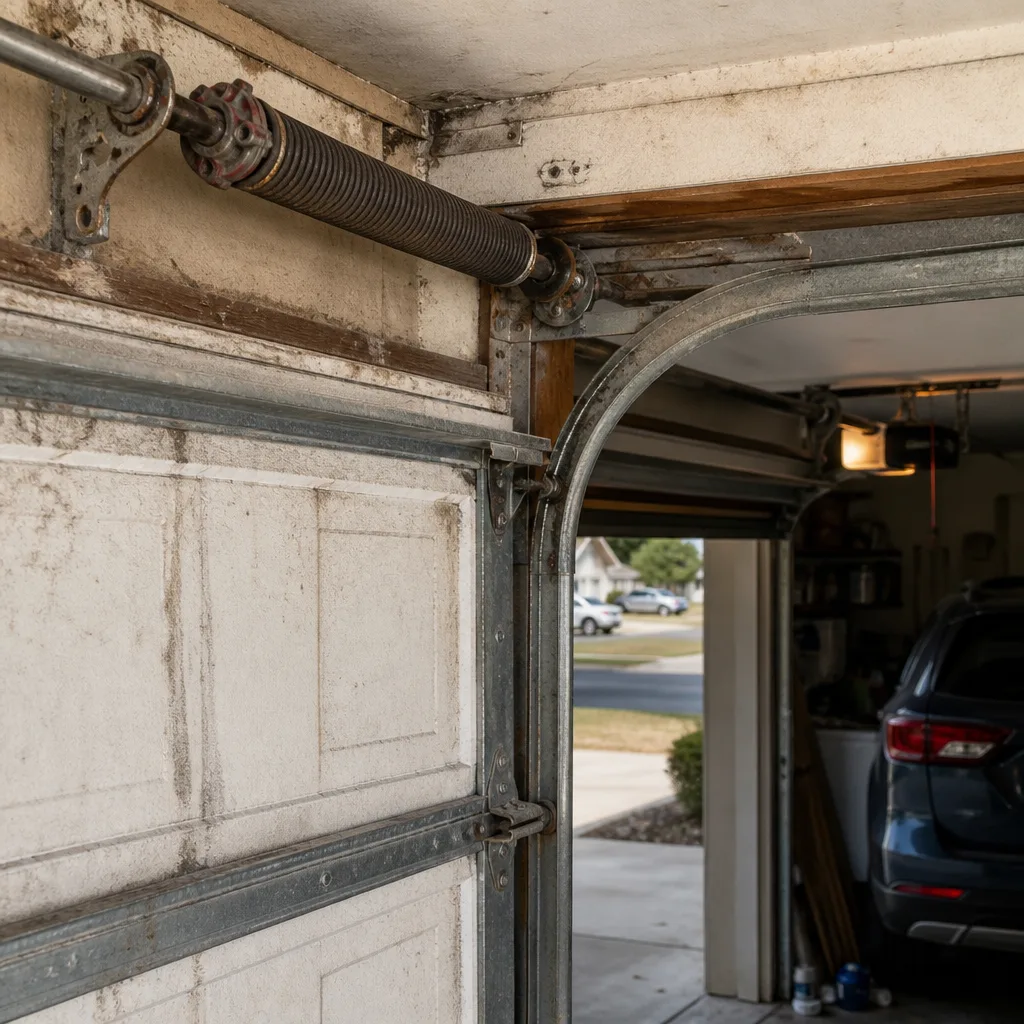
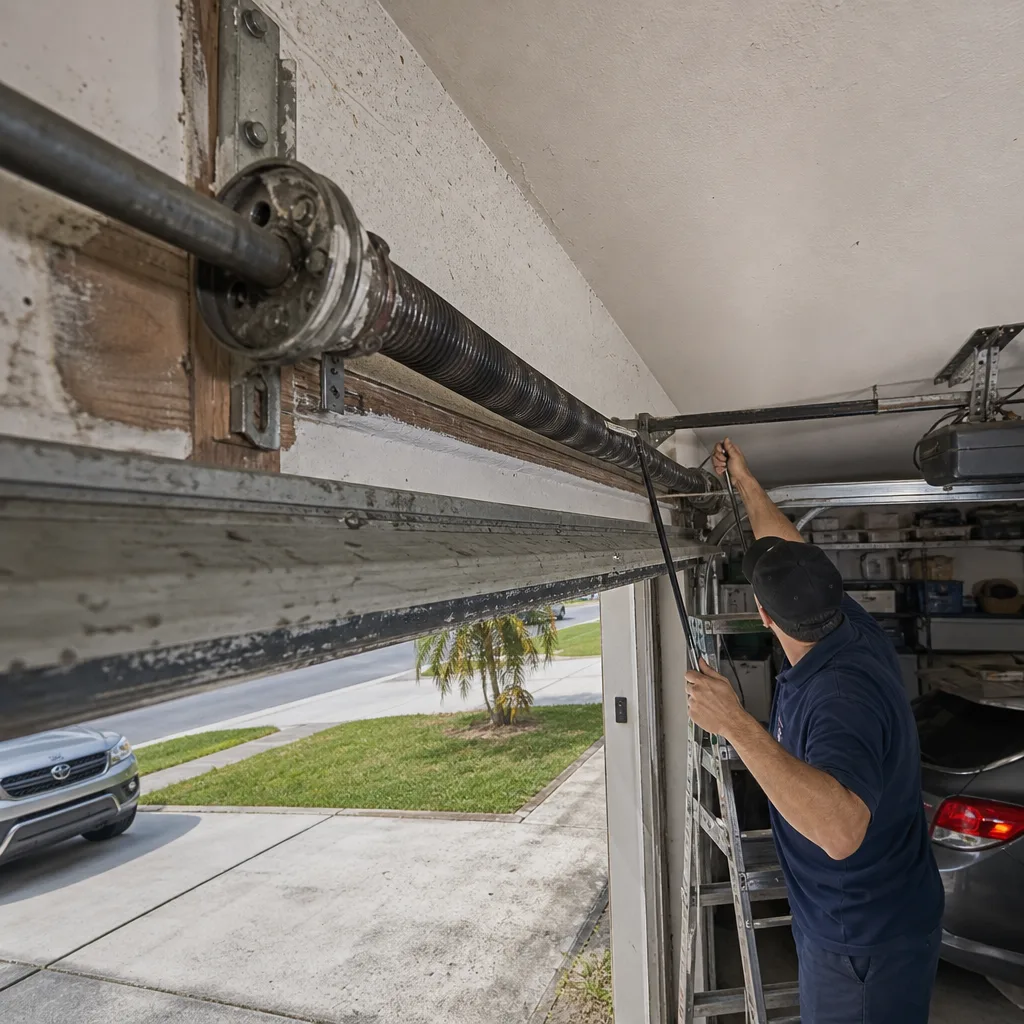
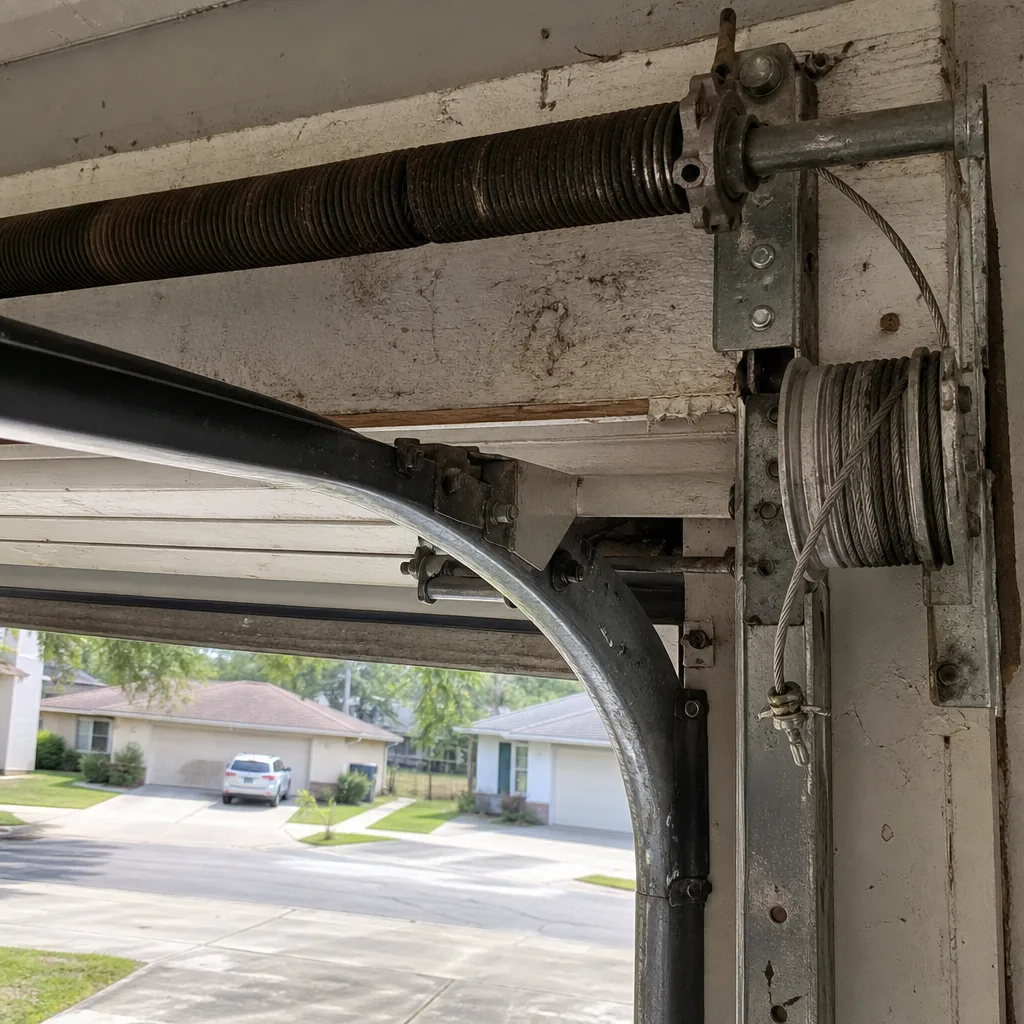
Start with a full visual inspection. Open the door halfway and look at the torsion springs above the opening. Surface rust is normal in Jacksonville’s air and not automatically a problem. Pitting, flaking, or a visible gap in the coil means the spring is compromised. Our team at Heritage Garage Door Service regularly sees doors in Riverside and Avondale where springs that looked fine in February show clear fatigue by mid-May, simply because the humidity returned and accelerated oxidation.
Here is a numbered pre-season checklist we recommend to every homeowner:
- Inspect the springs and cables. Look for rust, fraying on cable strands, and any gap in the spring coil. Do not touch or adjust these parts yourself. Springs under tension can cause serious injury.
- Test the balance. Disconnect the opener by pulling the red release handle, then lift the door manually. It should rise smoothly and stay put around waist height. If it drops or shoots up, the spring tension is off.
- Clean and lubricate the rollers and hinges. Wipe off grime first, then apply a silicone-based lubricant to the roller bearings and hinge pins. Skip the track itself; lubricating the track attracts dirt and causes more problems than it solves.
- Check the weather seal along the bottom. Jacksonville’s afternoon downpours start as early as April. A cracked bottom seal lets water, leaves, and the occasional palmetto bug into the garage.
- Test the auto-reverse safety feature. Place a roll of paper towels under the door and close it. The door should reverse on contact. If it doesn’t, stop using the opener until it’s serviced.
- Tighten visible hardware. Bolts and brackets work loose from thousands of open-close cycles. A socket wrench takes care of most of them in under ten minutes.
This is also the right time to schedule any opener maintenance you’ve been putting off. If you have a LiftMaster, Chamberlain, Genie, or Craftsman unit, the pre-season window is ideal for a professional to check the drive mechanism, remote programming, and safety sensors. You don’t want to discover a weak opener capacitor in July when the door becomes your primary point of entry during a storm. Our Garage Door Opener Repair in Jacksonville service covers these checks in one visit.
June through September: Active Storm Season Checks
Jacksonville’s storm season is not a single event. It’s a four-month stretch of afternoon thunderstorms, occasional tropical systems, and the constant baseline of heat and humidity that wears on every mechanical system in your home. Your garage door sits at the intersection of all of it: the largest moving object in your house, exposed to outdoor air on one side and conditioned air on the other.
During this window, your job shifts from preparation to monitoring. You’re looking for changes in how the door behaves, not doing a full teardown every weekend. Listen for new sounds. A door that starts squeaking in June may have been lubricated in March, and that’s normal. But a door that develops a grinding or popping sound in August is telling you something specific: a roller bearing is failing, or a hinge is binding, or the opener’s gear is wearing down.
Before any significant weather event, whether it’s a named storm or a line of severe thunderstorms moving across Duval County, take five minutes to check these things:
- Confirm the door is fully seated in the tracks. If the door shifted even slightly out of alignment, wind pressure during a storm can force it further and cause a derailment.
- Check that the emergency release cord is accessible and not tangled. If power goes out, you need to be able to open the door manually without fumbling around in the dark.
- Clear debris from the bottom track area. Leaves, pine needles, and small branches accumulate fast during Jacksonville summers and can wedge under the door, preventing a proper seal.
- Test the opener once. Run a full cycle before the weather arrives. If it struggles now, it will fail when you actually need it.
After a storm passes, do the same checks in reverse. Wind-driven rain can force water past a weather seal that was fine the day before. Debris can lodge in the track. And if lightning struck anywhere nearby, the opener’s circuit board may have taken a surge even if the rest of your electronics are fine. We’ve replaced surge-damaged control boards in neighborhoods from San Marco to Mandarin after storms that never even knocked out power to the house.
One thing to be clear about: during an active storm, leave the door alone. Do not try to open or close it while high winds are hitting it directly. A garage door has a huge surface area and acts like a sail. Operating it in heavy wind risks pulling it out of the track or damaging the opener’s gear mechanism. Wait for the weather to pass, then assess.
October through November: Post-Summer Hardware Assessment
This is the window where Jacksonville garage doors fail most often, and it catches homeowners off guard because October feels like relief. The humidity drops, the mornings are pleasant, and nobody is thinking about garage door problems. But four months of heat and moisture have done their work, and the first cool front triggers a contraction cycle that exposes every weak point.
Here’s what actually happens. During summer, metal components expand. Rollers, hinges, tracks, springs, and mounting brackets all live in a slightly enlarged state for months. When the temperature drops into the 60s or 50s, everything contracts. A spring with microscopic fatigue cracks from summer oxidation can snap during that contraction. A hinge with a hairline fracture can complete that fracture. A cable with three broken strands out of twenty can part under the sudden change in tension. This is why October and November service calls spike for us at Heritage Garage Door Service home, and it’s why the post-summer assessment is the most important maintenance step you’ll do all year.
Here is the post-season inspection list, ordered by how often we find problems:
- Spring condition. Look for rust bloom, flaking, or a visible separation in the coil. A torsion spring that looks “hairy” is shedding metal and is near failure. This is not a DIY item. A professional should evaluate it.
- Cable integrity. Check both lift cables for broken strands, especially near the bottom bracket where moisture collects. Jacksonville’s salt-tinged air accelerates cable corrosion even on inland properties.
- Roller wear. Nylon rollers should roll, not slide. Steel rollers should have no visible flat spots. If you hear a rumble when the door moves, the rollers are likely done.
- Opener performance. Time a full open-close cycle. If it’s slower than you remember, the opener’s drive gear or motor may be wearing. This is the single most common opener issue we diagnose in October.
- Weather seal condition. The bottom seal has been baked by summer sun and soaked by summer rain. If it’s cracked, stiff, or pulling away at the corners, replace it before winter.
- Mounting bracket and track hardware. Look for rust streaks and loose fasteners. Salt air and humidity work on everything, and track brackets are easy to ignore until the door starts binding.
If you find problems during this assessment, do not wait until spring to address them. A tired spring in November will break at the worst possible moment, and a failing opener gear will leave you with a door stuck halfway open on a December evening. Our Garage Door Repair in Jacksonville team handles more post-summer fatigue repairs than any other single category of service.
December through February: The Mild Window for Planned Replacement
Jacksonville’s winter is brief, but it’s the best time of year for any planned replacement work on your garage door system. Here’s why. The weather is mild enough that you don’t need the door operational every single day to keep the garage from turning into a sauna. The holiday season means many homeowners are home anyway. And critically, when a spring or cable is replaced in cooler weather, the metal components seat and settle at a baseline temperature that holds through the entire next summer. A spring installed in August will be tuned while hot and expanded, then shrink slightly when October arrives. A spring installed in January settles at the cool end of its range and stays within tolerance all year.
This is also the smart window for full door or opener replacement projects. If your door has been showing its age since the summer assessment, you have a few quiet months to make a deliberate decision instead of scrambling during a failure. We see homeowners in Neptune Beach, Ortega, and Springfield use this time to address things they noticed in October but didn’t want to deal with during the holidays. And that’s the right instinct, because the work is done on your schedule, not under emergency pressure.
What should you consider during the mild window? Start with these questions:
- Is the door itself structurally sound? Check for sagging panels, soft spots in wood doors, and rust-through on steel panels. A door that’s structurally compromised is not worth band-aid repairs, and our Garage Door Installation in Jacksonville service can help you evaluate replacement options during this window.
- How old is the opener? Openers from the early 2010s and older are reaching the end of their service life. If your opener predates smartphone connectivity and you’ve been patching it along, winter is the time to replace it. We work on units from LiftMaster, Chamberlain, Genie, and Craftsman, so we can diagnose what you have honestly before recommending anything.
- Are the cables and springs due? Most torsion springs cycle out after 10,000 to 15,000 open-close cycles, which for a typical Jacksonville family means roughly 7 to 10 years. If you’re on the original springs and the house predates the last few World Series runs by the Jags, you’re on borrowed time.
One more advantage of winter replacement in Jacksonville: the absence of afternoon thunderstorms means the installation can be scheduled for a full day without watching the radar. A door install doesn’t happen in 30 minutes. It’s a measured, multi-hour job, and mild, dry weather makes for a cleaner install.
Lubrication in a High-Humidity Climate: What Jacksonville Gets Wrong
Most garage door maintenance advice online comes from a national perspective, which means it’s written for places where “humidity” is a summer nuisance, not a daily reality. In Jacksonville, the air itself is a lubricant and a solvent at the same time, and the products you use matter more than the frequency with which you use them.
The fundamental problem is this: standard garage door grease, especially petroleum-based products, attracts and holds moisture. In a dry climate, that’s manageable. In Jacksonville, where average relative humidity runs 70-80% for most of the year, petroleum-based grease on a door’s moving parts becomes a moisture trap. The grease breaks down, mixes with condensation, and turns into a gritty slurry that accelerates wear on rollers and hinges instead of preventing it.
What actually works in this climate is a silicone-based or lithium-based lubricant formulated for high-humidity environments. Apply it to the roller bearings, hinge pins, spring coils, and lock mechanism. Avoid the track entirely. Here’s the schedule that works for Jacksonville conditions:
- Every 90 days: Light application to rollers, hinges, and springs. Set a calendar reminder. This is the single highest-return maintenance habit you can build.
- Before storm season (May): Full cleaning and fresh lubrication of all moving components. Remove the grime before applying new product.
- After hurricane season (November): Wipe down components that got saturated during the wet months, check for rust bloom, and re-apply.
- Any time you hear a squeak: Don’t wait for the schedule. A squeak is metal-on-metal contact, and in this climate that contact is happening with moisture present.
A caution about openers: the opener’s rail and drive mechanism on newer Chamberlain and Genie units are often designed with specific lubrication requirements, and using the wrong product can void the warranty or gum up the internal gears. Always check the manual for your specific model before lubricating an opener rail. When in doubt, a professional check is cheaper than replacing a drive gear that was ruined by the wrong spray.
Cold Snaps and Your Door: What Sub-40°F Nights Actually Do
Jacksonville doesn’t get cold by northern standards, but it gets cold enough to cause specific problems that northern garage door guides never mention. When the temperature dips below 40°F, a few things happen to your door that summer maintenance never accounts for.
First, lubrication viscosity changes. The products that work beautifully at 85°F thicken noticeably at 35°F. If you lubed the door in August with a product that wasn’t rated for temperature swings, those first cold December mornings will produce a sluggish door. The rollers won’t spin freely, the hinges will bind slightly, and the opener will work harder to compensate. Over time, that extra load shortens the opener’s motor life. The fix is simple: use a lubricant rated for a broad temperature range, and reapply when the season changes.
Second, the bottom seal loses flexibility. Rubber and vinyl compounds stiffen in cold weather, and a seal that was soft and compliant in July becomes rigid in January. A stiff seal doesn’t compress properly against the garage floor, which means gaps form. Those gaps let cold air in, sure, but in Jacksonville they also let in the damp air that causes tools to rust and cardboard boxes to mildew. If your seal is more than three years old, the rubber has likely lost enough elasticity that even mild cold will cause it to gap. Replacing it is inexpensive and takes under an hour.
Third, the opener’s logic board gets cranky. Most modern openers, including LiftMaster units with built-in battery backups, have electronic components that respond poorly to rapid temperature changes. Condensation can form on the circuit board when cold air hits warm electronics, and repeated condensation cycles shorten board life. If your opener is more than seven years old and starts behaving erratically on cold mornings, the board may be on its way out.
Finally, nylon rollers get brittle in cold weather. Nylon is a great roller material in Florida’s heat, but at sub-40°F temperatures, old nylon can crack. If you hear a chunking sound on cold mornings that disappears as the day warms, inspect the rollers. A cracked roller will eventually shatter, and a shattered roller will throw the door off balance, which cascades into cable and spring damage.
DIY Inspection vs. Professional Repair: Drawing the Line Safely
We’re strong believers in homeowner education. Understanding how your door works helps you spot problems early and communicate clearly with a technician. But garage doors contain components that can cause serious injury or death when mishandled, and it’s important to be honest about where that line sits.
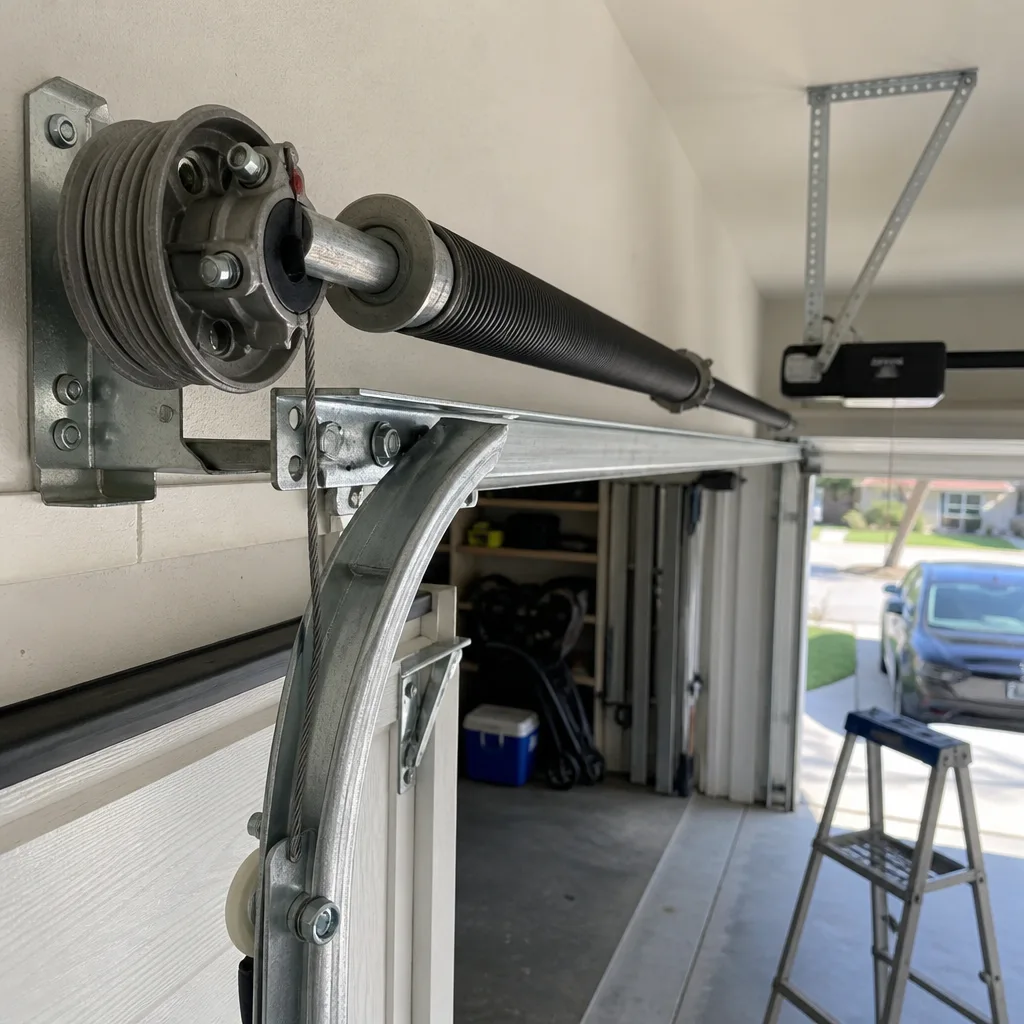
The dangerous components are the torsion springs and the lift cables. A torsion spring is under hundreds of pounds of tension even when the door is closed. If it snaps during adjustment, the released energy can break bones or worse. Lift cables run through pulleys and under tension as well, and a cable that parts under load can whip with enough force to cause deep lacerations. These are not the parts to learn on. If your spring inspection turns up visible rust, a gap in the coil, or any sign of damage, call a professional. The same goes for cables with broken strands.
What you can safely do yourself: visual inspections, cleaning, lubrication, weather seal replacement, tightening accessible bolts and brackets, and testing the auto-reverse feature. None of these require you to touch anything under spring tension. The moment a problem requires you to reach a tool into the spring assembly or loosen a cable, you’re in professional territory.
Heritage Garage Door Service carries factory-spec parts and tools for every major brand we service, including Genie, Clopay, Amarr, and Wayne Dalton. That matters because a spring replacement on an Amarr door is not the same job as a spring replacement on a Wayne Dalton door. Wrong spring weight, wrong cable length, or wrong winding direction turns a one-hour repair into a recurring problem. Your brand’s system, serviced by someone who knows it.
Common Mistakes to Avoid
The following mistakes come directly from service call patterns we see across Jacksonville every year. None of them are exotic. All of them are avoidable.
- Waiting until a storm warning to check the door. By the time a hurricane is in the Gulf, service availability tightens fast. The pre-season window in March through May is when actual preparation happens.
- Lubricating the track. This is the most common DIY mistake in garage door care. The track is designed to work dry. Oil or grease in the track attracts dust and grime, which turns into a sticky paste that makes the door work harder.
- Ignoring the October slowdown. A door that opens slower in October than it did in August is not adjusting to the weather. It’s showing you that something is wearing out. The cool weather didn’t cause the problem; it revealed it.
- Using any spray can within reach. WD-40 is not a garage door lubricant. It’s a water displacer with some short-term lubricating properties, but it dries out fast and leaves moving parts unprotected. Use a proper silicone or lithium garage door lubricant.
- Adjusting spring tension as a DIY project. Torsion springs are the most dangerous component in your garage. A spring under tension carries enough stored energy to cause fatal injury if it releases unexpectedly. This is not a YouTube tutorial situation.
- Force-opening a door after a power outage without disengaging the opener. When power returns, the opener will try to complete its last cycle. If the door was manually forced open without using the red release cord, the opener can yank the door out of alignment. Always use the release cord.
- Replacing an opener without considering the door itself. A new opener on a door with failing springs and worn rollers won’t fix the underlying problem. It’ll just burn through the new opener faster. Assess the whole system before spending money on one component.
When to Call a Professional
Some situations warrant a professional immediately, not at the next convenient maintenance window. If your door falls faster than normal when closing, that’s a spring tension issue and a safety hazard. If the door makes a loud bang and then refuses to move, the spring has likely broken and the door should not be forced open or closed. If the cables look frayed or hang loose, do not operate the door at all. If the opener runs but the door doesn’t move, the drive gear or coupler has failed. If you notice cracks in the door panels or visible sagging, the door’s structural integrity is compromised. In any of these situations, stop using the door and call a professional. Heritage Garage Door Service offers free estimates in Jacksonville, call (833) 711-2679.
Frequently Asked Questions
In Jacksonville’s humidity, you should lubricate your garage door’s moving parts every 90 days, year-round. Use a silicone-based or lithium-based lubricant on the rollers, hinges, and springs. Skip the track entirely. The 90-day schedule matters more here than in drier climates because the moisture in the air breaks down lubrication faster.
December through February is the ideal window for spring replacement in Jacksonville. Cooler temperatures mean the metal settles at the low end of its tension range, so the spring stays within tolerance through the hot summer months. A spring installed in the heat will contract when cool weather arrives and can shift out of balance. Call (833) 711-2679 for an exact quote, estimates are free.
October noise is the sound of components that wore down during summer contracting in cooler temperatures. Jacksonville’s summer heat expands metal parts slightly, and when October’s cool fronts arrive, everything shrinks. Fatigue cracks, worn roller bearings, and loose hardware that were quiet under warm expansion suddenly make contact and produce noise. It’s the canary in the coal mine for post-summer wear.
Before a significant storm, confirm the door is fully seated in the tracks, clear debris from the bottom track area, make sure the emergency release cord is accessible, and run one full cycle to confirm the door operates correctly. Once high winds arrive, do not operate the door. Wind pressure against a garage door panel can pull it out of the track or damage the opener’s gear mechanism.
A basic maintenance visit in Jacksonville that includes balance testing, hardware tightening, lubrication, sensor alignment, and a safety check typically runs $85 to $150 depending on the door type and opener configuration. If parts need replacing, the quote is given before any work starts. For a specific quote on your door, call (833) 711-2679.
Yes, bottom weather seal replacement is a beginner-level DIY project that takes under an hour. Purchase a seal that matches your door’s track profile, measure the width carefully, and follow the manufacturer’s installation guide. In Jacksonville, plan to replace the seal every two to three years because summer sun and heat accelerate rubber breakdown. If the door is older and the track has rust, the job may require professional help.
Yes. Coastal influence extends several miles inland in Jacksonville, and even neighborhoods in Riverside, San Marco, and parts of the Southside see elevated salt content in the air, particularly during onshore wind patterns. Salt accelerates corrosion on springs, cables, and hardware. Inland homes near the St. Johns River also experience higher than average humidity that contributes to the same effect.
The Bottom Line
Jacksonville garage door maintenance works best when it follows the city’s actual weather calendar, not a generic four-season checklist. March through May is for preparation. June through September is for monitoring. October through November is for honest assessment, because that’s when summer fatigue reveals itself. December through February is for planned replacement, when cooler temperatures make the work cleaner and more durable. Lubricate every 90 days with the right product. Respect the danger of springs and cables. And when a problem is beyond inspection level, call a professional who knows your specific door and opener brands. A well-maintained garage door in Jacksonville should deliver 10 to 15 years of reliable service before major components need replacing. For more guides & resources, explore our blog.
Written by the team at Heritage Garage Door Service, serving Jacksonville since 2018.
See the difference
 Before
 After
 Before
 After
 Before
 After