Last updated October 30, 2026
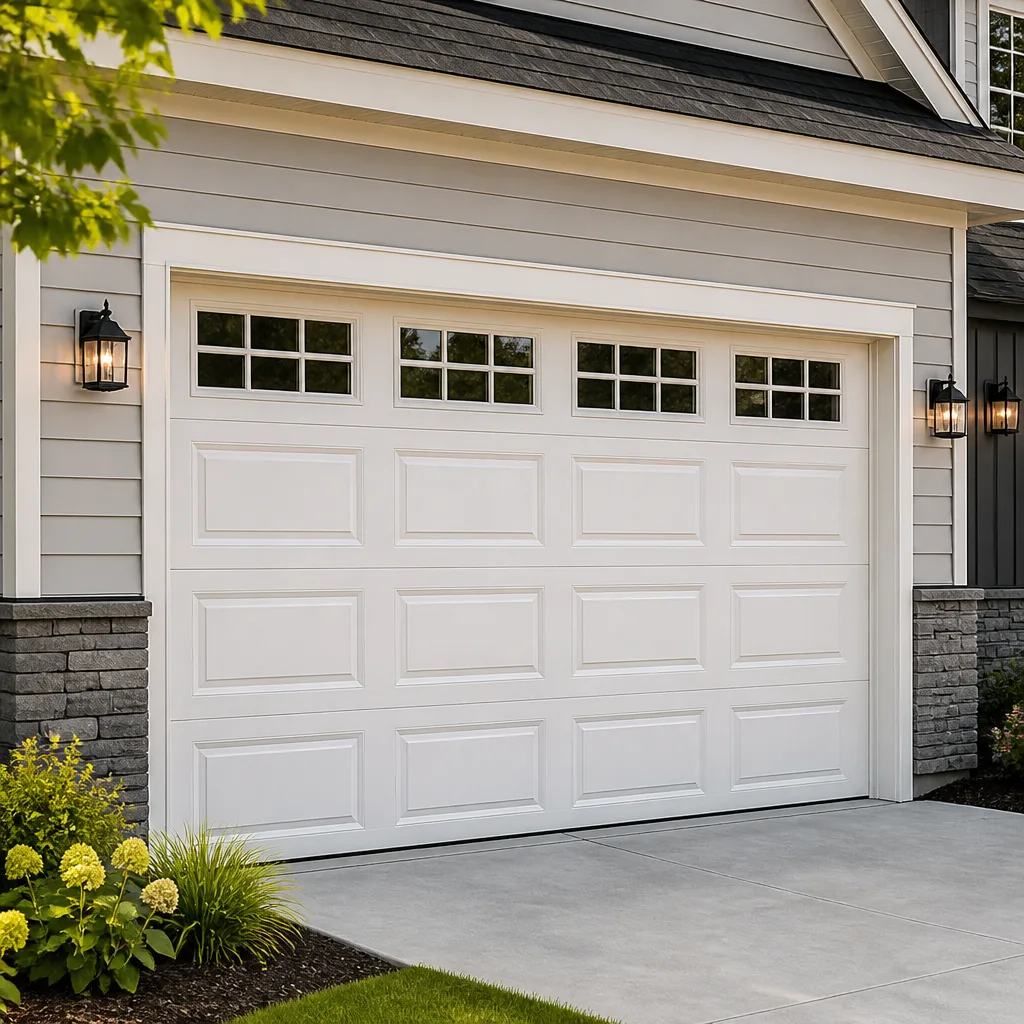 Raised-panel steel
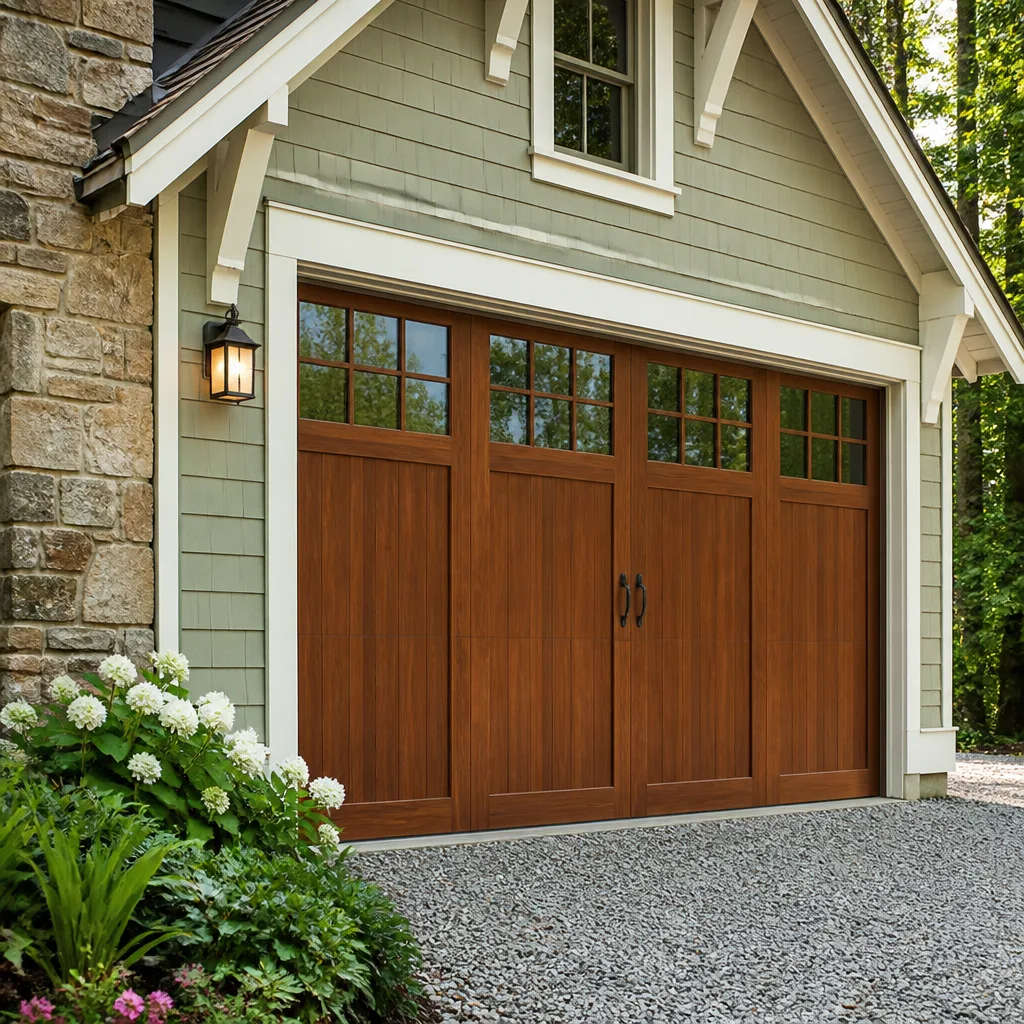 Carriage house
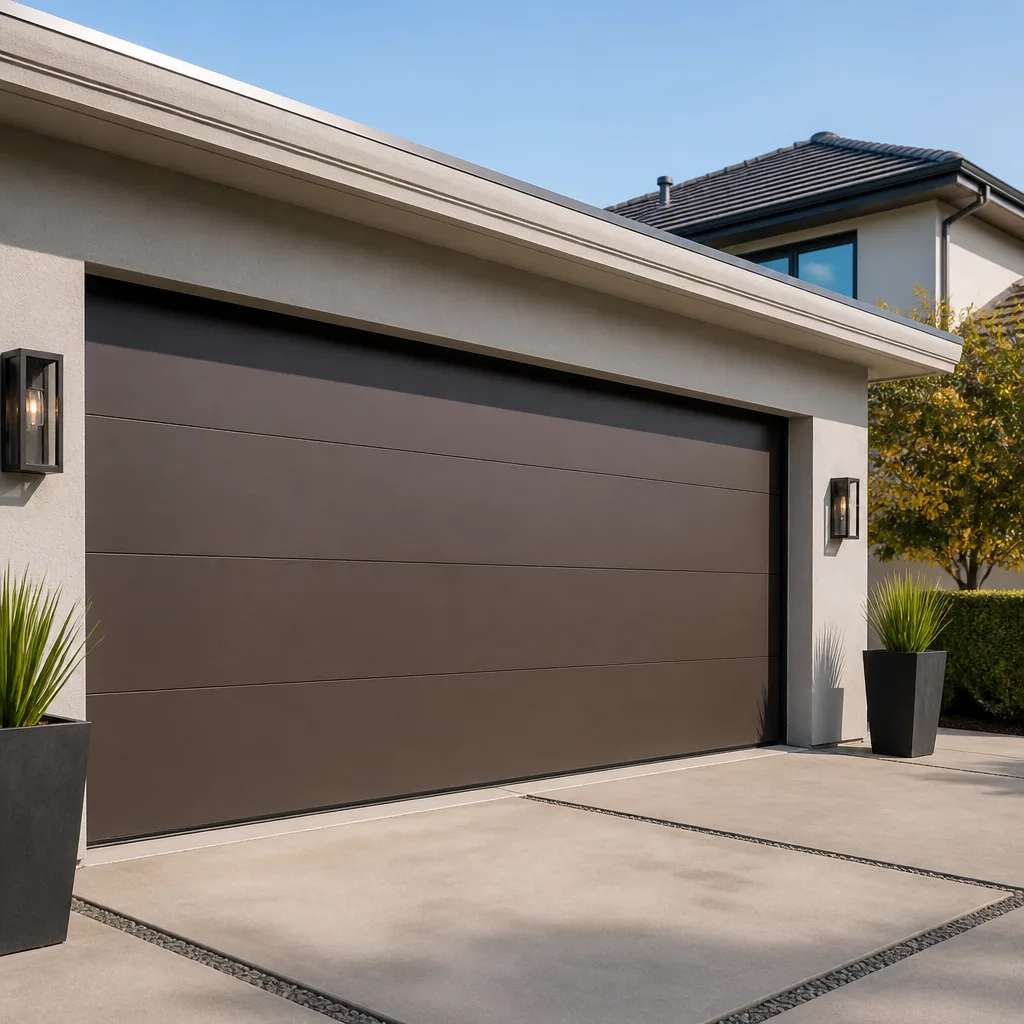 Modern flush
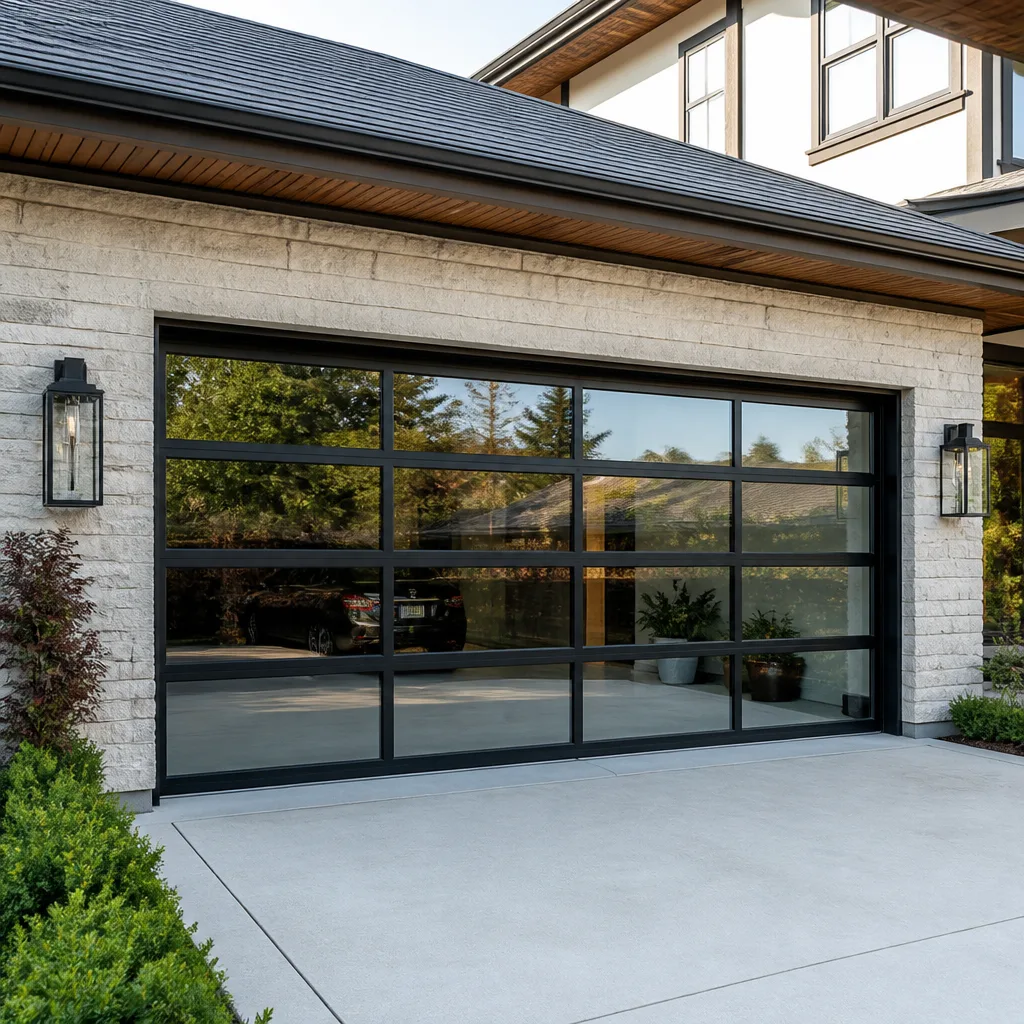 Full-view glass
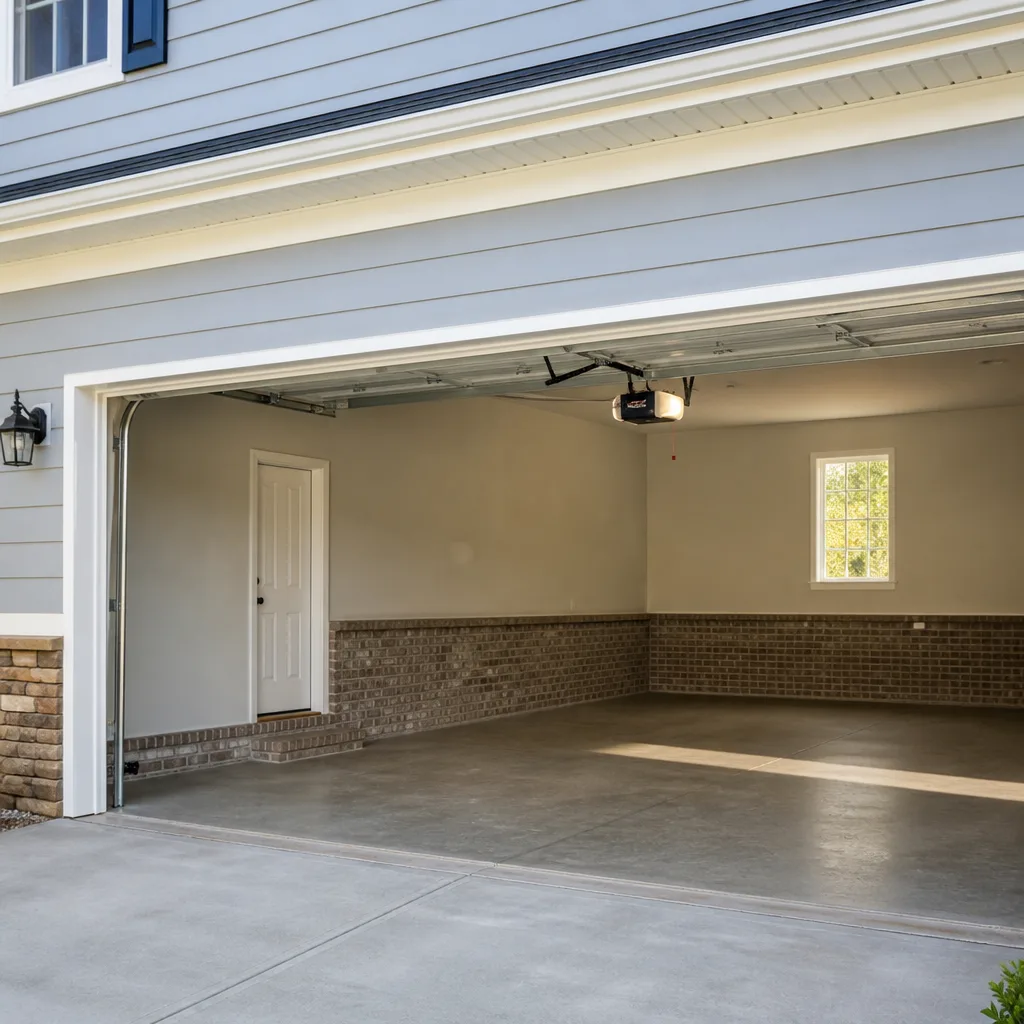 LiftMaster openers
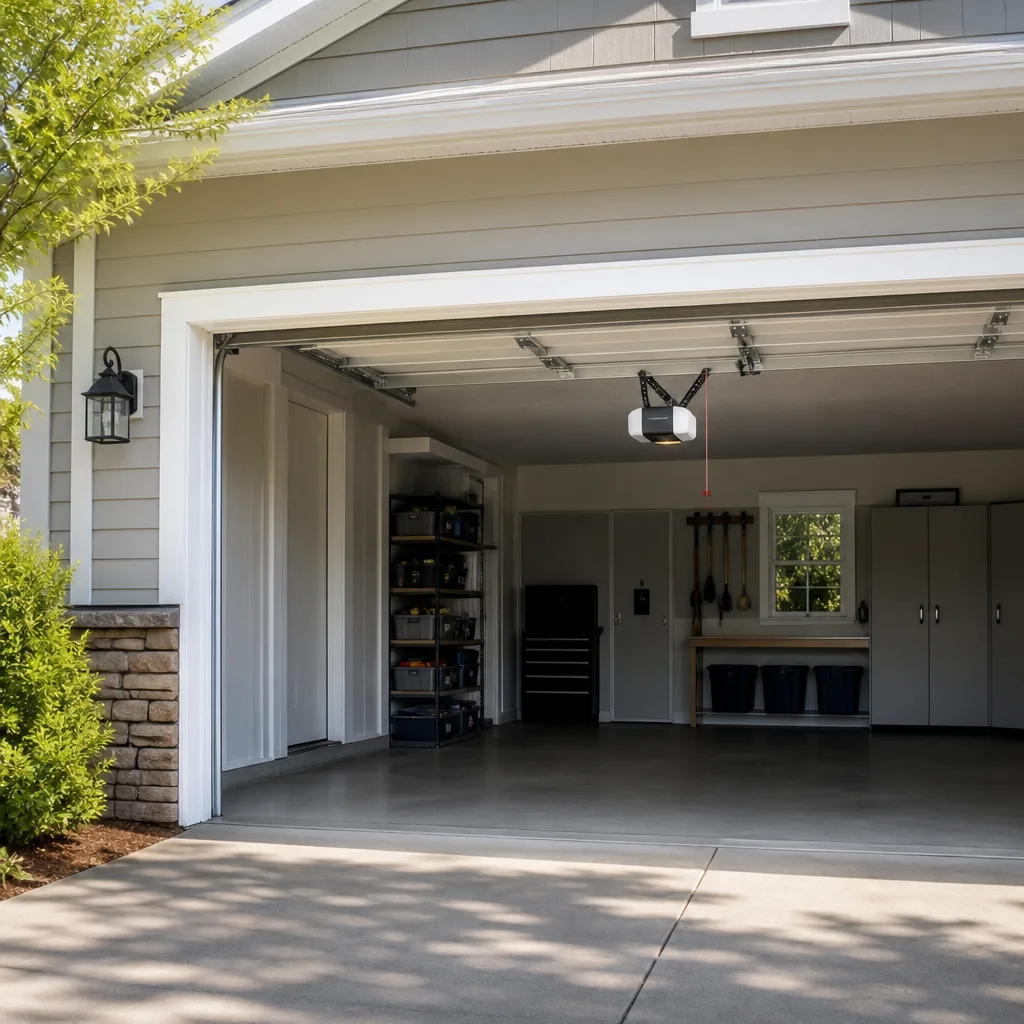 Chamberlain openers
Full 25-point door and opener safety check with every visit - springs, cables, rollers, tracks, and your LiftMaster or Chamberlain opener included
You get a price before we start. It does not change when the truck arrives.
Get your free estimateThe Complete Guide to Garage Door in Jacksonville
Most garage door guides are written for Phoenix or Atlanta. Jacksonville homeowners deal with salt-air corrosion, 60 inches of annual rainfall, and wind-load requirements that quietly disqualify half the doors sold at big-box stores. This guide covers what actually matters for a garage door in Jacksonville, FL: which materials survive the humidity, why Florida Product Approval matters more than price, how slab foundations change your opener options, and what your HOA will and won’t allow. For related advice, see our DIY vs Professional Garage Door: The Jacksonville Homeowner’s Decision Guide. You’ll learn how to choose, maintain, and repair a door that lasts in this specific climate, not a generic one.
Quick Answer
A garage door in Jacksonville needs three things to last: corrosion-resistant materials suited to salt air, a Florida Product Approval number for wind-load compliance, and an opener sized for the limited headroom common in slab-foundation homes. At Heritage Garage Door Service, we repair and install doors across Jacksonville with those three factors built into every recommendation we make. Call (833) 711-2679 for a free estimate from a team that works on what’s already in your garage.
Styles & brands we work with
Table of Contents
- Why Jacksonville’s Climate Changes Everything About Garage Doors
- Materials That Survive Salt Air: What We’ve Seen Last (and Fail)
- Florida Product Approval: What It Is and Why It’s Not Optional
- Slab Foundations and Low Headroom: The Jacksonville Opener Problem
- HOA Rules Across Riverside, Mandarin, Ponte Vedra, and the Beaches
- Storm Prep and Hurricane Season for Jacksonville Garage Doors
- Repair or Replace: How to Know Which One Makes Sense
- Common Mistakes to Avoid
- When to Call a Professional
- Frequently Asked Questions
Why Jacksonville’s Climate Changes Everything About Garage Doors
Jacksonville is not Miami temperature-wise, and it’s not Atlanta humidity-wise. It’s a subtropical coastal city with its own garage door problems. The city averages around 60 inches of rain per year, with the heaviest months spanning June through September. That moisture doesn’t just sit on the grass. It hangs in the air inside your garage, condenses on metal hardware, and accelerates the natural wear of springs, rollers, and hinges.
Salt air is the second factor. Homes within roughly three miles of the Intracoastal Waterway or the Atlantic Ocean get a steady dose of airborne salt, and that salt lands on every exposed metal surface. Galvanized steel handles it reasonably well. Untreated steel doesn’t. We’ve replaced hardware in Neptune Beach less than five years old that looked older than 15-year-old hardware in inland neighborhoods like Mandarin.
The third factor is wind. Jacksonville sits in a hurricane-prone region, and local building codes reflect that. Garage doors are the largest opening in most homes, and when a door fails under wind pressure, the roof often goes next. That’s why Florida Product Approval exists, and why it should drive your buying decision more than paint color.
Understanding these three forces changes how you shop. A door that performs beautifully in a dry climate can rust through its hardware, fail a wind test, and violate your HOA’s architectural rules all in the same year. We work on what you have, not just what we sell, and what works in Jacksonville specifically is the only thing worth buying here.
Materials That Survive Salt Air: What We’ve Seen Last (and Fail)
If your Jacksonville home sits east of US-1 or within walking distance of the St. Johns River, salt air is your garage door’s constant companion. The right material choice extends the door’s life by a decade or more. The wrong choice shows up as rust streaks within two years.
Here’s what we’ve observed across thousands of Jacksonville service calls:
- Fiberglass doors: They don’t rust, which makes them tempting for beach homes. But fiberglass gets brittle under UV exposure, and Jacksonville’s summer sun is relentless. Expect fading and possible cracking within eight to ten years. We see these more in Ponte Vedra than anywhere else, mostly as replacements for older wooden doors.
- Steel doors with factory-applied corrosion protection: This is the workhorse for most Jacksonville homes. A quality steel door from brands like Clopay or Amarr comes with a baked-on primer and a polyester topcoat. For homes more than three miles from salt water, this lasts 15 to 20 years with basic maintenance. Closer to the coast, expect to touch up scratches quickly, because even a small scratch exposes the steel underneath.
- Aluminum doors with powder coating: The strongest option for salt-air zones. Aluminum doesn’t rust the way steel does, and a powder-coated finish resists the pitting and flaking that salt accelerates. Amarr and Raynor both make aluminum doors that hold up well in the Beaches neighborhoods of Jacksonville. You’ll pay more upfront, usually 20 to 30 percent over a comparable steel door, but the replacement cycle stretches well past 20 years.
- Wood doors: Beautiful and largely impractical near salt water. Without diligent sealing every year or two, pressure-treated wood and wood composites absorb humidity and swell. We see warped wood doors more often in older Riverside and Avondale homes, where historic character motivated the original choice. If you’re committed to wood, plan on a maintenance schedule that most Jacksonville homeowners eventually abandon.
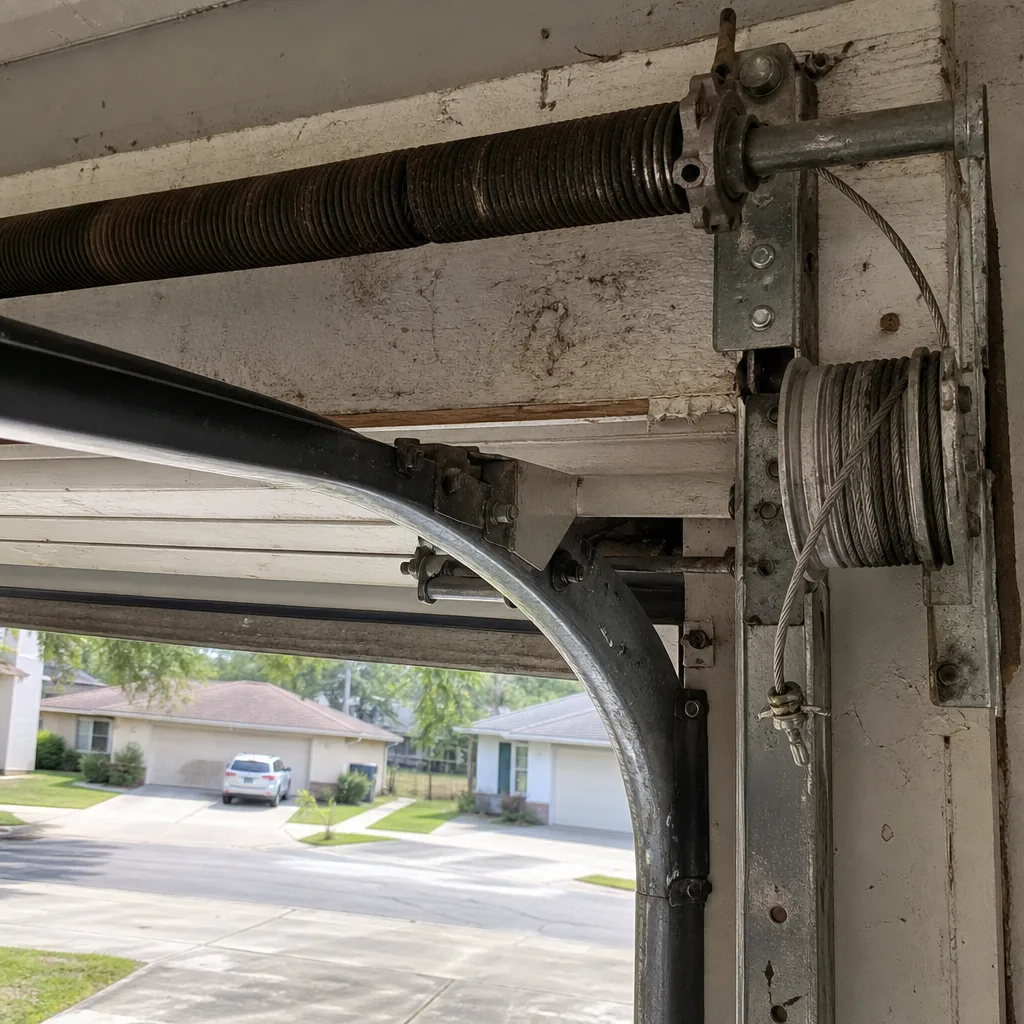
The hardware matters as much as the door itself. Hinges, springs, and track brackets made from galvanized steel or stainless steel are worth the upgrade in a coastal climate. We regularly replace rusted hardware on doors that are otherwise in decent shape, especially in neighborhoods east of the Intracoastal.
Florida Product Approval: What It Is and Why It’s Not Optional
Florida Product Approval (FPA) is a certification that a building product has been tested and approved to meet the state’s wind-load requirements. For garage doors, that means the door was tested to withstand specific wind pressures without blowing out of the opening. Every garage door installed in Florida is supposed to carry an FPA number. Not all of them do.
Here’s what happens when a door without an FPA number goes in: your insurance company may decline coverage for storm damage, your home may fail inspection when you sell, and the door may fail catastrophically in a hurricane. The door fails inward, the garage pressurizes, and the roof lifts off the house. This isn’t theoretical. It’s the documented failure pattern from Hurricane Andrew that led to Florida’s modern building codes in the first place.
Big-box stores sell doors without Florida Product Approval numbers, and homeowners on a budget buy them. We’ve replaced several of them after storms, and more than a few before storms when insurance companies flagged them. The conversation is always the same: the door cost less up front, and the correction cost three times that.
When you get a quote, ask two questions. First: “What’s the FPA number for this door?” Second: “What wind zone was it tested for?” Jacksonville falls into different wind zones depending on your proximity to the coast. A door approved for inland wind loads may not be approved for beachfront wind loads. A reputable installer will know both answers without looking them up. If you’re considering a door and want to check the FPA number yourself, the Florida Department of Business and Professional Regulation maintains a searchable database online.
Slab Foundations and Low Headroom: The Jacksonville Opener Problem
Most homes in Jacksonville sit on concrete slab foundations. That’s different from much of the country, where crawlspaces and basements are standard. A crawlspace raises the house off the ground, which creates more vertical room above the garage door opening. A slab doesn’t. The concrete is poured at ground level, the garage ceiling sits closer to the door opening, and the result is limited headroom.
Why does this matter? Because standard garage door openers and standard torsion spring setups need a certain amount of clearance above the door to work properly. In homes with less than about 12 inches of headroom, a standard overhead setup doesn’t fit. Jacksonville homes routinely present with 8 to 10 inches. That forces changes in how the door gets installed and which opener you can use.
The two most common solutions:
- Low-headroom track kits: These modify the track geometry so the door sits closer to the ceiling when open. They work, but they put more stress on the door’s hardware because the travel path is steeper. Expect more frequent roller and cable wear, especially on heavier double doors.
- Side-mount (jackshaft) openers: These mount on the wall beside the door instead of overhead. They don’t care about your headroom at all, and they’re quieter than traditional rail openers. LiftMaster and Chamberlain both make strong side-mount units. The tradeoff is cost: you’ll typically pay $150 to $300 more for the opener, plus a slightly more involved installation. For homes with finished garage ceilings or storage racks, the side-mount is often the best answer regardless of headroom.
We’ve worked in enough Jacksonville garages to expect the headroom issue before we even walk through the door. It’s the most common reason a homeowner’s hand-picked opener doesn’t actually fit their home, and it’s rarely checked until after the box is opened. Your Chamberlain system, serviced by someone who knows it, starts with figuring out whether your garage can physically take it.
HOA Rules Across Riverside, Mandarin, Ponte Vedra, and the Beaches
Jacksonville’s neighborhoods don’t share a single garage door aesthetic. Riverside and Avondale lean historic, with architectural review boards that prefer carriage-house styles and a limited range of colors. Mandarin has a mix of older subdivisions without strict rules and newer developments with detailed codes. Ponte Vedra, particularly inside gated communities like Sawgrass, often has the strictest standards in the region. The Beaches communities of Atlantic Beach, Neptune Beach, and Jacksonville Beach each carry their own restrictions, some of which trace back to design standards written decades ago.
The pattern that holds across all of them: the HOA cares about the door’s street-facing appearance, not its mechanical quality. A wind-rated, corrosion-resistant door can still violate a neighborhood’s architectural code if the color, panel pattern, or window configuration isn’t approved. And the violation can be expensive, because the HOA can require you to replace a brand-new door.
How to check before you buy:
- Find your governing docs. If you’re in a planned development, you signed them at closing. If you can’t find them, your HOA management company has copies.
- Look for the architectural review section. Search for words like “garage door,” “carriage house,” “fenestration,” and “approved color palette.” Some HOAs specify exact brands and even exact model numbers.
- Check the approval process. Many HOAs require submission of a photo, a spec sheet, and sometimes a paint sample before installation. The review window is typically 30 to 45 days in Jacksonville-area communities.
- Ask about precedent. If three neighbors on your street have a specific door style, approval for a matching door is usually faster.
When we install in a Jacksonville neighborhood with an active HOA, we recommend getting the written approval before the door gets ordered. It adds two or three weeks to the timeline and removes a potential four-figure mistake. Repair work on an existing door rarely triggers HOA review, but replacement almost always does.
Storm Prep and Hurricane Season for Jacksonville Garage Doors
Jacksonville residents have seen what a direct hit does. The garage door is the weak point of every home when wind loads spike. Preparation starts before hurricane season and continues through it.
What to check on your current door:
- Reinforcement struts: These are horizontal metal braces that bolt to the door’s interior face and stiffen the panel against wind flex. Most wind-rated doors include them or can accept them as an add-on. If your door has an FPA number, the struts were part of the tested assembly. Don’t remove them.
- Roller and hinge condition: Worn rollers let the door rattle and flex, which increases the load on every connection point when wind hits. If you hear the door vibrating during normal operation, the hardware is already telling you something.
- Track mounting: In Jacksonville’s slab homes, the track brackets bolt into the garage framing and sometimes into the concrete itself. Loose bolts are a failure point. Grab the track and pull. If it moves, call before the storm, not after.
- Weatherstripping along the bottom and sides: It’s not just for temperature control. Driven rain gets pushed under and around the door during tropical storms. Jacksonville’s heavy summer downpours make this a year-round concern.
During a storm, don’t brace the door yourself by propping things against it from inside. A wind-rated door is engineered to flex and transfer load to the building. A 2×4 wedged against the panel concentrates the load and can cause the exact failure you’re trying to prevent. The door was tested as a system. Trust the system.
After a storm passes, inspect before opening. A door that took on debris may have bent tracks or a shifted spring. If the door resists opening or makes noise it didn’t make before, leave it closed and call us. We repair storm damage across Jacksonville every hurricane season, and the damage is usually cheaper to fix when caught early.
Repair or Replace: How to Know Which One Makes Sense
Most garage door problems are repairable. Some are not. The line between the two isn’t a dollar amount, it’s a set of observable conditions. Here’s how we think through it.
Repair makes sense when:
- The door is under 12 years old and structurally sound
- The problem is isolated: a broken spring, a failed opener, a single damaged panel
- The door already carries a Florida Product Approval number and the damage didn’t compromise it
- The repair cost is under half the replacement cost
Replacement makes more sense when:
- The door has no FPA number and won’t pass inspection if you sell
- Rust has compromised the structural integrity of multiple panels, not just the surface
- Replacement panels for your door are discontinued, which happens with older Wayne Dalton and Raynor models in Jacksonville more often than you’d expect
- You’re planning to sell within a few years, and the current door is a visible liability
- The HOA has already flagged the door, and continuing to patch it isn’t sustainable
The honest answer is sometimes the one homeowners don’t want: a 18-year-old door with a broken spring and rusted tracks is not a $200 repair. It’s a $1,800 replacement waiting to happen, and spending $200 now might buy you six months instead of six years. We’ve told that truth in Mandarin living rooms and Riverside driveways, and the homeowners who took it seriously are the ones who didn’t call us back during the next hurricane. Repair or replace, we’ll tell you which one actually makes sense, and we’ll stand behind the recommendation.
Common Mistakes to Avoid
- Buying a door without checking the FPA number. Big-box pricing is tempting. A door without Florida Product Approval is a future insurance claim denial waiting to happen. Jacksonville code enforcement and home inspectors both check.
- Ignoring salt-air exposure when choosing materials. A homeowner in Atlantic Beach bought a standard steel door with a cheap topcoat. Two years later the bottom panels were rust-stained and the hinges were seizing. Proximity to salt water changes the material math.
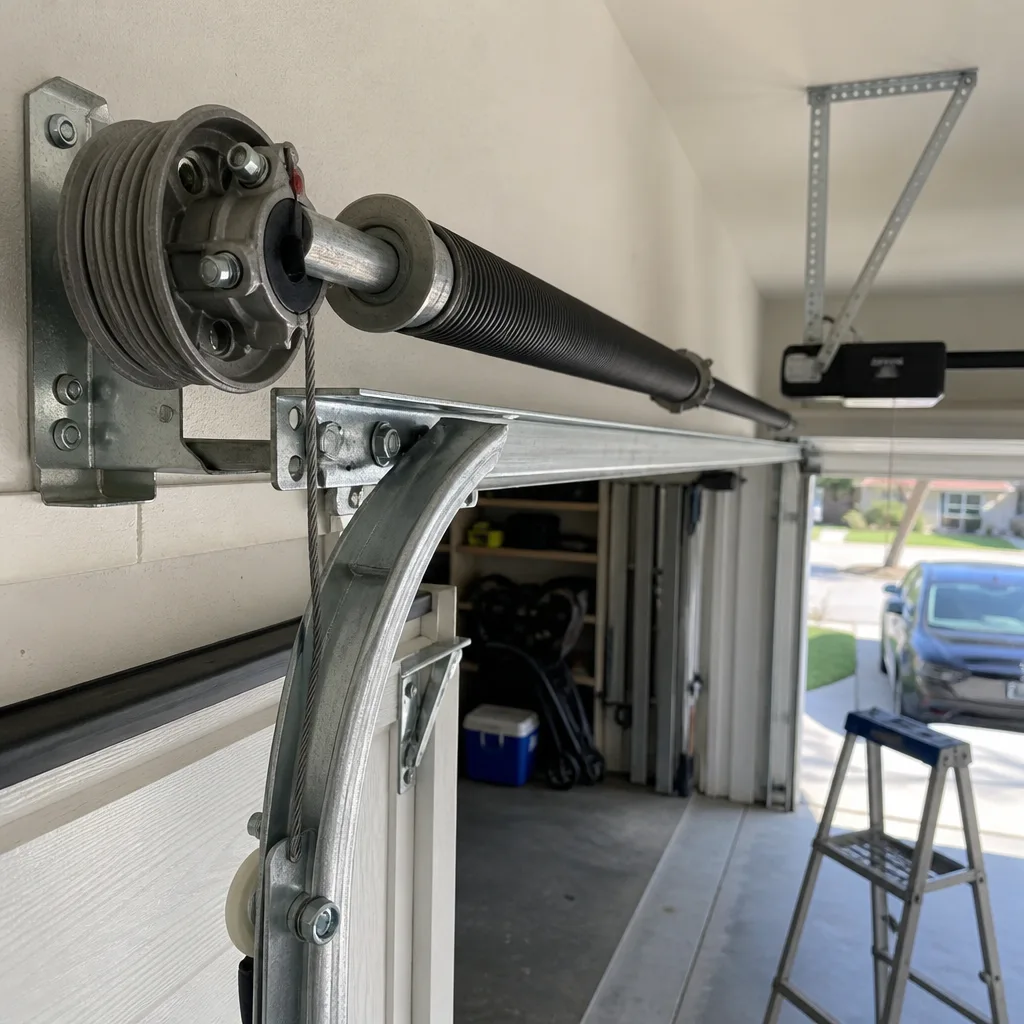
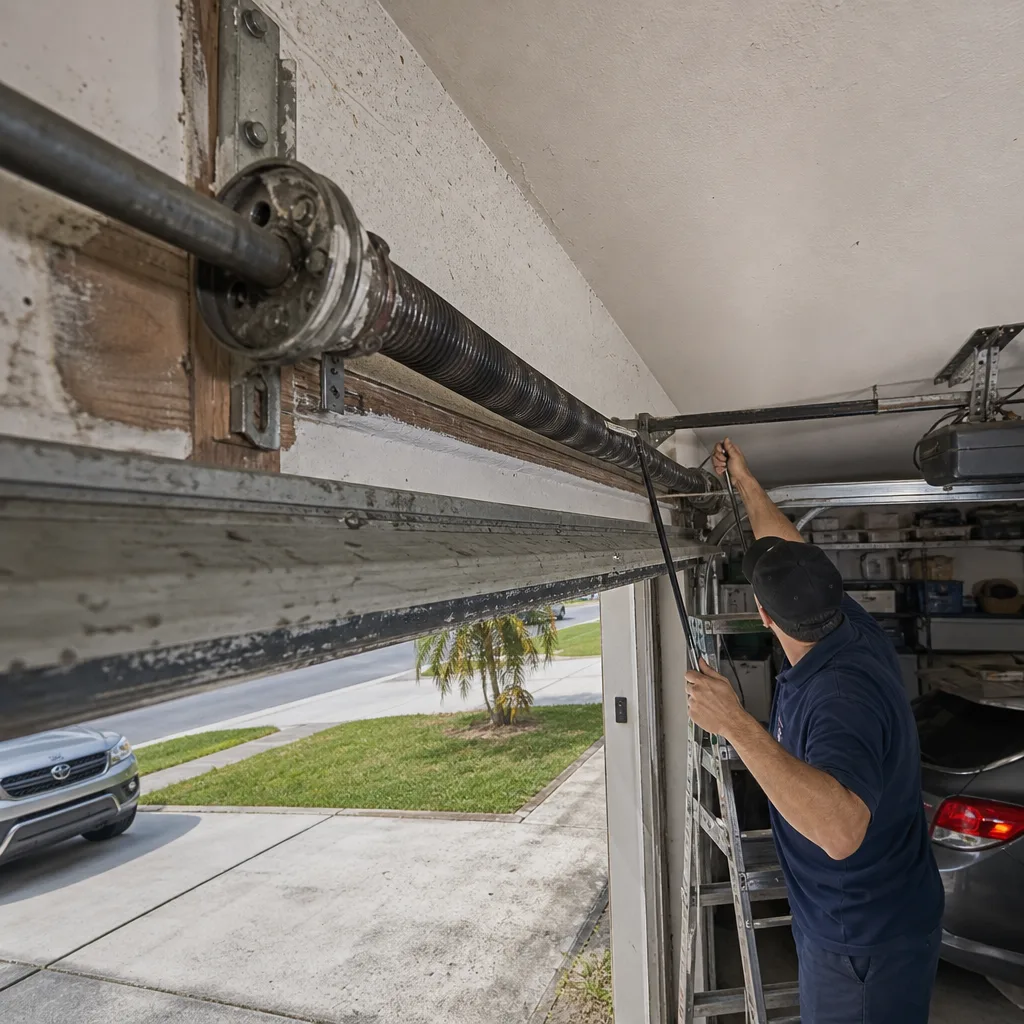
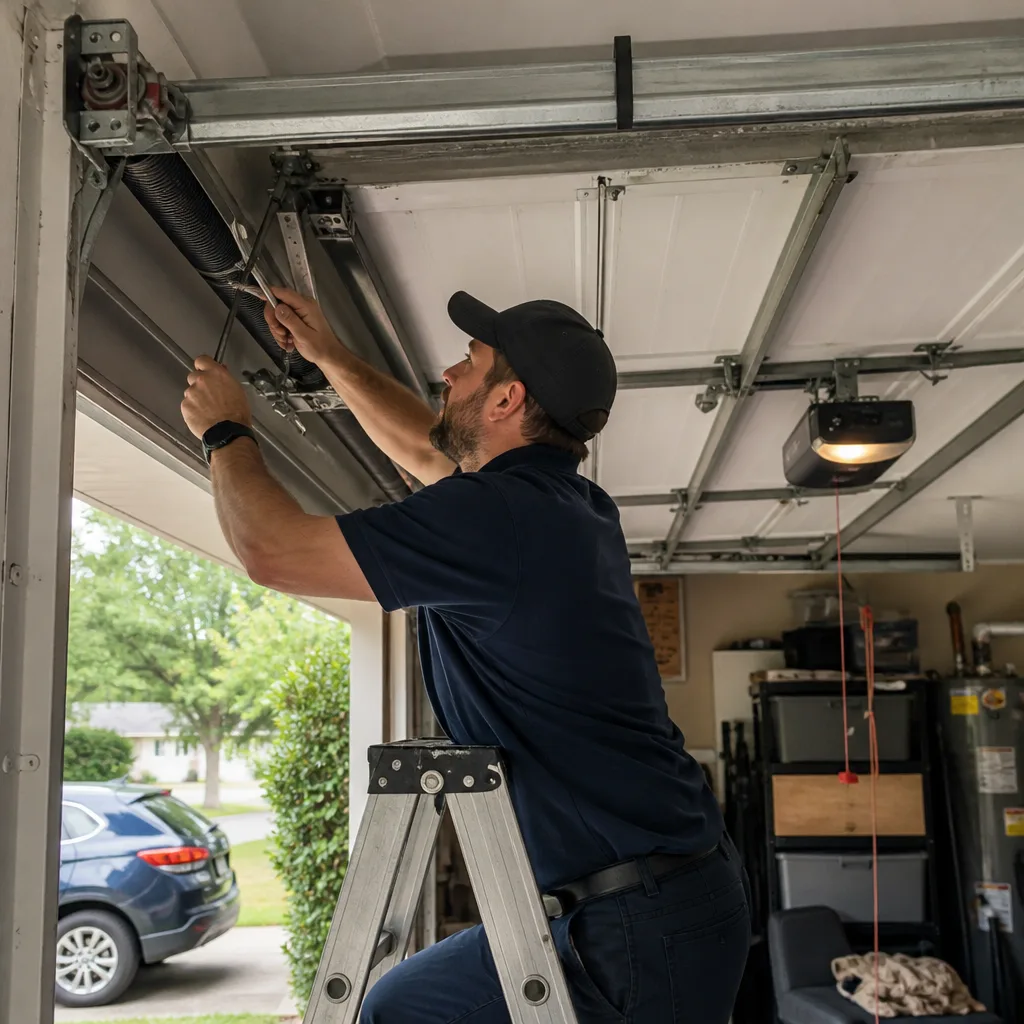
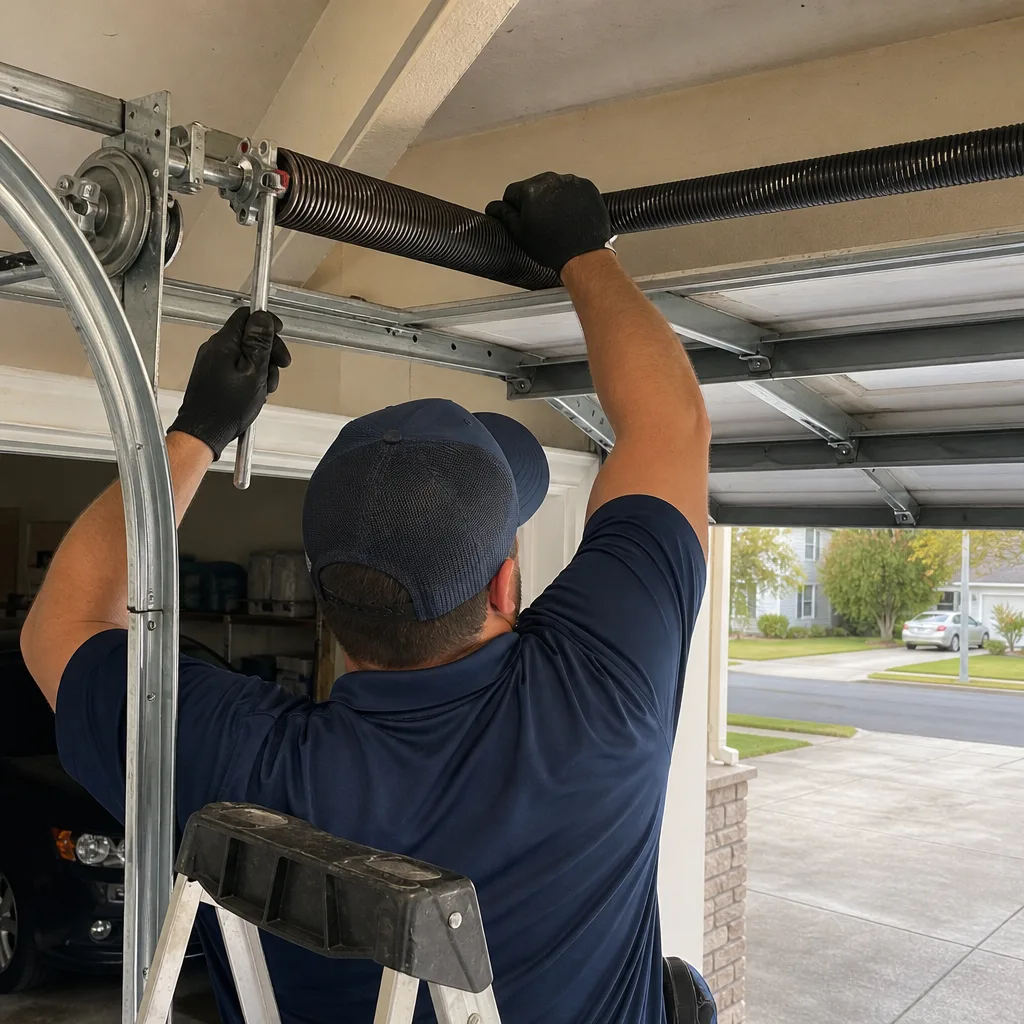
- Replacing springs as a DIY project. Torsion springs hold enormous tension. When they release improperly, they can cause serious injury. This is one repair that never makes sense to attempt without training and the right tools.
- Assuming every opener fits every garage. Jacksonville’s slab foundations create low headroom in many homes. A standard rail opener may not clear the ceiling. Measure before you order.
- Skipping the HOA check before replacing a door. We’ve seen new doors get flagged within a month in Ponte Vedra communities. The replacement door had an FPA number, wind reinforcement, and the wrong color. The HOA didn’t care about the first two.
- Lubricating the wrong parts. Grease on tracks attracts grit and grime in Jacksonville’s humid air. The right maintenance is specific: rollers and hinges get light lubricant, tracks get cleaned, springs get a silicon-based spray.
- Delaying a repair because the door still opens. A door with a broken spring works right up until it doesn’t, and when it fails, it often drops hard enough to damage the opener or the panels. The repair is always cheaper before the cascade failure.
When to Call a Professional
Call when the spring breaks. Torsion springs carry the full weight of the door and release stored energy violently when they fail. No tutorial on the internet makes this a safe DIY repair. Call when the door comes off its tracks, when the opener makes grinding noises, or when a cable has visible fraying. Call when you’re replacing a door and need to navigate Jacksonville’s FPA, HOA, and wind-zone requirements all at once.
And call when the answer isn’t obvious. A door that shakes when opening could be a balance problem, a track alignment issue, or a dying opener. Guessing rarely fixes it and often makes it worse. Heritage Garage Door Service offers free estimates in Jacksonville. One call covers the door, the opener, and everything in between. Call (833) 711-2679.
For more on our specific services, see Garage Door Repair in Jacksonville, Garage Door Opener Repair in Jacksonville, and Garage Door Installation in Jacksonville. Or start at our Heritage Garage Door Service home page to see everything we do.
Frequently Asked Questions
A new garage door in Jacksonville typically costs between $850 and $2,900 installed, depending on material, size, insulation, and wind-rating. A basic single steel door runs $850 to $1,400. A double door with insulation and corrosion-resistant hardware runs $1,800 to $2,900. Jacksonville’s FPA requirements and HOA constraints can add to the total, which is why a site visit matters more than an online quote. Call (833) 711-2679 for an exact price on your specific door.
Florida Product Approval is a certification that a garage door has been tested and approved for the state’s wind-load requirements, and yes, you need it on any replacement door in Jacksonville. Doors without an FPA number can cause insurance denials and inspection failures. The requirement applies throughout Florida, but it matters more in Jacksonville’s hurricane-prone coastal zones.
A quality steel door with corrosion protection lasts 15 to 20 years in Jacksonville’s inland neighborhoods, and 8 to 12 years within three miles of the Intracoastal or ocean. Aluminum doors with powder coating stretch past 20 years even near salt water. Regular hardware maintenance adds years to any door. Humidity, salt air, and hurricane-season wind loads all shorten the lifespan compared to drier climates.
No. Many Jacksonville neighborhoods, including parts of Riverside, Mandarin, Ponte Vedra, and the Beaches, have HOA architectural standards that restrict garage door colors, styles, and sometimes specific materials. The door also must carry a Florida Product Approval number. Style is personal, but in Jacksonville it’s constrained by covenant and code.
Garage door openers fail prematurely in Jacksonville most often because of low headroom stress, humidity damage to internal electronics, or an underlying door problem that forces the opener to work harder than it was designed to work. A door that’s out of balance destroys openers. Fixing the door problem before replacing the opener is the difference between three years of service and ten.
Check the reinforcement struts, tighten all track bolts, verify rollers and hinges are in good condition, and confirm your weatherstripping is intact. If your door doesn’t have wind reinforcement and you live near the coast, adding it is the single most protective change you can make. Don’t brace the door from inside during a storm; the door is engineered to flex as a system.
We work on products from the brands most commonly installed in Jacksonville, including LiftMaster, Chamberlain, Genie, Craftsman, Clopay, Amarr, Wayne Dalton, and Raynor. If it’s in your garage, one of our technicians has likely serviced its twin this week. We work on what you have, not just what we sell.
The Bottom Line
A garage door in Jacksonville has to do more than open and close. It has to survive salt air, shed 60 inches of annual rain, hold up under hurricane-force winds, fit within a slab-built garage with limited headroom, and get past your HOA’s architectural review. That’s a higher bar than most of the country, and it’s why generic advice fails here. Buy materials suited to coastal exposure, verify the Florida Product Approval number before you sign anything, respect your garage’s physical constraints, and check your neighborhood rules before the door gets ordered. Built on craft, not shortcuts, that’s how we approach every install and repair in Jacksonville. Explore more guides & resources for Jacksonville homeowners.
Written by the team at Heritage Garage Door Service, serving Jacksonville since 2018.
See the difference
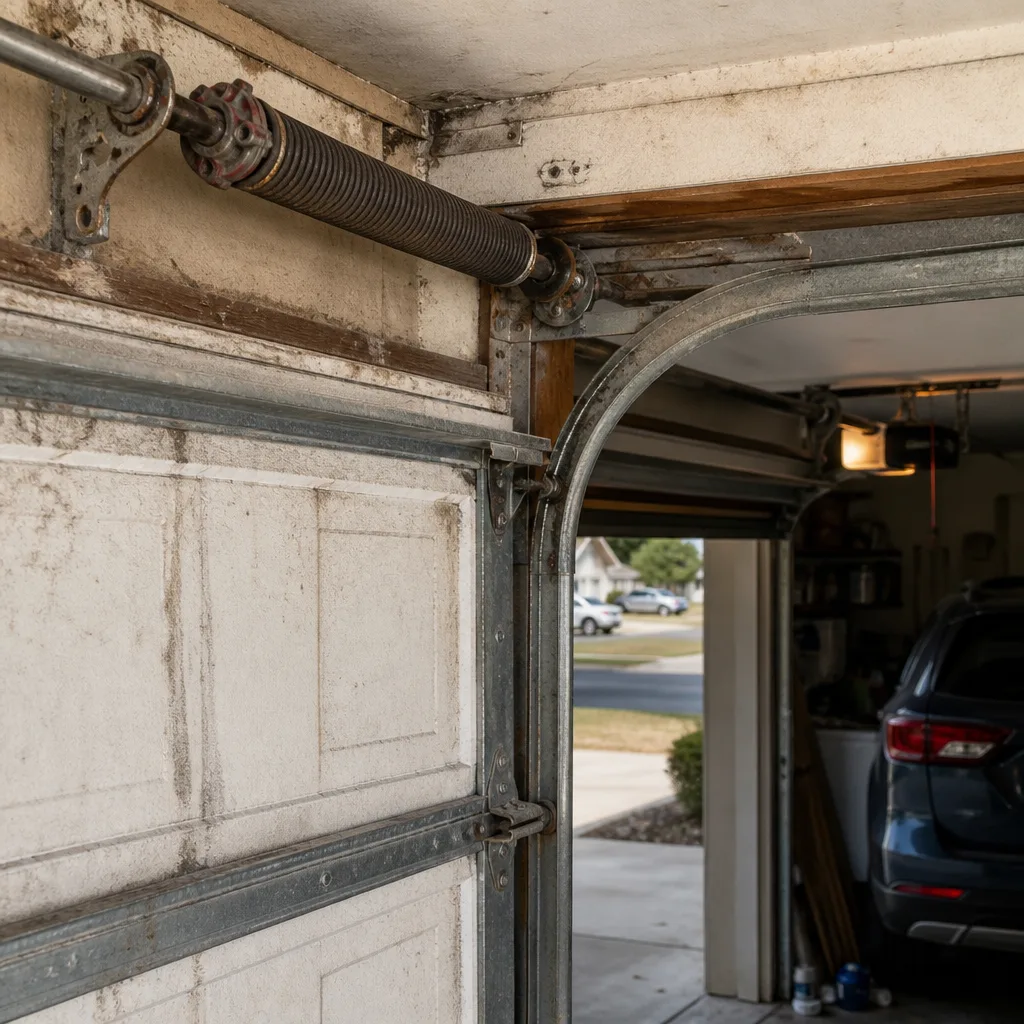 Before
 After
 Before
 After
 Before
 After